
Human Resources Development Minister Arjun Singh on Tuesday favoured a judicial inquiry into the Batla House gun battle in which the Delhi Police shot dead two suspected Indian Mujahideen terrorists. "In democracies, it is always better to make things clear," Singh said. Singh also indicated that even the prime minister was thinking over the issue.
The Lashkar, which also calls itself the Jamaat-ud-Duwah, held an open meeting at Pakistan-occupied Kashmir last week allegedly to discuss the Kashmir issue. During the meeting, the JuD had made it clear that their battle would largely revolve around Kashmir, but in the coming days they wanted to make a mark in cities such as Pune and New Delhi.
A specially-designated tribunal has lifted the ban on the Students Islamic Movement of India. Justice Geeta Mittal, a Delhi High Court judge who is heading the tribunal, said that the material given by the Home Ministry, justifying the ban on SIMI, was insufficient. The government maintains that SIMI still indulges in communal activities and it is a threat to the country.The organisation has been banned by the Centre for the last seven years.
The Delhi police has recommended the name of its encounter specialist Mohan Chand Sharma, who was killed in a gunbattle with suspected Indian Mujahideen terrorists, for the Ashok Chakra, the country's highest peace time gallantry award.Sharma, the Inspector with Delhi Police's elite anti-terror wing, had laid down his life on September 19 last year while fighting suspected Indian Mujahideen terrorists, allegedly involved in the Delhi serial blasts.

Cops are also investigating whether personal enmity or property dispute was a reason behind the murder.
The Lashkar-e-Tayiba runs a dedicated technology laboratory in Muzzafarabad, Pakistan occupied Kashmir. The lab has been operational for the past six years. It has a dedicated team, which imparts training to men chosen for terrorist operations.
The Delhi Police has filed its first chargesheet in the September 13 Delhi serial blasts case.The September 13 serial blasts which rocked Connaught Place, Gaffar Market in Karol Bagh in Central Delhi and the M Block market in Greater Kailash left 21 people dead and several others injured.
The Centre has convened a three-day conference of directors general of police from December 19 to draw a road map for the 2014 Lok Sabha polls.

Riyaz Bhatkal's name crops up in almost every terror investigation in India, but Indian security agencies are yet to issue an Interpol red corner notice against the terrorist because of a legal loophole.

On Sunday evening, while the shocked Centre and the hapless Bihar government were trying to deal with the aftermath of the Patna serial blasts, Home Minister Sushil Kumar Shinde was busy with a different kind of assignment.
The Delhi high court on Tuesday stayed the Central Information Commission's order directing the police to reveal the post mortem reports of two suspected Indian Mujahideen terrorists and a Delhi Police inspector killed during the Batla House encounter last year.
The Delhi police may have been right after all to go ahead with the encounter at Batla House. If the confession of Mohammad Noushad, one of the accused in the Hyderabad, Ahmedabad and Bengaluru serial blasts is to be believed, then the boys who were killed at Batla House were infact a part of the Indian Mujahideen which created panic across the country in form of serial blasts.
Mohammed Mansoor Ashgar Peerbhoy, the computer engineer accused of sending emails on behalf of terror outfit Indian Mujahideen about different blasts across the country, was on Monday remanded to seven days police custody by a Delhi court. Peerbhoy, a former employee of Yahoo, was brought to the capital by the Delhi police's Special Cell on February 28 for his alleged role in the serial blasts that rocked Delhi on September 13 last year.
'I condemn terror in all forms. Terror activities end up killing innocent people and hence I feel terror activities should not be carried out.'

The operation, which the sources said was coordinated by NSA Ajit Doval, led to the rendition of the 33-year-old princess, who has said she was seeking to escape torture inflicted by her father, UAE PM and Dubai ruler Mohammed bin Rashid al-Maktoum.
Mohammed Mansoor Ashgar Peerbhoy, the computer engineer accused of sending e-mails on behalf of terror outfit Indian Mujahideen about various serial blasts, was on Saturday sent to ten-day police custody by a Delhi court. The techie was arrested along with three others by the anti-terror cell of Mumbai Police last year. Public Prosecutor Rajeev Mohan said Peerbhoy, 31, headed the media cell of the terrorist outfit. He hacked WiFi networks in Mumbai and Navi Mumbai.
The Indian Mujahideen militants underwent a special hacking training in Hyderabad and also purchased a radio signal detector and other equipment used for breaking into a computer from the United States, according to Mumbai police's chargesheet.
However, according to investigation officers, the plan had to be aborted following the crackdown on SIMI activists in Karnataka. The task of stealing cars and motorcycles was entrusted with Riazuddin Nasir, son of Moulana Nasiruddin who is an accused in the Haren Pandya murder case.

The chargesheet against the 21 alleged members of the terror outfit Indian Mujahideen, accused of hatching the conspiracy to execute bomb blasts across the country, was on Tuesday filed by the city police in a special Maharashtra Control of Organised Crime Act Court in Mumbai.The Mumbai Crime Branch, in an 1800-page chargesheet, has charged all the 21 accused for hatching the conspiracy to execute bomb blasts in various cities of the country.

An IB report says some 25,000 preachers of the extreme Wahhabi form of Islam came to India last year as visitors, reports Vicky Nanjappa.

Four blasts rocked New Delhi on Saturday evening. The first blast was reported in Delhi's Karol Bagh, the second in M-block market in Greater Kailash and two in Cannaught Place in Delhi.
A Pune-based doctor was arrested for his alleged association with terror group Indian Mujahideen and obtaining two apartments for the outfit, a senior police official said on Tuesday.The IM is suspected to be behind blasts in Delhi, Ahmedabad and Bangalore last year and other terror attacks across India since 2005.Anwar Ali Bagwaan, a MBBS graduate who was practising in Hyderabad, also allegedly trained the IM members on how to administer sedatives.
The alleged terrorist, a final year student of a private Engineering college at Lucknow who was also carrying a prize of Rs one lakh on his head, was alleged by the police to have provided logistic supports to his co-accused in carrying out the September 13 serial blasts in the capital, besides supplying explosives to them. Mohammad Hakim, arrested by Uttar Pradesh Anti-Terrorism Squad, was produced before Metropolitan Magistrate Gaurav Rao who sent him to police custody.
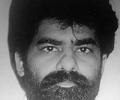
Fugitive Indian Mujahideen operative Afzal Usmani, who had escaped from a Mumbai court last month, was rearrested by Maharashtra Anti-Terrorism Squad from Uttar Pradesh on Sunday when he was trying to flee to Nepal.
Indian Mujahideen leaders Abdul Subhan, Riyaz Bhatkal, Iqbal Bhatkal, Qayamuddin and Shadab Malik are still out there, likely planning their next attack.
Indian Mujahideen terrorist Atif Ameen and an absconder were on Thursday charged by the police with planting bombs at posh Greater Kailash market in New Delhi on September 13 following a conspiracy hatched by Pakistan-based mastermind and IM founder Amir Raza Khan. In a charge sheet filed before chief metropolitan magistrate Kaveri Baweja, the police alleged that Ameen, who was killed in an encounter in south Delhi's Batla House area, had planted bombs.

After the arrest of Yasin Bhatkal, Mirza Shahnawaz Baig has been strengthening the Azamgarh module to plan Indian Mujahideen's next move. Vicky Nanjappa reports

The Indian Mujahideen, who allegedly carried out the attack, enjoyed the support of local political leaders, suspect investigators. Vicky Nanjappa reports
After a massive manhunt, the National Investigation Agency on Wednesday nabbed the elusive Students Islamic Movement of India operative Haider, who allegedly played a key role in the Patna blasts targeting Prime Minister elect Narendra Modi's rally last October.
Till now, we were greeting with glee Pakistan's incompetence in dealing with terrorism. We can no longer do so. We have become as clueless as Pakistan. I wanted to write much more, but my mind doesn't work. As I watch on the TV what is happening in Mumbai, I shiver and sweat at the thought of what is waiting to happen tomorrow and where, says B Raman
Riyaz Bhatkal, the founder of the Indian Mujahideen, allegedly told members of the terror outfit that Jihad should be practised not just through weapons but also through technology."Both Riyaz and his brother Iqbal, co-founder of the IM, said that Jihad is the right and duty of every Muslim and that in the 21st century, Jihad should be practised through technology," Mubin Shaikh, an arrested IM member, has confessed before a magistrate.

Highly-placed sources in the Assam police said that several jihadi elements from different areas of Assam were working for terror outfits after undergoing training.
The Ahmedabad crime branch on Tuesday secured the custody of seven alleged members of the terror group Indian Mujahideen, arrested by the Mumbai police, from a local court, police officials said.All the seven are accused in blasts cases across the country since 2005 including those at New Delhi, Ahmedabad and Bangalore, crime branch sources said.

Pakistan's spy agency Inter Services Intelligence had drawn up a plan to target Buddhist religious sites in India to avenge the alleged atrocities against the Rohingya Muslim community in Myanmar.
Peerbhoy is alleged to be one of the main member of the 'media wing' of the terror group and was responsible for sending threatening emails prior to the Ahmedabad serial blasts on July 26 and Delhi blasts on September 13 using wireless Internet connections in Navi Mumbai and Mumbai respectively.
The National Human Rights Commission on Wednesday gave a clean chit to the Delhi police in the Batla House encounter case, in which two suspected Indian Mujahideen terrorists and a police officer were killed last year. The NHRC, which had conducted an inquiry in the case on the direction of the Delhi High Court, said in its report that there has been no violation of human rights by the actions of the police, in which two alleged terrorists were gunned down on September 19.
Two of the arrested members of the terror group Indian Mujahideen from Pune have told their interrogators that they were planning to abduct a builder and jeweller to generate funds, a police official said. "The duo had decided to conduct the kidnappings to generate funds for their other terror activities," a senior crime branch official said.
Central agencies had been monitoring certain leads, which said a group of people hailing from Kerala along with Lashker-e-Tayiba's support were trying to enter Pakistan-occupied-Kashmir through North Kashmir.

Criminal jurisprudence is based on an interesting saying, "It is better that ten guilty persons escape than one innocent suffer." However, that does not seem to apply to the Maharashtra Anti Terrorist Squad. There are several instances to show that the agency has botched up its investigation, the latest being Pune Bakery blast main accused Himayat Baig.
Even as the Mumbai police look for Indian Mujahideen co-founder Roshan Khan, Intelligence Bureau sources say that he might have fled the country. Khan, according to police records, is a resident of Bhatkal in Karnataka, 150 kms away from Mangalore. He is also known as Riyaz Bhatkal.Preliminary investigations suggest that Khan controlled the operations of the IM in Karnataka and Maharashtra. He was in charge of supplying arms and ammunition and organising the outfit's finances
