
A spokesman for British Transport Police told Huffington Post India that Suroor travelled from Sloane Avenue, Kensington and Chelsea to meet the minor, after grooming the child online for sex on November 9.

Crucial reforms in Muslim personal law, especially laws related to inheritance and adoption, need to be initiated forthwith; historically speaking, without the State's backing, hardly has any reform taken place or allowed to prevail, asserts Mohammad Sajjad.
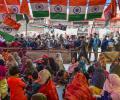
Having failed to wear down the protesters, the government has now resorted to a bare-knuckle campaign to discredit them by portraying them as pawns in a wider plot bankrolled by shadowy 'anti-national' and 'Islamist' forces, notes Hasan Suroor.

'And as we sit (or sleep) out the nightmare, there is feverish speculation about what the post-Corona world might look like,' mulls Hasan Suroor.

'The civil war in Islam has just got worse and the existential crisis facing it more threatening.'

'Where does one draw the line? At what point does your right to free speech cross the limit of civilised discourse and provoke me to take offence?' 'And if you have the right to offend, what about someone else's right to be offended?' asks Hasan Suroor.

India's volatile political mix has a new element - 'the Secularati' - that is adept at hijacking Muslim issues and running with them even before the community itself has formulated a response, says Hasan Suroor.

Making her film debut with The Householder, Ruth Prawer Jhabvala wrote more screenplays than novels, winning two Oscars -- for A Room with a View and Howards End. She kept her distance from the film crowd, seeking refuge in the 'protective' company of her two life-long collaborators, Director James Ivory and Producer Ismail Merchant.

'Why would the Communists do this? I have three possible answers: One, they are specifically opposed to the Global Education Meet that the ambassador organised. Two, they are beginning to realise their days are numbered in Kerala. Three, the standard modus operandi of leftists is anarchism because they are not constrained by any codes of ethics. Roughly, the bad, the good, and the ugly,' says Rajeev Srinivasan.
 © 2026 Rediff.com - Investor Information - Advertise with us - Disclaimer - Privacy Policy - Sitemap - Feedback - About us - Terms of use - Grievances