
The IMD also issued a red alert in the same 10 districts for August 3 also.
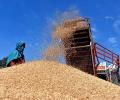
India is looking to tap its diplomatic missions abroad to enable grain exporters in the country to ship out wheat and corn as supplies from Russia and Ukraine are expected to remain disrupted for some time to come. Between the two items, pushing for wheat is easier because of a huge domestic surplus. "We are hand holding our exporters and support from various Indian missions abroad is also being channelised accordingly," a senior government official said. Global wheat prices have jumped since the Ukraine crisis started, with wheat futures in the US reaching their highest levels since 2008.

'Akhilesh did politics like Rabi and Kharif crop which come once a year. Politics is not seasonal, you have to harvest your field all through the year and only then you get a good crop' Political analyst lists 12 reasons why Akhilesh Yadav lost the UP elections.

A love triangle between reality and imagination? A courtroom turned into a reality television? Animation, satire or science-fiction? What would you like to watch on OTT this week?
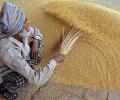
A head of its meeting, the Reserve Bank of India (RBI) can take some solace from the softening food commodity prices. However, the events surrounding the last few weeks show that the fall may not be uniform across all commodities, and cereals like wheat and rice could be the outliers. A Reuters report said that local wheat prices jumped to a record Rs 23,547 per tonne on Wednesday. That is a 12 per cent rise from the recent lows that followed the government's surprise ban on exports on May 14.

The week ended October 17 was remarkable as it saw a fall in the unemployment rate. We have not seen such a level in any monthly estimate of the employment rate since March 2020, Mahesh Vyas points out.

The popular bull- taming competition held on Pongal day in Madurai district left about 59 people, including tamers, bull owners and spectators injured.
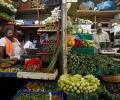
Supply rises as farmers harvest crops amid fear of spoilage on expectations of early showers
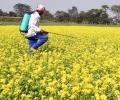
A memorandum with over two lakh signatures of people favouring a complete ban on the weedicide has been submitted to Union minister for agriculture and farmers welfare Narendra Singh, SJM co-convenor Ashwani Mahajan said.
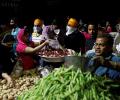
There have been several instances of traders dumping fruits and vegetables outside mandis. Or of farmers dumping produce outside their villages or feeding them to their animals.

Why the 2020 Padma Shri Awards are an honour truly worth celebrating.

Aseem Chhabra presents his list of 10 international films that mattered to him, stories that he connected with and characters that gave him a better understanding of the human condition.
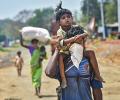

As India looks to mend its Covid-battered economy, one thing that will grab the attention of all concerned is the path that both wholesale and retail inflation will follow. Even the Reserve Bank of India in its latest policy statement said, "Going forward, the inflation trajectory is likely to be shaped by uncertainties impinging on the upside and the downside.

Trading for long around Rs 75 a kg in Himachal Pradesh, they have risen in a week to Rs 90 a kg. In Jammu & Kashmir, it has gone from Rs 45 a kg a week before to Rs 55 a kg
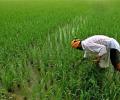
Gross value added in agriculture and allied activities clocked a healthy growth rate of 4.5 per cent at constant prices in the second quarter of FY22, up from 3 per cent during the same period last fiscal year and 3.5 per cent in Q2 of 2019-20. In the first quarter of FY22, gross value added in the sector was also 4.5 per cent. Growth in current prices was also a healthy 7.9 per cent in July-September 2021-22, up from 7.3 per cent in the same quarter last fiscal year. It was slightly less than the 8.7 per cent of the second quarter of 2019-20.
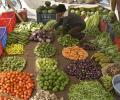
In most cases, however, retail consumers are paying higher prices in the absence of direct procurement from aggregator or farmers.

Malini was faced with allegations that she hardly visited Mathura, which is seen as rural constituency. Mathura will go to polls on April 18.
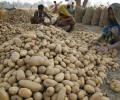
Farmers reported a massive crop damage in transit in addition to huge quantity of the potato left unharvested due to mud in the field.

How cities across the world have decked their streets with beautiful, eye-catching lights for the Yuletide season.

Keeping the employment rate from slipping is challenging. To merely keep the employment rate unchanged, the economy has to generate additional jobs. It needs to run to stay where it is, points out Mahesh Vyas.

On the occasion of Pongal, the harvest festival of Tamil Nadu, we bring you some traditional recipes you can treat your loved ones to.
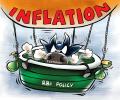
On food inflation, RBI said it is likely to soften from the high levels registered in December and the decline is expected to become more pronounced during the fourth quarter of this fiscal as onion prices ease following arrivals of late kharif and rabi harvests.

While most women will opt for storing their eggs for anywhere between six months to even ten years, frozen eggs can be securely stored for an indefinite period and still be viable.

Preparing turf for the World Cup, being held for the first time in the Middle East, is environmentally costly. Qatar has also countered the risk of fungus and disease outbreaks with a maintenance regime involving chemical cocktails, grass mowers that vacuum debris and an underground system that sucks excess moisture, said a UEFA pitch consultant.

Sitharaman also announced Rs 10,000 crore fund to support 2 lakh micro food enterprises for promoting health and wellness, herbal, organic and nutritional products.

A ramp-up in COVID-19 vaccination, healthy advance estimates of kharif (summer) crop and faster government spending were the factors which led to the revision, the agency said in a statement. It can be noted that after the 7.3 per cent contraction in 2020-21, there were expectations of a higher growth number in 2021-22.

'Nothing will stop India's top three-four corporates who have become aggressive players in the agri-markets after Modi came to power from acting in concert to drive down at will the prices at which they buy from farmers.' 'These corporate houses have the wherewithal to purchase all the farm produce at low prices and store them for a long period of time.' 'Once the harvest season is over they will sell the same produce at higher prices.'

The Congress won 77 seats or 42% of seats in the 2017 polls. How then can Gujarat be called a BJP bastion, asks Sanjeev Nayyar.
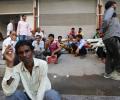
Unemployment was worse only in the pre-demonetisation period, according to the data, at 9.6 per cent in August 2016.

Hundreds of bullets rained down on a jam-packed outdoor concert at the Mandalay Bay Hotel and Casino along the Las Vegas Strip late Sunday, killing at least 20 people and wounding scores more as terrified spectators ran for their lives, according to police and hospital officials. Here are heartbreaking scenes from the shooting site.

The report admits that converting MSP to a floor price of auction on the eNAM portal will not completely solve the problem as the current data shows that average modal prices in e-NAM mandis is lower than the minimum support price in all commodities except urad.

I think they cannot be brushed under the carpet, saying you should not question them because then you are attacking freedom of speech. I think that's a cop-out. Obviously, it serves their interests, he said.

With days to go before the new tax regime around crypto assets kicks in, several investors are reportedly either booking profits, rejigging their portfolios or moving their crypto assets to their private wallets outside of India. Starting April, gains from trading in crypto and other virtual assets like non-fungible tokens (NFTs) will be taxed at a flat 30 per cent, as announced in the Union Budget. And, 1 per cent of tax will be deducted at source (TDS) on every transaction involving crypto and other virtual assets. The new tax regime also bars investors from offsetting losses from one crypto asset (such as Bitcoin) against gains from another (say, Ethereum).

The BSF also said multiple infiltration bids by Pakistan along the International Border have been foiled in recent past.

The new agri-infra fund, the duration of which will be 10 years till 2029, aims to provide medium-to-long term debt financing facility for investment in viable projects for post-harvest management infrastructure and community farming assets through interest subvention and financial support.
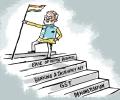
As the Ukraine conflict impacts the global GDP, India is projected to grow by 6.4 per cent in 2022, slower than the last year's 8.8 per cent but still the fastest-growing major economy, with higher inflationary pressures and uneven recovery of the labour market curbing private consumption and investment, according to a UN report. The UN Department of Economic and Social Affairs said in its World Economic Situation and Prospects (WESP) report released on Wednesday that the war in Ukraine has upended the fragile economic recovery from the pandemic, triggering a devastating humanitarian crisis in Europe, increasing food and commodity prices and globally exacerbating inflationary pressures. The global economy is now projected to grow by only 3.1 per cent in 2022, down from the 4.0 per cent growth forecast released in January 2022.

'My dad has been in this industry for almost 20 years.' 'Let's see if I can last that long.'
It has decided not to levy the 2 per cent tax deducted at source (TDS) on cash payments above Rs 1 crore made through Agricultural Produce Market Committees.
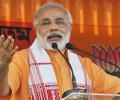
A Madhya Pradesh farmer has claimed that he lost his crop because of Prime Minister Narendra Modi's proposed rally in the state on February 18.
