
India has strongly criticised Pakistan at a UN Security Council meeting, asserting its right to defend itself against cross-border terrorism and warning of consequences for Pakistan's support of such activities.
India has strongly criticised Pakistan at a UN Security Council meeting, asserting its right to defend itself against cross-border terrorism and warning of consequences for Pakistan's support of such activities.
India has urged the United Nations to update its sanctions regime against Afghanistan, arguing that it must reflect the changed political reality and focus on incentivising positive actions rather than solely relying on punitive measures. India highlighted its ongoing humanitarian and development support for the Afghan people.

India has strongly condemned Pakistan's military airstrikes against Afghanistan, citing significant civilian casualties, and criticised its 'trade and transit terrorism' against Afghan traders, calling these actions blatant violations of international law and UN norms.

India has expressed firm opposition to attacks on merchant shipping amidst the ongoing Iran conflict, revealing that several Indian nationals have died or are missing due to these incidents. The nation also called for restraint, de-escalation, and prioritising civilian safety in the region.
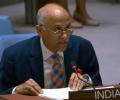
India has strongly criticised Pakistan at the UN Security Council, highlighting civilian deaths and injuries in Afghanistan caused by cross-border violence by Pakistani military forces, accusing Pakistan of 'heinous acts' and 'systematic genocide'.
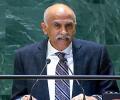
India has strongly condemned an attack on UN peacekeepers in Lebanon that resulted in the death of a Serbian Blue Helmet and injuries to two others. The nation has called for an immediate and thorough investigation to ensure accountability for the perpetrators. This incident follows a series of attacks on UNIFIL personnel amidst escalating hostilities in the region, prompting global calls for peacekeeper safety.

India has expressed strong concern over the targeting of commercial shipping in the Strait of Hormuz during the West Asia conflict, urging for the restoration of unimpeded navigation and global commerce.

India strongly responded to Pakistan's remarks on Jammu and Kashmir and the Indus Waters Treaty at the UN Security Council, accusing Pakistan of supporting terrorism and violating the spirit of the Indus Waters Treaty.

A vessel carrying 20,000 metric tonnes of Liquefied Petroleum Gas (LPG) arrived at Deendayal Port Authority in Kandla, Gujarat, after crossing the Strait of Hormuz amid the West Asia crisis.

India has strongly condemned Pakistan's airstrikes on Afghanistan, calling them a flagrant violation of international law and hypocritical given the civilian casualties during Ramzan.

India's Permanent Representative to the UN, Ambassador Parvathaneni Harish, delivered a sharp response to comments made by Pakistan's Ambassador to the UN, Asim Iftikhar Ahmad.
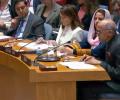
India told the UN Security Council that it calls for a pragmatic engagement with the Taliban, underlining that a focus on only punitive measures will ensure a 'business as usual' approach.
Asserting that democracy is an 'alien' concept for Pakistan, India has called upon Islamabad to end grave human rights violations in territories under its illegal occupation, where the population is in 'open revolt' against military occupation, repression, brutality and exploitation.
In a strong retort against Pakistan in the United Nations Security Council, India on Monday said its neighbour as a country that 'bombs its own people' and conducts 'systematic genocide'.
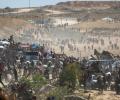
The recently signed Gaza Peace Agreement is a 'landmark' step towards stability in the Middle East, India has said, reiterating that a two-state solution remains 'the only pragmatic path' to achieving durable peace between Israel and Palestine.
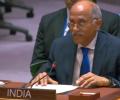
India has slammed Pakistan at the United Nations, accusing the country of illegally occupying the territory of Jammu and Kashmir and demanding its immediate vacation. India's Permanent Representative to the UN, Ambassador Parvathaneni Harish, made these remarks during a UN Security Council Open Debate on Advancing Adaptability in UN Peace Operations. He asserted that Jammu and Kashmir was, is, and will always be an integral part of India. Harish's statement came after Pakistan raised the issue of Jammu and Kashmir during the UNSC open debate, prompting a strong retort from India. He further stated that Pakistan's repeated references to the issue neither validate their illegal claims nor justify their state-sponsored cross-border terrorism. India, however, said it will refrain from exercising a more elaborate Right of Reply, suggesting a measured approach to the situation. Relations between India and Pakistan have been strained since India abrogated Article 370 of the Constitution in 2019, revoking Jammu and Kashmir's special status.
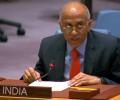
India's Permanent Representative to the UN Ambassador Parvathaneni Harish said that the Indian sub-continent offers a "stark contrast" in terms of progress, prosperity and development models.

India has voiced regret over the Ukraine conflict's 'collateral consequences', including prices of fuel, saying countries of the Global South have been left to fend for themselves, as Delhi underscored that diplomatic efforts hold the promise to end the war and bring lasting peace.
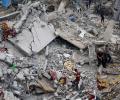
"Intermittent pauses in hostilities are not enough to address the scale of humanitarian challenges confronting the people, who grapple daily with acute shortages of food and fuel, inadequate medical services and lack of access to education," Harish said at the open debate on the 'Situation in the Middle East, including the Palestinian question'.
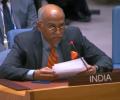
India's Permanent Representative to the UN, Ambassador Parvathaneni Harish, has sharply criticized Pakistan, calling it the "global epicenter of terrorism" and accusing it of providing state support to cross-border terrorism. Harish's remarks came in response to Pakistan's Deputy Prime Minister and Minister of Foreign Affairs Mohammed Ishaq Dar's comments on Jammu and Kashmir during a UN Security Council meeting. India highlighted that Pakistan harbors over 20 UN-listed terrorist entities and has a history of supporting groups like Jaish-e-Mohammed and Harkat Ul Mujahidin. India also emphasized that Jammu and Kashmir is an integral part of India and that Pakistan's misinformation campaign does not change the reality on the ground.
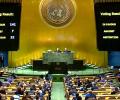
India abstained from a UN General Assembly vote on a resolution regarding Afghanistan, citing the need for a balanced approach that combines incentives and disincentives, and calling for new initiatives to address the humanitarian crisis.

India has accused Pakistan of violating the spirit of the Indus Waters Treaty by engaging in acts of terrorism and refusing to modify the treaty. India's Permanent Representative to the UN, Ambassador Parvathaneni Harish, addressed the UN Security Council, highlighting Pakistan's disinformation regarding the treaty and its continued support for cross-border terrorism. He stated that India has always acted responsibly as an upper riparian state and that Pakistan's actions have jeopardized civilian lives, religious harmony, and economic prosperity. India has suspended the treaty until Pakistan ends its support for terrorism.
The first issue in engaging with Pakistan is the cessation of terrorism, India's envoy at the United Nations said, underlining that India has been a long-standing victim of cross-border and global terrorism and has zero tolerance towards the scourge.
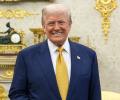
Trump, who has repeatedly said that he stopped the conflict between India and Pakistan through trade, last Friday said for the first time that "five jets were shot down" during the fighting.

India abstained in the United Nations General Assembly on a resolution that demanded Israel end its unlawful presence in the Occupied Palestinian Territory within 12 months, with Delhi underlining that it is a strong advocate of 'dialogue and diplomacy' and efforts should be made towards 'building bridges', 'not furthering divides'.
