
Chinese President Xi Jinping called for global collaboration in artificial intelligence development, emphasising a "symphony of global collaboration" over a "solo performance" by any single nation. Speaking at the World Artificial Intelligence Conference in Shanghai, Xi highlighted the need for ethical AI governance, shared prosperity, and addressing challenges like the widening digital divide. He also announced China's commitment to support developing countries with 5,000 AI research projects and training programmes. The event also saw 29 countries sign an agreement to establish the World Artificial Intelligence Cooperation Organisation (WAICO) in Shanghai.

Prime Minister Narendra Modi emphasised the democratisation of technology to ensure no section of society is left behind, advocating for affordable and accessible digital services, especially for the Global South. He highlighted the potential of Digital Public Infrastructure (DPI) and called for solutions to cyber fraud, global standards for emerging tech, and mechanisms to identify AI-generated content during his interaction with GSMA board members.

The Reserve Bank of India (RBI) has increased its GDP growth forecast for the current fiscal year (FY27) by 40 basis points to 7.1 per cent, acknowledging the resilience of domestic economic activity despite global headwinds and geopolitical tensions.

President Donald Trump has withdrawn the United States from over 60 international organisations, including United Nations bodies and the India-France-led International Solar Alliance, calling the institutions 'redundant' and 'contrary' to America's interests.

BRICS Sports Ministers adopted a Joint Declaration in Visakhapatnam, reaffirming their commitment to strengthen sports cooperation through dialogue and mutual respect. The meeting, held under India's 2026 Chairship, saw Union Minister Dr. Mansukh Mandaviya call for a BRICS Sporting Partnership and introduce three key initiatives: a Working Group on Sports Technology, a Sports Manufacturing Conclave in Udaipur, and Traditional and Indigenous Sports Demonstration Games in Ahmedabad in 2026.

From four nations to a powerful 11-member bloc, here's how BRICS reshaped the global order in 27 years.
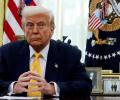
US President Donald Trump is set to engage in a series of high-profile meetings during the 81st United Nations General Assembly High-Level Week in New York, including discussions with NYC Mayor Zohran Mamdani, French President Emmanuel Macron, and Ukrainian President Volodymyr Zelenskyy.

Sports Minister Mansukh Mandaviya inaugurated the BRICS Traditional and Indigenous Sports Demonstration Games, emphasising India's commitment to placing sport at the core of nation-building through significant investment in infrastructure and grassroots development. He highlighted India's indigenous sports like Mallakhamb, Yogasana, and Kalaripayattu, and discussed the country's ambition to host major international events, including the 2036 Olympic Games.

Pakistan and the European Union have agreed to enhance their cooperation in combating terrorism across all forms. This commitment was solidified during the 10th Pakistan-EU Bilateral Counterterrorism Dialogue in Islamabad, where both sides condemned terrorism and discussed evolving threats, including those in cyberspace. They also expressed concern over the security situation in Afghanistan and pledged to work together in multilateral forums.

Chinese President Xi Jinping is in New Delhi for the 18th BRICS Summit, where he is scheduled to hold bilateral talks with Prime Minister Narendra Modi. This visit, his first to India in nearly seven years, comes amidst efforts to normalise India-China relations following the 2020 Eastern Ladakh standoff and is expected to have significant implications for bilateral ties and BRICS cooperation.

The Ministry of External Affairs (MEA) has issued a warning against 'malicious' and 'misleading' social media posts concerning the health of world leaders, specifically Chinese President Xi Jinping and South African President Cyril Ramaphosa, who attended the recent BRICS Summit in New Delhi. The warning comes amidst unverified claims about Xi's health and an official statement from Ramaphosa's office confirming his withdrawal from public engagements due to ill health.

US Secretary of State Marco Rubio visited Reliance Industries' Jamnagar refinery, a day after calling India a crude oil refining 'superpower', and met with top Indian business leaders Gautam Adani and N Chandrasekaran to advance bilateral ties in energy, trade, investment, and defence.

BJP MP Raghav Chadha addressed the 12th IPU Global Conference of Young Parliamentarians in Samarkand, Uzbekistan, highlighting India's digital transformation journey. He emphasised how technology is widening access and promoting inclusion, citing UPI's success, affordable data, and robust data protection laws. Chadha also discussed India's digital cooperation with Uzbekistan and the importance of digital rights, safety, and skill development for all citizens.

This article details the quarter-century journey of BRICS, from its inception as an economic acronym by a Goldman Sachs economist to its current status as an expanded eleven-member international bloc. It highlights its growth, key historical moments, and the significance of its upcoming summit, particularly with Iran's renewed importance in discussions.

Defence Minister Rajnath Singh on Tuesday called for dialogue and diplomacy to resolve global conflicts, stating, "war can never be the answer to war," while addressing the Shanghai Cooperation Organisation (SCO) Council of Heads of Government meeting in Dushanbe, Tajikistan.

United States Treasury Secretary Scott Bessent has warned that Iranian airlines could be effectively shut out of international travel from Wednesday, September 23, as Washington threatens secondary sanctions against foreign companies that continue providing services to Iran's carriers.

Russian Foreign Minister Sergey Lavrov has publicly supported India's bid for a permanent seat on the United Nations Security Council. He stated that any reform of the UNSC should not grant additional seats to Western countries like Germany and Japan, citing their "militarism and revanchism." Instead, Russia advocates for increased representation from Asia, Africa, and Latin America, specifically backing India and Brazil, while also emphasizing the need to address African interests.

External Affairs Minister S Jaishankar will host US Secretary of State Marco Rubio in Mumbai on October 20 for talks aimed at strengthening the Comprehensive Global Strategic Partnership. Discussions will cover energy, trade, defence, and critical technologies. The visit also includes celebrations for the 250th anniversary of US Independence. This meeting follows earlier confusion regarding Rubio's visit and will also touch upon the India-US bilateral trade agreement, which both sides are close to concluding. The MEA clarified that hosting foreign dignitaries outside Delhi is a common practice.

US Secretary of State Marco Rubio kick-started a three-day visit to India on Tuesday to advance bilateral ties in energy, trade and investment, defence, critical technologies, and exchange views on the West Asia crisis.

Prime Minister Narendra Modi cautioned against the 'weaponisation' of technology and critical minerals at the BRICS summit, advocating for cooperation to foster shared prosperity. Concurrently, Chinese President Xi Jinping announced plans for an open-source AI ecosystem for BRICS nations, positioning Beijing as a key technology partner amid global AI competition.
IIT Hyderabad and Japan's Mie University have signed MoUs to foster academic exchanges and joint research, with a strong focus on semiconductors and digital technologies. This collaboration aims to develop skilled talent and strengthen the semiconductor ecosystem in both countries.

Chinese President Xi Jinping's upcoming visit to India for the BRICS summit is a pivotal diplomatic event poised to significantly impact bilateral ties and global cooperation amidst ongoing international instability.
BRICS leaders, in their New Delhi Declaration 2026, have called for wider access to Artificial Intelligence resources and stronger international cooperation to ensure the technology is safe, secure, inclusive, and reliable. The declaration outlines a broad technology agenda covering AI, cybersecurity, digital public infrastructure, telecom, quantum technologies, and advanced manufacturing, committing to implement the grouping's statement on 'Global Governance of Artificial Intelligence'.

The subtext here is that nobody else really matters to America today; only China, because nobody else can truly hurt them, points out Mihir S Sharma.

US President Donald Trump has defended a controversial diesel deal with Russia, stating it aims to stabilise the global market despite bipartisan criticism from US lawmakers. The deal, which eases sanctions on Russian diesel shipments until April 2027, has been criticised as a "gift to our adversary" that finances Russia's war efforts and offers little relief to Americans.

Prime Minister Narendra Modi and US President Donald Trump held a telephone conversation to review progress in bilateral ties, covering trade, defence, and energy, against the backdrop of heightened trade friction due to the 'Lindsey O. Graham Sanctioning Russia and Iran Act of 2026'.

The US announced a 60-day pause on sanctions against Russia and tariffs on other countries, including India, to analyse the global economic impact. This decision, made via an executive order by Trump, has drawn significant criticism from both Republicans and Democrats, who had previously passed the Lindsey O. Graham Sanctioning Russia and Iran Act. US officials stated the waiver allows for assessment of global energy pressures and European allies' refusal to impose secondary sanctions on Russian oil buyers.

US Secretary of State Marco Rubio's visit to India this week underscores the complex dynamics of global energy policy, as Washington re-evaluates sanctions on Russian oil buyers amidst India's continued reliance on Russian crude.

US Secretary of State Marco Rubio is on a three-day visit to India to discuss bilateral ties in energy, trade, investment, defence, and critical technologies, as well as the West Asia crisis. His visit aims to strengthen the India-US Comprehensive Global Strategic Partnership amidst existing friction, with a focus on finalising a proposed bilateral trade deal.

India has exhausted 58.04 per cent of its FY27 fertiliser subsidy budget in under five months, primarily due to a significant surge in global urea prices following the conflict in West Asia, necessitating potential additional government expenditure.

Pakistan has welcomed an Indian delegation's visit to Islamabad for a Shanghai Cooperation Organisation (SCO) meeting, marking the first such visit after a significant gap. The visit is seen as a positive step towards regional peace and cooperation, with Pakistan also commenting on other international and domestic issues.
South African President Cyril Ramaphosa on Friday described BRICS as an important global forum, highlighting the grouping's growing demographic and economic weight and noting that its members account for around half of the world's population and 40 percent of global GDP.
Union Minister Mansukh Mandaviya inaugurated the BRICS Traditional and Indigenous Sports Demonstration Games 2026 in Ahmedabad, emphasising the role of traditional sports in reflecting cultural identity and fostering international cooperation. The one-day event, hosted by the Ministry of Youth Affairs and Sports, brought together delegations from BRICS and partner countries to showcase indigenous sporting practices like Mallakhamb, Yogasana, and Kalaripayattu from India, alongside Wushu from China and Sambo from Russia. Gujarat Deputy Chief Minister Harsh Sanghavi also highlighted India's rich sporting heritage and proposed initiatives for global promotion and preservation of traditional sports.

Chinese Foreign Minister Wang Yi stated that President Xi Jinping and Prime Minister Narendra Modi reached a crucial consensus during the BRICS summit, agreeing that China and India should be partners, not rivals. The leaders pledged to maintain peace and tranquility in border areas, deepen cooperation, and support each other in multilateral forums, aiming to strengthen the Global South and promote a multipolar world order.

'India is trying to project that it can engage with the world in a different way too.'
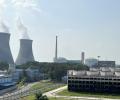
Atomic Energy Commission Chairman Ajit Kumar Mohanty announced that India's private sector is projected to invest Rs 7.5 lakh crore and contribute 30 GW towards the nation's goal of achieving 100 GW nuclear power capacity by 2047. This marks a significant policy shift, facilitated by the SHANTI Act, encouraging private participation in nuclear energy beyond the traditional public sector model. The country is also exploring Small Modular Reactors (SMRs) for industrial needs and advancing its three-stage nuclear power programme, leveraging its substantial thorium reserves.

Russian President Vladimir Putin has proposed a new investment platform, based on the New Development Bank (NDB), to fund projects in trade, infrastructure, logistics, and technology across BRICS nations, emphasising that the grouping's expanding economic cooperation is not 'against anyone' but aims to advance members' national interests.
New Zealand Prime Minister Christopher Luxon stated that the historic Free Trade Agreement with India, now in effect, will help grow both economies, allowing Kiwi businesses to reach over a billion more customers with significantly reduced tariffs, leading to 'more jobs and higher wages for Kiwis'.

Chinese President Xi Jinping addressed the BRICS summit, urging the bloc to play a significant role in achieving peace and tranquillity in West Asia and the Gulf region. He highlighted BRICS' growth over two decades, its efforts in tackling global challenges, and its steadfastness in safeguarding the interests of the Global South. Xi called for opposing the Cold War mentality, strengthening multilateralism, and promoting cooperation in emerging domains like AI, as China prepares to chair the next summit.

India is hosting the BRICS summit, leveraging the platform to address global trade tensions and champion the developmental priorities of the Global South, including food, energy, and supply chain security. The summit, attended by leaders like President Xi Jinping and Vladimir Putin, will focus on resilience, innovation, cooperation, and sustainability, with India aiming to strengthen intra-BRICS collaboration and discuss global matters. The expanded BRICS grouping represents a significant portion of the world's population and GDP, making its discussions crucial for global economic stability.
