
China's closer and enhanced relationship with Pakistan is putting considerable strain in India-China relations, says former RA&W officer Jayadeva Ranade.

'The China Pakistan Economic Corridor is Pakistan's number one preoccupation today -- and tensions with India and the $46 billion projects simply do not go together,' points out Ambassador M K Bhadrakumar.

Even as Prime Minister Nawaz Sharif headed to the United States for the 70th session of the UNGA and for bilateral meetings to be held on the sidelines of the multilateral summit, back home all that is expected of him is to internationalise the Kashmir issue, or as Pakistan puts it, the 'Kashmir dispute'.

'Washington is telegraphing here is its willingness to support a low-grade, limited use of force meant to send a strong message to Pakistan.' 'Perhaps something along the lines of the surgical strikes in 2016, or perhaps something a bit more -- but not much more.'

Pak seeks US help to ease tensions with India.

Nawaz Sharif's appointment of a new army chief will influence India-Pakistan relations

During a war, there are just four possibilities a soldier faces. One: Victorious and safe. Two: Wounded. Three: Killed in action. Four: Prisoner of War. It was my fate to face the fourth, says Colonel Anil A Athale (retd) on the year spent as a prisoner of war in Pakistan during the 1971 War.

The question really is whether the US can be persuaded to embark on a path of calibrated and stronger sanctions on Pakistan.

'Jaish aided by LeT attacked Parliament knowing mobilisation of Indian military assets would be the consequence.' 'That mobilisation happened, necessitating a military response from Musharraf who moved troops guarding back doors out of Tora Bora, facilitating Osama's escape.'
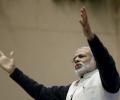
'Modi's brilliance seems to be in combining Indira Gandhi's 'feel' for the Indian pulse and Narasimha Rao's cynicism.' 'By the time the Opposition leaders caught up with Modi over the 'surgical strikes', he had already moved on,' says M K Bhadrakumar.

'By beheading an Indian soldier, the Pakistan army has demonstrated its proclivity for barbaric medievalism.' 'The strategies adopted and the punishment inflicted by India must be made progressively more stringent with every new act of terrorism till the cost becomes prohibitive for Pakistan,' says Brigadier Gurmeet Kanwal (retd).

Indian policymakers must incorporate in their nuclear doctrine a realistic response to tactical nuclear warheads, says Ajai Shukla.

'Pakistan needs to be constantly at war with somebody, ultimately resulting in it waging war on itself and its own people,' says Shekhar Gupta.

'Clearly, the Modi government is proving to be far more willing than any previous government in Delhi to hitch India's wagons with the US' regional strategies.'
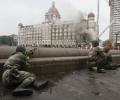
Through its early days to the 1980s, Pakistan sought to expand its sphere of Islamic influence through Afghanistan to Central Asia and got Pakistani citizens recruited in the Afghan government institutions in the 1990s when the Taliban were power. Now, it is looking eastward through India to Bangladesh and Myanmar to establish an imaginary caliphate.

'Pakistan's military leaders have to accept that the policy of proxy wars has damaged Pakistan more than it has damaged the enemy,' says former R&AW chief Vikram Sood.

'Pakistan may feel emboldened to give an upswing to the proxy war in J&K, having secured a better international consensus on its strategic importance.' 'The raising of Pakistani flags by separatists in J&K is an attempt to win psychological space and more of this can be expected as we go into the summer.' 'Pakistan should remain warned that pushing India on this issue will be dangerous.'

By weakening Sharif, the corps commanders could have a final say in important matters like relations with India, dealing with Taliban militants, interacting with Americans and once again achieving strategic depth in post-NATO Afghanistan. Which is why they may be behind the unrest in Pakistan led by Imran Khan and Dr Tahirul Qadri, says Shahzad Raza.
 © 2026 Rediff.com - Investor Information - Advertise with us - Disclaimer - Privacy Policy - Sitemap - Feedback - About us - Terms of use - Grievances