The 21st AGM of the company is scheduled to be held in Mumbai on Friday.

V-Mart, Manaksia, Whirlpool Global and few other companies posted better third-quarter results.

Commercial banks have not yet reduced their lending rates.

Mukesh Ambani-owned RIL's JioMart is set to launch a slew of new products including financial services, electronics to airline tickets to take on the competition from upcoming rivals like the Tata Super app and other established players including PayTM, Amazon and Flipkart. This comes at a time when RIL's e-commerce revenues are set to grow by 35 per cent to $15 billion within four years and its core retail revenue is expected to grow at the same pace to $44 billion, as per a forecast by Goldman Sachs. "The Tata vs JioMart war will be the next big corporate battle to watch. "While Tata has an upper hand like in-house products and brands, RIL has the backing of global biggies like Google, Facebook and Microsoft," said head of a rating firm asking not to be quoted.
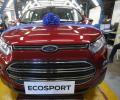
Sanand plant exported 78,930 cars. The one at Chennai exported 79,539 units of EcoSport model

Respiratory product paves way for launch in larger markets and greater earnings visibility.

Maruti is expected to post double-digit growth on product launches and good demand for entry-level cars.
Analysts factor in 200-300-bps impact on sales in FY16

Repeat business from existing clients is not coming easily and companies are still in the process of building digital capabilities

India Ratings on Mondy projected a 7.7 per cent growth this fiscal driven by consumption demand.
Growth acceleration will be gradual and it is still early days for a sharp recovery, says Gautam Chhaochharia, executive director and head of India research, UBS.

JLR volumes could hit million units by 2019, stock trading at discount to other premium automakers

Companies from the capital goods space will under-perform.

The combined pay for India Inc's top management was up 30 per cent in FY16, growing at the fastest pace in nine years

The 13 firms under consideration had nearly a million employees as of March 2018, including contractual and temporary workforce.

The list of companies skipping dividends in FY19 includes some of the country's largest firms and industry leaders such Tata Motors, Avenue Supermart, Future Retail and Vodafone Idea, among others.
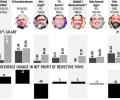
In 2015-16, Sikka as CEO took home Rs 48.73 crore as salary (including, bonus and incentives), which is the highest among peers.

The report further said that confidence is improving, while risk aversion is falling and has upgraded industrial production to neutral from negative.
The broader markets outperformed the benchmark indices- BSE Midcap and Smallcap indices gained 0.4% each

The industry expects Iran to purchase at least 1 million tonnes this financial year
Core sector companies have seen volumes drop to single digit in the first nine months of FY16.

Together, they controlled nearly Rs 26 lakh crore of assets at the end of FY16.
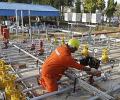
It is rare for Cabinet ministers to tick off state-owned companies publicly, yet that was what then petroleum and natural gas minister Dharmendra Pradhan did for ONGC. Speaking at an event on June 29, Pradhan said he has asked India's premier exploration company to find fresh oil acreages fast. "Do it yourself through some joint venture (or) through a new business model. But the government cannot permit you to hold resources for an indefinite time." The reason for this stricture is India's rising dependence on imported oil and gas. Or, to put it another way, falling domestic production (see chart: "Crude truth"), especially from ONGC, which faces a simple problem.

The incremental stress is mainly from sectors including power, infrastructure, constructions, hospitality, iron and steel, telecom, and realty.

Asset sale plans lag target in both current and next financial years; the airline had a three-year plan to monetise assets worth Rs 5,000 crore (Rs 50 billion) by March 2016.

Above normal monsoon forecast and strength in Asian equities lifted sentiments.

An industry executive said The Oberoi had a lot of C-Suite guests and most such companies decide to give a new or renovated property some time to stablise before they start booking.

HSBC analysts believe the UV which might sell about 3,000 units a month might fail to be an aspirational product in urban India.

Most positives seem to be factored into current valuations.

Airlines will report losses in FY16 but 35% less Y-o-Y

The S&P BSE Sensex ended up 28 points at 25,844 and the Nifty50 ended flat at 7,915.
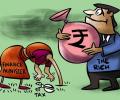
While the tax-to-GDP ratio of 9.88 per cent has been assumed for FY21, the same as last year, when it touched a decadal low, for FY22 a ratio of 10.7 per cent has been assumed, an average of the last five years.

Aditya Birla Retail set up seven years earlier, posted a 20% growth in sales over a year earlier for 2013-14.

Fiscal situation better but spending cuts likely in FY16 too.

Advertisement revenues will go up in 2016-17 with automobiles and e-commerce being big contributors.

While the Budget might have been a sentiment booster for the sector, firms with market dominance emerge as favourites.

One of the reasons is the increasing number of upgrades in analysts' recommendations.

The turnaround of SAIL from several quarters of losses was one of the most challenging experience, said Anil Kumar Chaudhary, the outgoing chairman of the country's largest steel maker. The chairman said he also wants to see SAIL paying back at least 50 per cent of its debt in the near future. Chaudhary who had joined SAIL as a junior manager in 1984 would be superannuating from the top post on December 31, 2020 after serving the company for almost 36 years in various roles.

Private sector investment is likely to improve mildly in H2 of FY17, even though signs from investment data are not encouraging.

This equity capital infusion is the country's largest-ever FDI.
