
The Indian economy will grow at around 6.5 per cent in the current fiscal, notwithstanding high crude oil prices and increased uncertainty due climate changes, NITI Aayog member Arvind Virmani said on Thursday. Virmani also asserted that the gross household savings ratio in India has consistently gone up. In an interview with PTI, he said: "My growth projection (of India's GDP growth) is 6.5 per cent plus minus 0.5 per cent... because my experience is that the fluctuations in global GDP more or less has balanced out for us, assuming normal changes."
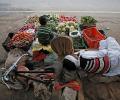
The spike in food prices at the onset of the monsoon season has corroborated the Reserve Bank of India's (RBI's) view that the fight against inflation is far from over, the State of the Economy report of the central bank said. At the same time, the report said that the country is poised to become the fastest-growing major economy in the world, notwithstanding some sequential moderation in economic activity in June. Consumer Price Index (CPI)-based inflation rate increased to 4.8 per cent in June 2023, from 4.3 per cent in May, primarily on account of an increase in food inflation.

While the economy seems to be on a firm growth path, the fight against inflation is not over yet. Shaktikanta Das seems to be in no hurry. After playing well through a five-year Test match, he doesn't want to get out hit wicket, observes Tamal Bandyopadhyay.

Citing the sharp rise in food prices, economists at a foreign bank have forecast a steeply higher retail inflation print for July, pegging it at 6.7 per cent, up 190 basis points from the previous month. Deutsche Bank India economists led by chief economist Kaushik Das, in a report on Monday ahead of the monthly inflation print and the Reserve Bank's monetary policy review, said that the July consumer price-based inflation index (CPI) is likely to print at 6.7 per cent on-year as against 4.8 per cent in June. The Reserve Bank is widely believed to leave the key interest rates unchanged for the fourth time in its upcoming bi-monthly monetary policy decision on August 10.
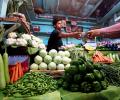
Retail inflation rose to three-month high of 4.81 per cent in June, mainly on account of hardening prices of food, according to the government data. Inflation based on the Consumer Price Index (CPI) stood at 4.31 per per (revised upward from 4.25 per cent) in May and 7 per cent in June 2022. The inflation, however, remains within the RBI's comfort level of below 6 per cent.
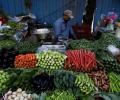
Retail inflation breached the RBI's comfort zone and rose to a three-month high of 6.52 per cent in January, mainly on account of a spike in food prices, as per government data released on Monday. The inflation rate based on the Consumer Price Index (CPI) stood at 5.72 per cent December and 6.01 per cent in January 2022.

India has built up buffers against cyclical difficulties and has ample foreign exchange reserves to withstand pressure on credit worthiness, S&P Global Ratings said on Thursday. Speaking at the India Credit Spotlight 2022 webinar, S&P Sovereign & International Public Finance Ratings director Andrew Wood said the country has a strong external balance sheet and limited external debt, making debt servicing not so expensive. "The country has built up buffers against cyclical difficulties like those, which we are experiencing right now," Wood said.

Bond markets, global as well as domestic, are likely headed towards hard times over the next three to six months, as higher vegetable prices, rising fuel costs, and improved wages may keep inflation hot, believe analysts, who expect the yields to hit 7.5 per cent in the near-term from the current 7.234 per cent. In this backdrop, they suggest investors can put in money in funds/instruments with residual maturity of 4 to 6 years, while longer-term investors can allocate cautiously to the longer end in the range beyond 7 years.
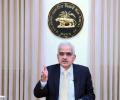
The challenge for the RBI in 2024 is likely to be less about containing elevated inflation and more about curbing excessive financial market exuberance and a 'problem of plenty', notes Sajjid Chinoy, Chief India Economist JP Morgan.
Unprecedented rains and floods in the northern region in the past few days have not only caused extensive damage to lives and property but have also impacted business and commercial establishments. Vegetable prices have gone through the roof in the national capital and many other parts of the country since rains started pouring earlier this month. Traders say vegetable prices would come down only after roads open and skies clear, even as water in the fields will take time to recede.

The wholesale price-based inflation declined to over two-year low of 3.85 per cent in January on easing prices of manufactured items, fuel and power, even though food articles remained expensive. This is the ninth straight month of decline in the rate of wholesale price-index (WPI) based inflation. The WPI inflation was 4.73 per cent in January and 13.43 per cent in February, last year.
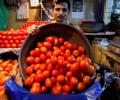
How is it that tomatoes recorded a price fall in official statistics when it remained unaffordable for the common person in June?

In the coming few weeks, agriculture markets in North and Central India will be full of wheat, mustard, and chana - the three main rabi crops grown in these parts. Not only will the price trajectory of these determine the course of food inflation in the months to come, but it could also have a wider impact on the rural economy in the main growing states for these crops. Wheat and chana are largely grown in Madhya Pradesh (MP).

The economy is likely to log in a tepid 6 per cent growth next fiscal, in line with the consensus estimates, rating agency Crisil said on Thursday. The agency also sees the economy averaging a growth rate of 6.8 per cent over the next five fiscals. Crisil further said it expects the corporate revenue to log in double-digit rise again next fiscal.

As per the new system, the weekly wholesale price index data would cover only primary articles and commodities in the broad group -- fuel, power, light and lubricants, an official statement said.

Less-than-expected rainfall and a poor spatial distribution, experts say, can rekindle fears of a rise in food and fuel inflation that can have an impact on the RBI's monetary policy. The fear of less than optimal rainfall due to El Nino this year, analysts believe, is the biggest short-term risk for the markets, which they said has not been fully priced in yet by them. Monsoon set over Kerala on June 08, a week later than its scheduled date.

Passenger vehicle wholesales rose 23 per cent year-on-year in the December 2022 quarter, aided by robust demand in the festive period, the automobile industry body Society of Indian Automobile Manufacturers said on Friday.

Prime Minister Narendra Modi's election triumph in May had raised hopes of quick action to tackle India's recurring food price shocks.
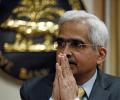
Reserve Bank Governor Shaktikanta Das on Wednesday ruled out upside risks to the 5.3 per cent inflation forecast for the current fiscal, saying the recent cut in excise duty on diesel and petrol as well as better management of supply-side issues on the food front have contained inflationary expectations. These measures are significantly positive for inflation management, he said. After months of calls for reducing taxes on fuels, the government, last week, cut the excise duty on diesel and petrol by Rs 10 and Rs 5 per litre, respectively.

The Gujarat Cooperative Milk Marketing Federation (GCMMF), which markets its dairy products under the Amul brand, on Tuesday increased the prices of its Gold, Taaza and Shakti milk brands by Rs 2 per litre. The new prices will be effective from Wednesday, the GCMMF said in a statement. This price hike is being done due to an increase in the overall cost of operation and production of milk, it said.

Demand for fast-moving consumer goods (FMCGs) went up last month across India, as kirana stores stocked up their shelves in anticipation of a sizzling summer, according to data by retail intelligence firm Bizom. There was a spike in beverages sales across the country despite inflation inching up in February after moderating downward previously, Bizom noted.
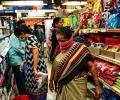
Some analysts see more upside in FMCG stocks given the performance gap between the sector and the market.

India needs a second green revolution along with the next generation of reforms with a view to make agriculture more climate-resistant and environmentally sustainable, said an RBI article on farm sector challenges. Observing that Indian agriculture has exhibited remarkable resilience during the COVID-19 period, the article said "new emerging challenges warrant a second green revolution along with next-generation reforms". Despite the success in terms of production that has ensured food security in the country, food inflation and its volatility remain a challenge, which requires supply-side interventions such as higher public investment, storage infrastructure and promotion of food processing, said the article titled 'Indian Agriculture: Achievements and Challenges'.

'The performance of any government is benchmarked on five parameters -- India's external security, the state of the economy, social cohesion, internal security, and India's relations with the world or its foreign policy. On each of the benchmarks in the past nine years, the NDA-BJP government has come up completely short'
Food inflation continues to run amok, and very clearly, the government does not seem to have any clue on how to rein it in.
Inflation rose to 4.86 per cent in June, driven mainly by rising prices of food articles, especially vegetables including onion.

It is for the second consecutive month that the retail inflation has been above the RBI's comfort level.
Retail inflation rose marginally to 4.91 per cent in November, mainly due to an uptick in food prices, government data showed on Monday. The Consumer Price Index (CPI) based retail inflation was 4.48 per cent in October 2021 and 6.93 per cent in November 2020. As per the data released by the National Statistical Office (NSO), food inflation was at 1.87 per cent in November this year compared to 0.85 per cent in the preceding month.
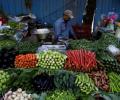
The wholesale price-based inflation eased to a 29-month low of 1.34 per cent in March on easing prices of manufactured products and fuel items, even though food articles turned expensive.

'To summarise, PM Modi's failures in the last nine years can be categorised under 'durniti' (bad policies), 'anyay' (injustice) and - perhaps most importantly - 'badniyat' (ill intention)'
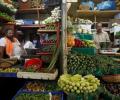
The states that witnessed high CPI-based inflation rates were Lakshadweep, Tripura, Odisha, Uttar Pradesh, Kerala, Madhya Pradesh, Puducherry, Tamil Nadu, Rajasthan, Manipur and Mizoram.

'Banks will continue to increase FD rates to attract more deposits and meet the increasing demand for credit.'
Retail inflation fell to a 15-month low of 5.66 per cent in March, mainly due to a decline in food prices, government data showed on Wednesday. The inflation figure in March is within the RBI's comfort zone as it is below 6 per cent. The retail inflation based on Consumer Price Index (CPI) was 6.44 per cent in February 2023 and 6.95 per cent in the year-ago period.
The rise in food inflation has been mainly on account of 58.58 per cent rise in prices of vegetables in the wholesale market.

For all its claims to economic glory, the majority of India's population lives vulnerable lives, a situation that has only worsened over the past 15 years, to the extent that the government now fears to release economic data or even conduct a proper Census, notes Rathin Roy.
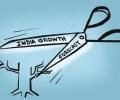
India's projected economic growth for 2022 has been downgraded by over two per cent to 4.6% by the United Nations, a decrease attributed to the ongoing war in Ukraine, with New Delhi expected to face restraints on energy access and prices, reflexes from trade sanctions, food inflation, tightening policies and financial instability, according to a UN report released on Thursday. The UN Conference on Trade and Development (UNCTAD) report downgraded its global economic growth projection for 2022 to 2.6 per cent from 3.6 per cent due to shocks from the Ukraine war and changes in macroeconomic policies that put developing countries particularly at risk. The report said while Russia will experience a deep recession this year, significant slowdowns in growth are expected in parts of Western Europe and Central, South and South-East Asia.

'When you need to revive the economy, when you need to revive aggregate demand, you cut taxes.' 'But what's this government doing?' 'It's increasing taxes for the middle class and the vast majority of the poor on fuel, which has a ratchet effect on most other products.'
Reserve Bank of India (RBI) on Wednesday upped inflation projection for the current fiscal to 6.7 per cent from 5.7 per cent forecast in April. RBI Governor Shaktikanta Das said the upside risk to inflation persists and the recent spike in tomato prices would fuel food inflation. Also, high global crude oil prices would add to the upside pressure on inflation. The upward revision in inflation projection comes as domestic retail inflation has remained above RBI's comfort level of 6 per cent for four months in a row, mainly due to the Russia-Ukraine war which has impacted the prices of commodities across the globe.
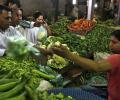
'If you see the composition of items which are causing this spike in prices, most of them have little to do with the kharif harvest, except for pulses and vegetables to some extent.' 'I don't know on what basis the government is claiming that food prices will moderate in the weeks to come.'

The Reserve Bank on Wednesday hiked key benchmark policy rate by 25 basis points to 6.5 per cent, citing sticky core inflation. This is the sixth time interest rate has been hiked by the Reserve Bank of India (RBI) since May last year, taking the total quantum of hike to 250 basis points. Announcing the bi-monthly monetary policy, RBI Governor Shaktikanta Das said the Monetary Policy Committee (MPC) by a majority decided to raise the policy repo rate by 25 basis points and keep a 'strong vigil' on inflation outlook.
 © 2026 Rediff.com - Advertise with us - Disclaimer - Privacy Policy - Sitemap - Feedback - About us - Terms of use - Grievances