
The Reserve Bank of India (RBI) has reiterated its demand for Tata Sons, the holding company of the Tata conglomerate, to be listed as per existing regulations for Non-Banking Financial Companies in the Upper Layer (NBFC-UL). This comes amidst internal divisions within the Tata group regarding the listing, with some stakeholders supporting it for liquidity and others opposing it.

Manchester City has reportedly been found guilty of 114 out of 115 alleged breaches of Premier League financial rules, a development that could have significant repercussions for English football. The club denies wrongdoing and plans to appeal, stating the process is ongoing and confidential. This ruling follows a lengthy investigation and raises questions about financial regulation and competitive integrity in the league.

'Most of the time, women tend to take a lot of time to even understand that this is abuse. They feel that this is just a habit and that it can be changed or is some kind of issue with their partner which can be worked on.'

NetApp CEO George Kurian advocates for harmonised global AI regulations to simplify compliance and foster business growth. He highlights the complexities arising from diverse regulatory frameworks and the importance of a unified approach, similar to cyber resilience standards. Kurian also notes India's significant role as NetApp's fastest-growing market in Asia, driven by its Bengaluru global capability centre.

SBI Chairman CS Setty has cautioned against the potential for Artificial Intelligence (AI) systems to exclude rural, small, and new-to-credit borrowers due to inherent biases. Speaking at an event, Setty emphasised that financial inclusion must be a core principle in the design and deployment of AI tools, highlighting the responsibility of bank boards to ensure fair and inclusive systems. He also noted the importance of AI training for bank directors.
Airtel Business CEO Sharat Sinha stated that evolving architecture and methodologies for safely deploying Artificial Intelligence, coupled with adequate guardrails, are essential to unlock productivity gains. He welcomed the government's upcoming consultation paper on AI regulation, focusing on safety, deepfakes, and a human-first approach. Sinha also highlighted AI's role in driving demand for digital infrastructure and Airtel's growth in cybersecurity and fraud prevention.

Manchester City's 3-0 win at Liverpool was overshadowed by crowd trouble, with 10 arrests and a police officer suffering a serious facial injury.

India's markets regulator, Sebi, is set to issue comprehensive guidelines for the responsible use of Artificial Intelligence (AI) in capital markets, aiming to balance technological innovation with robust investor protection. The guidelines will focus on disclosures, accountability, and human oversight in critical AI-driven decisions.
An independent commission has found Manchester City guilty of serious financial rule breaches over nine seasons, involving "sham" commercial contracts to inflate revenue and understate costs by over 900 million. The club denies wrongdoing and plans to appeal the decision, which could have significant consequences for its past and future achievements in English football.

RBI Governor Sanjay Malhotra stated that the central bank consistently views fintechs as 'valuable partners' in shaping India's future financial system, crediting the sector with expanding financial inclusion, enhancing customer experience, and streamlining credit delivery, particularly for MSMEs.

Internet firm Rediff.com India Ltd has filed updated draft papers with Sebi for an IPO to raise up to Rs 600 crore. The fresh issue will fund expansion of its platforms like Rediff One, Rediff Pay, and Rediff TV, along with marketing, acquisitions, and general corporate purposes. The company had received Sebi approval in August.

The Securities and Exchange Board of India (Sebi) is set to expand its artificial intelligence (AI)-based surveillance beyond trading data to include corporate filings, aiming to proactively flag financial misstatements and manipulation in quarterly results without relying solely on investor complaints.

The National Financial Reporting Authority (NFRA) will invite public comments on the revised International Standard on Auditing 600 (ISA 600) proposed to be adopted by publicly listed companies and non-public-sector banks, sources close to the development told Business Standard. The decision to take this "graded approach" for the adoption of the ISA, which is meant to rein in auditors often found hiding behind the audit reports signed off by subsidiary companies, was taken at a meeting of various financial sector regulators at NFRA's board meeting on Monday (August 26). The idea behind upgrading the Standards of Audit 600 currently followed by Indian auditors to ISA 600 is to plug current gaps, which have led to major audit lapses in the recent past.

Fintech firm Razorpay has secured approval from markets regulator Sebi for its proposed initial public offering (IPO) of Rs 5,000-6,000 crore, targeting a valuation of around USD 5 billion. The company, founded in 2014, offers various financial services and attained unicorn status in 2020. This development follows its confidential IPO filing in June, while rival PhonePe's IPO is currently on hold.

Jose Mourinho joked that he and Pep Guardiola may not live to see the end of Manchester City's legal battle after the club appealed its verdict.

The Reserve Bank of India has issued new master guidelines requiring non-bank payment system operators to report cyberattacks, system outages, and settlement delays within six hours. This directive aims to enhance cybersecurity, combat digital fraud, and ensure a more resilient digital payment ecosystem in India, with experts welcoming the proactive measures.
Reserve Bank of India (RBI) Deputy Governor Rohit Jain has warned that financial institutions' increasing reliance on a small number of common technology providers, including cloud and AI model providers, could create a new source of systemic risk. He highlighted 'speed, concentration and opacity' as key risks, noting that a disruption at one provider could rapidly spread across multiple institutions, amplifying existing financial risks.

The Securities and Exchange Board of India (Sebi) is set to undertake a comprehensive overhaul of the small and medium enterprise (SME) listing framework and tighten accountability around the use of artificial intelligence (AI) and machine learning (ML) in financial markets, Sebi Chairman Tuhin Kanta Pandey announced.

The US push for clearer crypto rules is putting pressure on India to fill its own regulatory gap for virtual digital assets.

India's central cyber security agency, I4C, has issued a critical warning to banks, NBFCs, and fintech firms regarding a surge in financially motivated cyberattacks leveraging artificial intelligence agents. These AI-driven attacks enable hackers to compromise systems and execute fraudulent transactions at machine speed, making investigations complex due to record deletion. The advisory, issued in collaboration with CERT-In, urges financial institutions to implement robust security measures, align with CERT-In's blueprint, and report incidents promptly to mitigate the escalating threat.

Tata Trusts Chairman Noel Tata has voiced concerns that a proposed public listing of Tata Sons could fundamentally alter the group's traditional business philosophy, potentially leading to profits being prioritised over philanthropy. This comes amid an ongoing dispute between Tata Trusts and the Tata Sons board regarding the holding company's ownership structure and leadership.

'In our view, an institution's character is preserved by the quality of its governance and accountability, not by its listing status.'

One 97 Communications' subsidiary, Paytm Payments Services Ltd (PPSL), has received in-principle authorisation from the Reserve Bank of India to operate wallets. This approval comes with conditions, including a mandatory system and cyber security audit, and PPSL can only issue Prepaid Payment Instruments after final authorisation. This development follows a period of significant regulatory challenges for Paytm Payments Bank, including the cancellation of its banking licence. Concurrently, One 97 Communications reported a substantial increase in profit and revenue for the second quarter ended September 2026.

Bihar Police's Special Task Force has dismantled an interstate and international online betting syndicate, arresting six individuals and seizing Rs 22 lakh in cash. Coordinated raids were conducted across five states and Delhi, revealing a complex money laundering operation involving 44 mule accounts with transactions worth over Rs 88 crore. The syndicate lured people, including minors, through social media to platforms hosted on foreign servers, with its alleged kingpin based in Dubai.

The Indian government has amended direct overseas listing norms, allowing companies to list convertible debentures and preference shares, in addition to equity shares, on international exchanges in the GIFT IFSC. Unlisted public companies and those with negative net worth can also list, subject to conditions.

RBI Deputy Governor Shirish Chandra Murmu has dismissed concerns that the new Merchant Discount Rate (MDR) on UPI payments above Rs 2,000 will increase cash transactions. He also clarified the 'cash paradox' of rising digital payments alongside cash in circulation, explaining cash's dual role. Murmu further detailed the RBI's extensive regulatory changes aimed at reducing compliance burdens and emphasised that accountability for AI-driven decisions in finance will remain with institutional boards.

The Securities and Exchange Board of India (Sebi) has confirmed its interim directions against Rajesh Exports and its chairman, Rajesh Mehta, due to unresolved concerns regarding financial disclosures, consolidation of overseas subsidiaries, and alleged fund routing through related parties.
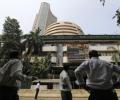
Analysts predict that the US midterm election results, which saw Democrats gain control of Congress, will primarily influence Indian markets through changes in global financial conditions, trade policy expectations, and geopolitical developments, with a keen focus on the US administration's actions in West Asia and their potential impact on crude oil prices.

The Union finance ministry has constituted a high-level committee, chaired by former Central Vigilance Commissioner Suresh N Patel, to recommend structural, regulatory, and legislative reforms for India's banking sector, aiming to make banks globally competitive and support the financing needs of a developed economy.

Banks in a growing economy need patient, long-term foreign capital with good governance to meet credit demand. The direction is right, points out Tamal Bandyopadhyay.

Finance Minister Nirmala Sitharaman has called for enhanced accountability and safeguards for artificial intelligence, particularly as it integrates into critical sectors like finance. Speaking at the Global Fintech Fest, she highlighted the dual nature of AI, capable of accelerating transactions but also amplifying fraud and cyberattacks. Sitharaman stressed the need for human and institutional responsibility in AI-driven decisions, urging regulators and companies to scrutinise high-risk AI applications. She also proposed a federated industry platform for Indian tech companies to navigate international regulations and ensure tax compliance globally.

This may point to the beginning of a rising role of whistleblowers in aiding stock-market policing amid the rapid expansion in capital markets in recent years.

TRAI has proposed a comprehensive draft framework for the responsible use of artificial intelligence in telecom networks. The guidelines mandate service providers to adopt board-approved AI policies, establish dedicated governance and safety committees, and report serious AI-related incidents to the regulator. Entities will be accountable for AI system outcomes, classify AI risks, ensure human oversight, and maintain inventories of all AI systems.

The Supreme Court has expressed serious concerns over the non-implementation of Solid Waste Management rules, stating that despite India's economic growth, its sanitation performance remains poor. The court highlighted the need for unwavering implementation by authorities and adherence by citizens, noting that existing laws and rules are falling short of their objectives. It has tasked district collectors with reinventing strategies and assisting in the implementation of SWM rules, while also pointing out deficiencies in addressing unorganised sectors and leveraging public-private partnerships.

Investors should study the technology behind digital assets, including blockchain networks, wallets and transaction verification, rather than rely solely on recommendations. Understanding the technology could help them assess the risks.

NCP (SP) MLA Rohit Pawar has accused Maharashtra Chief Minister Devendra Fadnavis of protecting aviation firm VSR Ventures and its owner, VK Singh, in the investigation of a plane crash that killed ex-Deputy CM Ajit Pawar. Pawar alleges political influence is preventing action and demands a CBI probe, citing concerns over tender cancellations and alleged meetings. The BJP has dismissed these claims as low-level politics and a publicity stunt.

Gold is more than just a precious yellow metal in India; it is an emotion, a cultural pillar, and an asset that is passed down through generations. In Mumbai, whether it's the vibrant jewellery hub of Zaveri Bazaar or the local shops in suburban areas like Borivali or Thane, purchasing physical gold is a common tradition.

The Supreme Court has mandated that banks must be held accountable for losses incurred by digital fraud victims, ensuring compensation of at least the amount lost if the fraud stems from the financial institution's lack of due diligence. The court emphasised that the proposed RBI regulatory framework must include enforceable provisions for compensation, preventive measures, and institutional accountability, moving beyond mere advisories. The CJI stressed the need for banks to use technology like AI to prevent fraud by monitoring unusual transactions and called for stronger accountability clauses against non-compliant banks.
The Delhi State Industrial Infrastructure Development Corporation (DSIIDC) launched an online liquor booking app, approved by the previous government in 2024, to bring transparency and curb brand pushing in retail sales. The app, which became available to iOS users via a micro-site on September 6, allows customers to digitally book and pay for liquor, which must then be picked up from designated stores. It has seen significant transaction growth since its launch in November 2025, aiming to reduce crowds and ensure age verification.

'We see a lot of cases of bank deposits getting lost, especially when people die, so this will help address that because you have one consolidated view.'
