
The Election Commission has clarified that its ECINet platform is decentralised, with statutory functions performed only by designated officials, not headquarters staff. This comes after concerns were raised about the centralisation of electoral roll databases. The EC also defended the legality of an additional declaration sought from new voters during the Special Intensive Revision, citing unanimous commission approval and a Supreme Court judgment.

Maharashtra's Chief Electoral Officer has formally requested the Election Commission to modify the ECINet software, seeking greater discretion for Electoral Registration Officers in addressing over 2 crore voter discrepancies.

Maharashtra's Chief Electoral Officer has allowed voter documents via WhatsApp for the Special Intensive Revision (SIR) exercise, with Block Level Officers (BLOs) conducting home verifications. This development comes amidst controversy surrounding the Election Commission and its Chief, Gyanesh Kumar, over alleged unilateral decisions regarding the SIR, which opposition parties claim dilute the powers of Electoral Registration Officers. The deadline for claims and objections has been extended to October 12.

India's Election Commission's centralised voter database systems, ERONET and ECINet, are under scrutiny following concerns raised by Election Commissioners Sukhbir Singh Sandhu and Vivek Joshi regarding the centralisation of electoral rolls and control available to state election officials. The article explains how these systems work and why they are currently in the news.

The Election Commission has removed an additional declaration related to the Special Intensive Revision (SIR) from the online voter enrolment Form 6 in states where the SIR process is complete. This decision follows internal objections from Election Commissioners Sukhbir Singh Sandhu and Vivek Joshi regarding changes to the form and the process. The EC maintains the declaration was SIR-specific and not an amendment to Form 6 itself.

The Election Commission of India has announced decisions addressing concerns raised by two election commissioners, Sukhbir Singh Sandhu and Vivek Joshi, over the past 10 months. These issues included changes to voter registration forms, access to the electoral roll database, the handling of Goa's 97 voters, communications issued without full commission approval, oversight of the IT division, and appeals against voter restoration. The EC has provided responses and outlined steps to resolve these internal disputes and improve transparency and compliance.

Former civil servants and rights activists have issued a "people's impeachment" notice demanding the resignation of Chief Election Commissioner (CEC) Gyanesh Kumar. They allege six charges against him, including undermining the Election Commission's functioning, mass disenfranchisement through Special Intensive Revision (SIR) of electoral rolls, and compromising political impartiality. The group, including G K Pillai and Najeeb Jung, was prevented from submitting the notice at the EC office.
The Election Commission of India has addressed reports of internal dissent among its commissioners and clarified that all Special Intensive Revision (SIR) orders and Form 6 updates for voter enrolment received unanimous consent and were upheld by the Supreme Court. The EC also announced measures to ease the process for voters issued notices, including doorstep document collection and extended deadlines in Delhi and Maharashtra, while affirming its commitment to transparent decision-making and meticulous compliance with directives.

The Supreme Court is set to hear a plea filed by Congress leader Rahul Gandhi and other opposition figures on Thursday regarding alleged large-scale voter deletions and irregularities in the Special Intensive Revision of electoral rolls. The petition seeks an independent audit of these deletions and modifications, and a direction to prevent further deletions without due process.
The Supreme Court has agreed to hear a Public Interest Litigation (PIL) next week that seeks the suspension of Chief Election Commissioner (CEC) Gyanesh Kumar and challenges the alleged unilateral decision-making within the Election Commission without the approval of two other Election Commissioners.

The Election Commission of India has defended its Special Intensive Revision (SIR) of voters' lists, asserting that differing views among Commissioners are a normal part of deliberations and all orders carry full legal sanction, following reports of two Commissioners red-flagging issues.

The Delhi Chief Electoral Officer's office has issued notices to over 33 lakh voters, including former deputy prime minister LK Advani, External Affairs Minister S Jaishankar, and former vice-president Jagdeep Dhankhar, over discrepancies in their electoral roll details. These notices are part of the Special Intensive Revision (SIR) exercise, primarily due to details not matching with the 2002 SIR. Despite concerns raised by some politicians, officials assure that no names will be deleted without due verification and an opportunity for voters to respond.

'Election Commissioners are Constitutional authorities and they are not supposed to go to the Cabinet secretary. They are not supposed to write letters. And if they are aggrieved, they should straight go to the President of India.'

The Election Commission (EC) has announced 17 new initiatives for the Bihar Assembly polls, including compulsory webcasting, mobile phone-deposit facilities, and measures to improve voter turnout and accessibility.

'The final electoral roll will be published on October 7, 2026.' 'If someone who is otherwise eligible does not find his/her name in that electoral roll, they can fill Form 6 along with other necessary documents to enrol his/her name in the electoral roll after the final publication of the electoral roll also.'

West Bengal is on edge as it awaits the results of its recent election, with the TMC and BJP vying for control. The counting process will be conducted under tight security, with the Election Commission implementing stringent measures to ensure a fair and transparent process.

Counting of votes begins in Tamil Nadu, Assam, Kerala, Puducherry, and West Bengal, with significant implications for regional and national parties.
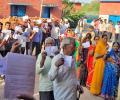
The draft electoral roll for Uttar Pradesh was published after a special intensive revision exercise, with 12.55 crore voters retained out of 15.44 crore listed earlier. Around 2.89 crore voters were excluded due to deaths, migration, or multiple registrations.

The Election Commission on Thursday extended the timeline for Special Intensive Revision (SIR) in six states and Union territories following requests from the chief electoral officers.

The Election Commission released the names of deleted voters in West Bengal ahead of the publication of the draft electoral rolls for the upcoming assembly elections.
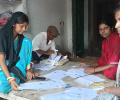
The Election Commission of India is conducting a special intensive revision of the electoral roll in Bihar, with over 6.60 crore electors expected to be included in the draft roll.
