
Indian-flagged vessels are navigating the Strait of Hormuz safely despite ongoing tensions in the region, ensuring the continued flow of vital energy supplies to India.

India is well-stocked with inventories of crude oil and key petroleum products, including petrol, diesel, and aviation turbine fuel (ATF), to deal with short-term disruptions as the war intensifies in West Asia, Union Minister of Petroleum and Natural Gas Hardeep Singh Puri said on Tuesday.

Amidst the ongoing conflict in West Asia, the Oil Ministry assures citizens that India's LPG supply remains secure, with no need for panic booking of cylinders. The normal delivery cycle of two-and-a-half days is being maintained, and crude oil is being sourced from diverse routes.

Hundreds of Indian seafarers are stranded on vessels carrying crude oil, LPG, and LNG in the Persian Gulf due to the ongoing conflict in the Middle East, causing disruptions to India's energy supplies.

Indian stock market indices Sensex and Nifty experienced a significant drop in early trade, reversing a three-day rally. The decline was triggered by a sharp increase in crude oil prices, weak global market trends, and continuous outflows of foreign funds.

Indian stock market indices Sensex and Nifty experienced a significant decline, driven by rising crude oil prices, sustained foreign fund outflows, and selling pressure in major bank stocks.

S&P Global Ratings warns that Indian oil marketing companies like IOC, BPCL, and HPCL may face reduced profit margins due to rising crude oil prices and government pressure to maintain stable retail prices.

Analysts predict that the ongoing conflict in West Asia, crude oil price fluctuations, and the US Federal Reserve's interest rate decision will significantly influence the Indian equity market this week.
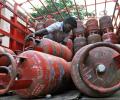
The Indian government has allocated an additional 40,000 kilolitres of kerosene to states as an alternative fuel to LPG, amid the ongoing crisis in West Asia. The government assures a comfortable crude oil supply situation in the country.

Indian equity markets experienced a significant downturn, with the Sensex and Nifty plummeting due to rising crude oil prices, geopolitical tensions in West Asia, and continuous foreign fund outflows.

Indian stock market benchmarks Sensex and Nifty rebounded strongly after a two-day decline, driven by falling crude oil prices and positive global cues amid hopes of de-escalation in the Middle East.

Indian stock market indices Sensex and Nifty closed nearly 1 per cent higher, marking their third consecutive day of gains, supported by a slight decrease in crude oil prices and positive global market trends.
Indian benchmark equity indices experienced a significant downturn, with the Sensex plummeting over 800 points and the Nifty falling sharply, driven by rising crude oil prices, geopolitical tensions, and foreign capital outflows.

An Indian-flagged crude tanker safely departed from the UAE's Fujairah after loading oil, despite an attack on the oil terminal. The Indian government is closely monitoring the situation in West Asia to ensure stable fuel supplies and maritime safety.

Despite international crude oil rates crossing USD 100 per barrel due to Middle East tensions, the Indian government plans to maintain current petrol and diesel prices, ensuring uninterrupted fuel supply across the country.

Foreign brokerages have started to cut their year-end targets for the Nifty 50 index amid the ongoing West Asia conflict.

The Indian rupee crashed to a record closing low against the US dollar due to rising global crude oil prices, a strengthening dollar, and geopolitical tensions in the Middle East.

Indian stock market benchmark indices Sensex and Nifty experienced a significant drop in early trade due to rising crude oil prices, bearish global market trends, and continuous foreign fund outflows.

The Kremlin has announced it will not disclose data on crude oil exports to India, citing concerns about 'ill-wishers'. This decision follows reports of increased Russian oil supplies to India and China amid geopolitical tensions.

An oil tanker carrying Saudi crude safely reached Mumbai after crossing the war-hit Strait of Hormuz with its tracking system briefly switched off.
The Indian rupee fell to a record low against the US dollar due to rising crude oil prices, foreign institutional investor selling, and weak domestic equity market sentiment.

If the conflict continues for a prolonged period, State-run oil companies may have to review retail fuel prices accordingly.

An Indian-flagged crude oil tanker, Jag Laadki, safely sailed from the UAE's Fujairah port despite an attack on the terminal and is scheduled to reach India. The Indian government is working to ensure the safe passage of remaining Indian-flagged vessels in the region.

Amidst escalating tensions with Iran, the US has granted India a temporary 30-day waiver to continue purchasing Russian oil, aiming to stabilise global energy markets and encourage future US oil imports by India.

India possesses approximately 100 million barrels of commercial crude oil stocks, capable of covering 40-45 days of its requirements if flows through the Strait of Hormuz are disrupted, according to Kpler.

Indian benchmark equity indices Sensex and Nifty experienced a significant crash in early trade, triggered by a sharp increase in crude oil prices and escalating tensions in the Middle East.

Foreign portfolio investors (FPIs) withdrew a substantial amount from Indian equities in the first half of March, driven by geopolitical tensions, rupee depreciation, and concerns about crude oil prices.

India's crude oil imports from Russia saw a marginal decline in September, but continued to account for over one-third of the country's total oil purchases, despite US pressure to curb the trade over concerns that it supports Moscow's war effort in Ukraine. India's crude imports in September were around 4.7 million barrels per day, up 220,000 bpd month-on-month and flat year-on-year.

Indian refiners are negotiating for additional crude cargoes from the US, Russia, and West Africa to ensure adequate supplies amid Middle East tensions. Refineries are maintaining normal processing rates and deferring maintenance to build reserves. The move comes as conflict impacts tanker movements through the Strait of Hormuz, a key energy transit route.
Indian stock market benchmark indices Sensex and Nifty experienced a significant decline, driven by escalating tensions in the Middle East and rising crude oil prices.

When asked about Bessent's announcement allowing certain Russian oil sales to India and whether the US is considering any other moves, including tapping the Strategic Petroleum Reserve (SPR), Trump said, "If there were some, I would do it just to take a little of the pressure off."

24 Indian-flagged vessels with 677 Indian seafarers were currently located west of the Strait of Hormuz, and four vessels with 101 Indian seafarers were stationed east of the strategic waterway.
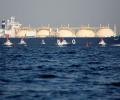
Analysts predict India will face oil price volatility and macroeconomic effects due to the escalating Iran crisis, though the country's oil supply chain is not yet structurally insecure.

Asian Development Bank (ADB) on Friday warned that India's limited crude oil reserves of about 100 million barrels - sufficient for only 40-45 days of consumption - leave the country particularly vulnerable to supply disruptions through the Strait of Hormuz amid the ongoing war in West Asia.

The incident came shortly after a spokesperson from Iran's military warned that Tehran could target ports and docks in the United Arab Emirates following recent United States strikes on Kharg Island, a key hub for Iran's oil exports.

India has condemned the escalating attacks on commercial shipping in West Asia, particularly after a Thai-flagged vessel en route to India's Kandla Port was targeted in the Strait of Hormuz. The attacks have disrupted global oil and gas supplies, impacting India's energy imports.

A fall in the Nifty 50 to around 19,000 is not impossible, but that would likely require nuclear options to be exercised.

The Iran conflict led to a sharp correction in Reliance Industries Ltd's (RIL's) share price, which has been partially reversed by a rebound.

Prime Minister Narendra Modi on Sunday said the Bharatiya Janata Party-led central government is taking steps to reduce imports of crude oil and gas, focusing more on exploration of fossil fuels and green energy.

In the present hyper-connected world, there are many domestic and global factors that affect financial markets. Of them, the most powerful and often least predictable are geopolitical events, which often boil down to one diplomatic headline.
 © 2026 Rediff.com - Investor Information - Advertise with us - Disclaimer - Privacy Policy - Sitemap - Feedback - About us - Terms of use - Grievances