
A clutch of Indian stars led by India and Royal Challengers Bangalore captain Virat Kohli are either sidelined or ruled out of this edition of the tournament, lessening the wow factor of the IPL.

Over the past two decades, six of the eight army chiefs have been from the infantry and the other two from the artillery division. The appointment of either General Bakshi or General Hariz would interrupt the infantry's prolonged domination of the army command, says Ajai Shukla, a retired army officer himself.
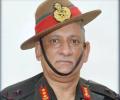
The Congress and the Left on Sunday questioned the appointment of the new army chief by superseding two officers, saying every appointment by the government has become controversial.
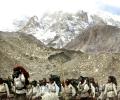
President Ram Nath Kovind presents the President's Colours to the Ladakh Scouts Regimental Centre today, August 21. These are normally presented to units that distinguish themselves consistently over decades. The Ladakh Scouts became a regular army regiment only in June 2001 after its stunning performance in the Kargil conflict, notes Ajai Shukla.

'Jaish aided by LeT attacked Parliament knowing mobilisation of Indian military assets would be the consequence.' 'That mobilisation happened, necessitating a military response from Musharraf who moved troops guarding back doors out of Tora Bora, facilitating Osama's escape.'
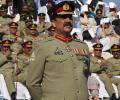
The recent postings and promotions of three-star generals in the Pakistan Army have propelled some of former chief Ashfaq Parvez Kayani's favourites to traditionally important positions
.jpg)
Pundits in Pakistan and also some western diplomats are predicting that the next army chief will be forced, partly by institutional pressure and partly by circumstances, to indulge in some tough talking with the civilian leadership. How the civil-military equation settles in this sort of a situation is something that will determine the future of Pakistani politics, and also Pakistan's relations with rest of the world, says Sushant Sareen.

'An operation such as the Mumbai attacks, which needed expert technical assessment, money and time to prepare, could not have been carried out without the knowledge of the ISI's leadership.'

We would like that people come directly to us rather than resorting to the social media or other means, Gen Rawat said.

With Pakistan's powerful army chief Gen Ashfaq Parvez Kayani's term coming to an end in November, names of top generals who are likely to succeed him are being discussed in the political circles and in the corridors of power.

'The combination of the LeT and the ISI is the most dangerous terrorist challenge in the world because it carries a real and present danger of provoking nuclear war.'

While the Indian Government was aware of it, it tried to play it down and instead referred to it as genocide against the Bengali community in Bangladesh so as to avoid an outcry from the leaders of the then Jan Sangh, the predecessor of the today's main opposition Bharatiya Janata Party, says Gary J Bass, author of the book The Blood Telegram: Nixon Kissinger and a Forgotten Genocide, which recently hit the book stores.

On the title page of the Top Secret Report, Henderson-Brooks quotes the Chinese tactician Sun Tzu: 'Know yourself, know your enemy: A hundred battles, a hundred victories', says Claude Arpi, highlighting where the Indian Army and government failed to counter the Chinese attack in 1962.
 © 2026 Rediff.com - Advertise with us - Disclaimer - Privacy Policy - Sitemap - Feedback - About us - Terms of use - Grievances