
Social changes take a "little time" and sometimes it is easier to bring a law but difficult to persuade society to change with it, the Supreme Court observed on Thursday while deliberating upon the issue relating to the dissolution of marriages.

How should one billion Indians, for whom deprivation has become an inescapable way of life, join us in celebrating 75 years of Independence? And where do we go from here? asks Kalyan Singhal.

While no specific state-oriented sops were rolled out, a strong thread of political wellness ran through the Budget.

Human Development -- a measure of a nation's health, education, and average income -- has declined for two years in a row.

'The digital trust level has drastically gone up due to Covid, not only in tier-I and II cities, but also in tier-III, IV and V geographies,'

At Rediff Labs, we analysed the data on military expenditure by Stockholm International Peace Research Institute.

The key risks against a fast recovery would include long delays in business travel resumption, delays in commissioning, etc.
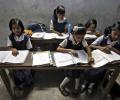
The top five states with a high Human Development Index in 2017 were Kerala, Chandigarh, Goa, Lakshadweep, Delhi. The bottom five states in 2017 were Bihar, Uttar Pradesh, Jharkhand, Madhya Pradesh and Odisha.

'From the tiniest to mid-level organisations and even some at the lower end of the large-scale ones would say that computerisation and the extensive documentation and regulatory requirements for GST have made the compliance process worse in many cases.'
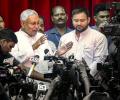
Various indicators make it amply clear that there are grave challenges facing the new government of Chief Minister Nitish Kumar, reports Indivjal Dhasmana.

Prosus-backed fintech firm PayU is set to acquire India's earliest payment gateway BillDesk in an all-cash transaction of $4.7 billion. This will be the largest acquisition in India's digital payments space. The deal will also give exit to investors General Atlantic, TA Associates, Temasek, Clearstone Ventures, and Visa. The proposed acquisition will help PayU, the payments and fintech business of Prosus which operates in more than 20 markets, become one of the leading online payment providers globally by total payment volume (TPV).

We have our own problems for sure and they are not trivial, but for now, our economy is in not too bad a shape, our politics is as personality-driven and authoritarian as that of most countries in the world. We must make the best of what we have and not be excessively unhappy looking at the grass on the other side of the septic tank which may not be greener after all!, observes Shreekant Sambrani.

'Aquaponics can effectively cushion the impact of a calamity like COVID.'

Consumption of gold is the highest among middle-income households - those with annual income between Rs 2 lakh and Rs 10 lakh - who account for an average of 56 per cent of gold sales over the last five years, according to a nationwide survey conducted by India Gold Policy Centre (IGPC) at the Indian Institute of Management, Ahmedabad (IIM-A). "Per capita consumption is highest among the rich, but total volume still rests with the middle-income group. "With increasing income, there is an increasing propensity to consume gold, although the share of gold in the portfolio does not increase with the same proportion of income," the survey report says.

'It is building the country's infrastructure, and delivering it very efficiently.'

Bangladesh might overtake India this year by per capita income in nominal dollars, but it is not yet close to becoming South Asia's economic powerhouse anytime soon, T N Ninan points out.

'For the common man, the economic conditions are not going to get better.'

S&P Global Ratings has forecast India's economy to shrink by 5 per cent in the current fiscal. It, however, has projected GDP growth to be 8.5 per cent in 2021-22 and 6.5 per cent in 2022-23.
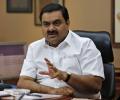
Billionaire Gautam Adani on Monday said his infrastructure conglomerate will invest between $50-70 billion in organic and inorganic growth opportunities across the entire energy value chain over the next decade. Speaking at an industry event, he said the port-to-energy group will invest over $20 billion in renewable energy generation alone. "Over the next decade, we will invest over $20 billion in renewable energy generation.

There's no silver bullet to get rid of poverty, says Alok Sheel.

Europe reigns supreme among the world's most innovative nations.

China's per capita GDP is about four times of India's, Raghuram Rajan said.

It is largely due to his vision and efforts that we have almost quadrupled our per capita milk availability in the last 40 years, points out Shailesh Dobhal.

World's 300 largest metropolitan economies account for nearly half of global economic output.

The culture of freebies burdens coming generations with the huge bill for the flagrant abuse of power by preceding governments, points out Virendra Kapoor.
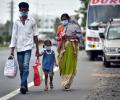
The year 2020 could see the worst global economic fallout since the Great Depression in the 1930s, with over 170 countries likely to experience negative per capita income growth due to the raging coronavirus pandemic, IMF Managing Director Kristalina Georgieva said on Thursday. Georgieva made the remarks during her address on 'Confronting the Crisis: Priorities for the Global Economy' in Washington, DC, ahead of next week's annual spring meeting of the International Monetary Fund and the World Bank.

Observing that India's worsening COVID-19 situation and the strict measures to contain it have hit the economy hard, the rating agency said productive capacity has been severely disrupted since the start of the pandemic.

The words 'industry', 'industrial development', 'jobs', and 'employment' have been ringing with higher frequency since Mamata Banerjee stepped into her third term with landslide victory after a high-octane election last year. "Our government's next target is industrial development," the chief minister (CM) had been heard stating at different public meetings in the past few months - perhaps setting the tone for the sixth edition of the Bengal Global Business Summit (BGBS) slated for later this month. Investor summits by any state are about intent, big numbers, and tall claims. Yet in competitive federalism, its importance as a marketing tool is undeniable.

'India's output contraction in the previous year was among the worst in the world!'

The biggest headwind to the consumption story in FY23 is a sharp decline in government subsidies on food, fertiliser and fuel, and overall decline in revenue expenditure net of interest payments. This, analysts say, will adversely impact purchasing power of households at the lower end of the income pyramid, translating into lower spending on consumer goods and services.

This will cost the government Rs 3.1 trillion, about 10 per cent of its annual expenditure, and higher than any other spending item in its Budget.

The story of Iceland is the story of life, notes Payal Singh Mohanka after a recent journey to that fascinating land.

Gandhi took a swipe at the government on Twitter by tagging a chart that showed IMF growth projections for 2020-21 for Bangladesh, Myanmar, Nepal, China, Bhutan, Pakistan, Sri Lanka, Afghanistan and India.
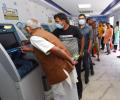
The correlation between withdrawal of deposits and the Covid death rate is stark, reveals Tamal Bandyopadhyay.

On the heels of the National Family Health Survey-5 (NFHS-5), which revealed new demographic trajectories including the replacement level of fertility, the government will, on Monday, unveil extensive economic data related to health and the broader economy. New data will relate to per capita spending on health and proportions of the GDP to health spending. Health ministry sources said the NFHS-5 marked some areas for celebration but also some markers that should cause concern.

'God has given me everything -- wealth, success, a good wife and good friends. I wish He gives me good health.'

Making a case for an optimal fiscal stance, the Economic Survey on Friday said growth leads to debt sustainability and not necessarily vice-versa. "This is because debt sustainability depends on the 'Interest Rate Growth Rate Differential' (IRGD) i.e. the difference between the interest rate and the growth rate in an economy. "With the Indian context of potential high growth, the interest rate on debt paid by the Indian government has been less than India's growth rate by norm, not by exception," it said.

In the excitement over the allocation of bank licences for the private sector, a new category of licence offered by the Reserve Bank of India (RBI) last year went almost unnoticed. That was when the RBI consolidated the rules for prepaid payment instruments (PPI), popularly understood as e-wallets or gift cards. In the process, the regulator has fast-forwarded a bottom-up card usage industry in India that is completely different from the world of bank-linked credit and debit cards.

By financial year 2024-25, Morgan Stanley expects per capita income to rise 125 per cent to $3,650.

The share of total health expenditure as part of the gross domestic product (GDP) went down to 3.3 per cent in 2017-18 from 3.8 per cent in the previous two years, according to the national health account data released on Monday by the health ministry. The share of government expenditure as part of total expenditure as well as GDP has gone up from from 3.78 per cent to 5.12 per cent between 2013-14 and 2017-18, which could also explain a decline seen in out of pocket expenditure in 2017-18. Health ministry also emphasised the increase in the government health expenditure as part of the total GDP from 1.15 per cent in 2013-14 to 1.35 per cent in 2017-18.
 © 2026 Rediff.com - Advertise with us - Disclaimer - Privacy Policy - Sitemap - Feedback - About us - Terms of use - Grievances