
The Commission for Air Quality Management (CAQM) has revoked restrictions imposed under GRAP 3 in Delhi-NCR following improvements in air quality. Non-essential construction and demolition activities are now allowed to restart, and restrictions on vehicles have been lifted.

A thick layer of toxic smog enveloped the national capital on Saturday as air quality deteriorated sharply, prompting the Commission for Air Quality Management (CAQM) to invoke the strictest curbs under Stage IV of the Graded Response Action Plan (GRAP) across Delhi-NCR.

The Supreme Court of India has directed the NHAI and MCD to consider relocating or temporarily closing toll plazas at Delhi's borders to alleviate traffic congestion and reduce air pollution. The court also addressed school closures and financial aid for construction workers affected by pollution control measures.
A bench headed by Justice Arun Mishra said Bharat Stage-IV vehicles sold after March 31 this year and those whose details have not been uploaded on the e-Vahan portal of the government will not be registered.

A three-judge bench headed by Justice Madan B Lokur made it clear that only BS VI compliant vehicle shall be sold in the country from April 1, 2020.
The BS-IV emission norms will come into force from April 1, 2017.

General Motors India would roll out its BS IV version of Sports Utility vehicle Tavera in the country by next year, a top company official said on Tuesday
The fact is that BS-IV vehicles, particularly diesel trucks, are much less polluting than BS-III ones, says Sunita Narain.

The engine of this car is now Bharat Stage IV compliant.
Most of the leading vehicle manufacturers were before the court, though their stand was not identical and sometimes contradictory.

Tata Motors, India's largest commercial vehicle manufacturer, is looking to launch a first-of-its-kind sub-600 kg small commercial vehicle, aiming to cater to the growing demand for efficient last-mile delivery solutions, an area currently witnessing a surge in interest from e-commerce giants. This new entrant is set to be positioned just below the marquee Tata Ace, which is popular across the country as "Chota Haathi".
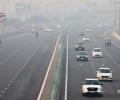
The city's 24-hour Air Quality Index (AQI), recorded at 4 pm daily, stood at 417, making it the worst in the country. On Friday, the AQI level was 396.

Preventive measures are in place and the forecast suggests further improvement, said the statutory body responsible for forming air pollution reduction strategies for the region and their implementation.

Delhi's air quality plummeted to alarming levels on Tuesday after 24 days, with many areas witnessing a significant spike in pollution despite the strictest measures, including a ban on construction activities and the entry of trucks into the city, coming into force.

Delhi's air quality improved for the second consecutive day on Thursday, with the Air Quality Index (AQI) recorded in the "moderate" category at 165. This marks a significant improvement from the "poor" category recorded on Tuesday. Several restrictions imposed under Stage 4 of the Graded Response Action Plan (GRAP) were lifted, but some restrictions under Stage 2 remain in place. The Decision Support System (DSS) has not been updated since Friday, with technical difficulties hindering the update of data for the last six days.

Delhi's air quality deteriorated significantly on Monday, with areas like Dwarka, Mundka and Najafgarh recording an AQI of 500, the worst this season. The city's overall AQI reached 491, triggering the implementation of the Graded Response Action Plan (GRAP) Stage-IV restrictions in Delhi-NCR. Doctors warned of health risks, urging people to wear N95 masks and avoid outdoor activities. The Supreme Court questioned the Delhi government on its anti-pollution measures and warned against scaling down preventive measures without its permission. Delhi Chief Minister Atishi accused the BJP-led central government of political maneuvering while neglecting stubble burning in states it governs. Meanwhile, the city enforced stricter pollution control measures, including a ban on truck entry and suspension of construction activities. Air purifier sales surged, reflecting the public's concern over the severe air pollution.

The city's 24-hour Air Quality Index, recorded at 4 pm every day, stood at 418, up from 334 the previous day, and it may trigger stringent restrictions under the third stage of the graded response action plan to mitigate hazardous conditions.

Passenger and commercial vehicle prices are expected to rise as automobile companies invest in upgrading vehicles to meet stricter emission norms that kick in from April next year. The Indian automobile industry is currently working to make their products meet the second phase of Bharat Stage VI, equivalent to Euro-VI emission norms, in real time driving conditions. Four-wheeler passenger and commercial vehicles will need more sophisticated equipment to be added to meet the next level of emission standards.
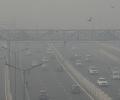
Delhi's 24-hour average air quality index (AQI) stood at 248 on Saturday.

Let alone a discount, they might not even get the model, variant or colour of choice in BS-IV-compliant vehicles.

India is served by BS-IV fuel in cities such as Mumbai, Chennai, Delhi and BS-III fuel in the rest of the country.

While commercial vehicle (CV) sales were the worst hit, down by 21 per cent to 67,793 units from 85,833 units, two-wheeler sales dropped by 16 per cent to 12,64,169 units from 15,00,545 units. Passenger car sales dropped nine per cent to 215,716 units from 236,586 units.

Dealers say the significant increase in sales was driven by a need to plug the diminishing inventory as most dealerships were transitioning from BS-IV to BS-VI when the Covid-19 lockdown was announced.
Second body blow after diesel ban on engines of 2,000 cc and above in NCR.

As the air pollution in Delhi-NCR ameliorated over the last two days, the Centre's air quality panel Sunday directed authorities to lift the ban on plying of non-BS VI diesel light motor vehicles in the region and the entry of trucks into the capital imposed under the final stage of the Graded Response Action Plan.

A complaint addressed to Saxena in June this year had claimed that the appointment of the minister of transport as the chairman of the committee for tendering and procurement of buses by Delhi Transport Corporation was done in a "premeditated manner".
The stock of auto component major Bosch was up 2.5 per cent on Wednesday and in the process hit its 52-week high. Expectations of higher volumes of medium and heavy commercial vehicles' (M&HCV), rise in content supplies on account of BS VI stage 2 implementation from April, and improved profitability are some of the positives for the stock. In addition to this, the company appointed a new managing director and joint managing director last week, which will come into effect from July 1.

'Inquiries and bookings are at quite a healthy level.'
The FM said, change in the mindset of the millennials not to commit any EMIs towards buying an automobile and instead taking Ola, Uber or the Metro (train) services also led to automobile sector slowdown.

Companies also said confidence was yet to return among buyers, with many holding back their decision to buy cars.

Automobile retail sales in India clocked best-ever performance last month aided by robust registrations across segments including passenger vehicles, two-wheelers and commercial vehicles, automobile dealer' body FADA said on Friday. The overall automobile retail sales rose by 26 per cent to 23,80,465 units last month, as compared with 18,93,647 units in November 2021. "November 2022 has clocked highest retails in the history of Indian automobile Industry with March'20 as an exception when retails were higher due to BS IV to BS VI transition," Federation of Automobile Dealers Associations (FADA) president Manish Raj Singhania said in a statement.
The government on Friday announced several relief measures including deferring one-time registration fee, lifting the ban on purchase of petrol/diesel vehicles by its departments and allowing higher depreciation, but it remained non-committal on the demand for a reduction in GST rates.

The panel suggested the cess for BS-IV and BS-V fuels should accrue to the Oil Industry Development Board

There are about 23 oil refineries in India with a combined capacity of 230 million tonnes per annum.

The Supreme Court on Thursday dismissed a plea by Skoda Auto Volkswagen India challenging an FIR registered in Uttar Pradesh by a customer over the alleged use of 'cheat device' in its diesel car by the company to manipulate emission norms.

The company cited low demand in the second half of the year due to high interest rates, increased insurance cost and fuel prices for its downward revision

Market leader Maruti Suzuki India's passenger vehicles sales declined by 2.34 per cent last month at 133,702 units. Hero MotoCorp reported total two-wheeler sales of 480,196 units last month, down 20.05 per cent.
Automobile manufacturers said Euro-VI grade vehicles will not hit the roads before 2020 but the advancement gives them confidence to make investments in manufacturing such vehicles.

From Hyundai to Tata Motors, automakers are staring at a bleak future. With no succor provided in the Budget, the pain for companies is likely to continue for the next two quarters.

Vehicle prices have gone up as manufacturers gear up for the transition to stricter emission norm BS-VI from BS-IV beginning April 1.
 © 2026 Rediff.com - Investor Information - Advertise with us - Disclaimer - Privacy Policy - Sitemap - Feedback - About us - Terms of use - Grievances