
India must re-negotiate its nuclear deal with the US in order to save its strategic interests, former national security adviser Brajesh Mishra said Tuesday night.
The National Security Adviser during his visit to the US had an unscheduled substantive meeting with US President George W Bush.

Former National Security Advisor M K Narayanan on Wednesday said that he played no role in the controversial Rs 3,600 crore VVIP AgustaWestland chopper deal.

'Could the Chinese have taken a leaf out of our book?' 'That their unprecedented build-up is their attempt at coercive diplomacy with India?' 'And if so, what is it that they could be expecting as a quid pro quo?' asks Shekhar Gupta.

The two media groups have been critical of the Covid-19 management in the country and have done numerous news stories on the subject during the second wave of the pandemic that hit the country between April and May.

In comments that are likely to create a political storm over the next few days, former Research and Analysis Wing chief A S Dulat has reveled that former prime minister Atal Bihari Vajpayee had expressed his discontent over the 2002 Gujarat riots and called it "our mistake".
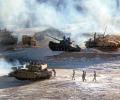
'India cannot allow Beijing's policy of stabilising and destabilising the border at will to perpetuate its own ends.' A riveting excerpt from Manish Tiwari's 10 Flashpoints; 20 Years National Security Situations That Impacted India.

Ambassador Natarajan Krishnan and Ambassador Shankar Bajpai helped shape Indian foreign policy at a glorious, but difficult, time in history, recalls Ambassador T P Sreenivasan.

China will flood direct flights to India with wholesale takeaways of the authentic stuff; Indian businessmen will fight for the commission and the consumers for the cuisine, predicts Sunanda K Datta-Ray.
Several officers in the intelligence agencies want the role of the National Investigation Agency clearly defined to avoid lack of cooperation between the Centre and states.

Prime Minister Modi made a strategic blunder of Nehruvian proportions -- presuming no war can happen now, and the Chinese won't be a military threat and risk their economic interests, observes Shekhar Gupta.

A simple look at the prices of 10 media stocks during the tenure of the current government tells an interesting tale, says N Sundaresha Subramanian.
'The heart of the matter is that India is not Israel.'

'Unlike the Congress, the BJP is not a party that merely goes by family connections.' 'Scindia's future will depend on what he brings to the BJP table.' 'The BJP is also a party where vertical growth is mostly factored by RSS preferences.' 'To secure confidence of the saffron brotherhood, Scindia will have to be his grandmother's grandson and not his father's son,' notes Nilanjan Mukhopadhyay.
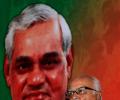
'Advani went by the book, by files, by advice given by his babus. He may be well read and articulate and a pleasant conversationalist, but none of that makes for the kind of creative politician that Vajpayee was.' 'This is the kind of observation about the Vajpayee premiership, more than the promise of espionage or Kashmir gossip, that made writing A S Dulat's book a satisfying experience,' says Aditya Sinha.

In a sharp attack on the Narendra Modi government, BJP leader Arun Shourie on Monday contended that it believes that managing economy means "managing the headlines" and that people had started recalling the days of former Prime Minister Manmohan Singh.
India's national security strategy needs to be revised periodically since the global and regional geopolitical situation is dynamic, points out Commodore Venugopal Menon (retd).
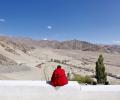
We should have anticipated it on August 5 last year, when we made the big changes in J&K. Amit Shah left nothing to chance when he told Parliament that 'we will bring back Aksai Chin even at the cost of our lives'. 'Then, there were the new maps, objections to the CPEC going through Indian territory, the weather reports.' A broad territorial status quo had existed in Ladakh-Aksai Chin since 1962. India made its intention to change this public, notes Shekhar Gupta.

Ambitious diplomats continue to be attracted to politics but do they make good politicians, asks Jyoti Malhotra

India's new high commissioner in Islamabad goes to Pakistan at a time when the country is set to face much internal tumult.

Amit Shah now enters an unfamiliar and interesting phase of his political career. His success or failure will henceforth be assessed based on his performance as a key minister, points out Shekhar Gupta.

With India's political wheel turning full circle this year, National Security Advisor Ajit Doval will negotiate from an expanding diplomatic space, writes Ajai Shukla

Dai Bingguo, who served as the China's boundary negotiator with India from 2003 to 2013, told Chinese media, "If the Indian side takes care of China's concerns in the eastern sector of their border, the Chinese side will respond accordingly and address India's concerns elsewhere."
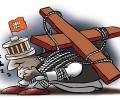
'Poor home work, and a subsequent loss of nerve.' 'This sums up the Modi government's current travails, the stall in key sectors, fading momentum, irritability,' points out Shekhar Gupta.

The Congress kept sheltering Quattrochi, and the BJP was more intent on shielding the Hinduja brothers. The fact is that the two roads crisscrossed, and neither the truth prevailed nor did the law take its course, says Mohan Guruswamy.

'Nawaz Sharif asked: "What if I invited him and he declined?"' 'I said I will check.' 'Vajpayee liked the idea. He said I should see him on my return.' Shekhar Gupta reveals how Sharif wanted to make peace, but was tripped by the army and notes the lessons it has for Imran Khan.
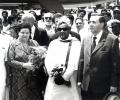
'I was present at a meeting where he decided to permit the IAF to strike at Pakistan positions in Kargil, with the caveat that they should not cross the LoC.' 'Confident that the Indian Army would succeed, Mr Vajpayee was positioning himself to tell the world after the Kargil conflict was won that India did not violate the 'sanctity' of the LoC,' recalls Ambassador G Parthasarathy, who served as India's envoy in Islamabad in that eventful year, 1999.
 © 2026 Rediff.com - Investor Information - Advertise with us - Disclaimer - Privacy Policy - Sitemap - Feedback - About us - Terms of use - Grievances