
India's Ministry of External Affairs spokesperson Randhir Jaiswal stated that India desires positive, constructive, and forward-looking ties with Bangladesh and is ready to discuss all bilateral issues. This comes amidst queries regarding the state of relations following a change in Bangladesh's government and upcoming international engagements.
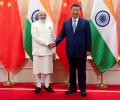
India has asserted that the state of its border with China directly impacts the broader bilateral relationship, emphasising the critical importance of maintaining peace and tranquillity along the Line of Actual Control (LAC). The Ministry of External Affairs also firmly rejected China's claims over Arunachal Pradesh, reiterating its status as an integral part of India. This stance was reiterated during a recent Working Mechanism for Consultation and Coordination meeting, where both sides agreed to continue using diplomatic and military channels to resolve outstanding issues.

India on Tuesday firmly rejected Turkish President Recep Tayyip Erdogan's reference to Jammu and Kashmir during his address at the 81st United Nations General Assembly (UNGA), asserting that the issue pertains strictly to the country's territorial integrity and sovereignty.

Pakistan and the European Union have agreed to enhance their cooperation in combating terrorism across all forms. This commitment was solidified during the 10th Pakistan-EU Bilateral Counterterrorism Dialogue in Islamabad, where both sides condemned terrorism and discussed evolving threats, including those in cyberspace. They also expressed concern over the security situation in Afghanistan and pledged to work together in multilateral forums.
A Parliamentary Standing Committee on Commerce has urged the Indian government to swiftly conclude the proposed India-US Bilateral Trade Agreement (BTA), while ensuring India's interests are protected, recommending complete exemption for key export products like generic medicines and smartphones from future US tariff increases.

India's national security adviser was in Dhaka for roughly three-quarters of the day on Thursday to prepare the ground for Bangladesh Prime Minister Tarique Rahman's visit to New Delhi.

Pakistan and the Maldives have signed 20 Memorandums of Understanding (MoUs) covering defence, maritime security, artificial intelligence, trade, and other sectors during Maldivian President Mohamed Muizzu's three-day visit to Islamabad. The agreements aim to significantly boost bilateral cooperation and trade, with Pakistan also offering technical expertise and educational opportunities.

External Affairs Minister S Jaishankar will host US Secretary of State Marco Rubio in Mumbai on October 20 for talks aimed at strengthening the Comprehensive Global Strategic Partnership. Discussions will cover energy, trade, defence, and critical technologies. The visit also includes celebrations for the 250th anniversary of US Independence. This meeting follows earlier confusion regarding Rubio's visit and will also touch upon the India-US bilateral trade agreement, which both sides are close to concluding. The MEA clarified that hosting foreign dignitaries outside Delhi is a common practice.

Marco Rubio will visit Mumbai and Jamnagar to discuss energy cooperation as S Jaishankar says India-US trade talks are nearing a landing point, with a few issues unresolved.

US Secretary of State Marco Rubio kick-started a three-day visit to India on Tuesday to advance bilateral ties in energy, trade and investment, defence, critical technologies, and exchange views on the West Asia crisis.

Cricket West Indies (CWI) CEO Chris Dehring has vehemently criticised the existing revenue model for bilateral cricket series, highlighting that the West Indies receive no financial benefit from their lucrative ongoing white-ball engagement with India.

Chinese President Xi Jinping's upcoming visit to India for the BRICS summit is a pivotal diplomatic event poised to significantly impact bilateral ties and global cooperation amidst ongoing international instability.

US Secretary of State Marco Rubio's visit to India this week underscores the complex dynamics of global energy policy, as Washington re-evaluates sanctions on Russian oil buyers amidst India's continued reliance on Russian crude.

China emphasises proper handling of differences and a long-term perspective for bilateral ties ahead of President Xi Jinping's visit to India for the BRICS summit and talks with Prime Minister Narendra Modi. The visit aims to stabilise relations following the 2020 Ladakh standoff and strengthen BRICS cooperation.

US Secretary of State Marco Rubio has characterised the strategic alignment between India and the United States as "extraordinary", emphasising that both nations have an opportunity to shape the course of the 21st century through partnership.

Chinese President Xi Jinping is in New Delhi for the 18th BRICS Summit, where he is scheduled to hold bilateral talks with Prime Minister Narendra Modi. This visit, his first to India in nearly seven years, comes amidst efforts to normalise India-China relations following the 2020 Eastern Ladakh standoff and is expected to have significant implications for bilateral ties and BRICS cooperation.

Prime Minister Narendra Modi and Israeli PM Benjamin Netanyahu held a telephone conversation to discuss recent developments in West Asia, emphasising the urgent need for peace and stability. They also reaffirmed their commitment to strengthening the India-Israel Special Strategic Partnership.

A British Conservative Party MP, Bob Blackman, has tabled an Early Day Motion in the House of Commons to reaffirm India's sovereignty and territorial integrity over Jammu and Kashmir. The motion, timed for Jammu and Kashmir Accession Day, also expresses concern over terror incidents and targeted killings in the region and calls for constructive dialogue.

Prime Minister Narendra Modi and US President Donald Trump held a telephone conversation to review progress in bilateral ties, covering trade, defence, and energy, against the backdrop of heightened trade friction due to the 'Lindsey O. Graham Sanctioning Russia and Iran Act of 2026'.
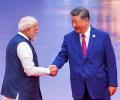
India and China held diplomatic talks to review the situation along the Line of Actual Control (LAC), discussing boundary delimitation, border management, and trans-border cooperation. Both nations stressed the importance of maintaining peace and tranquillity for bilateral relations and agreed to continue using existing channels to resolve outstanding issues.

Prime Minister Narendra Modi, in bilateral talks with Chinese President Xi Jinping, emphasized that both nations must show sensitivity to each other's core issues and be guided by mutual respect, sensitivity, and interest. Modi highlighted the critical importance of peace and tranquillity along the Line of Actual Control for the development of India-China relations, while also addressing concerns regarding Taiwan and Tibet.

External Affairs Minister S Jaishankar highlighted that India's primary concern regarding terrorism from its neighbour, Pakistan, if not fully appreciated by partners like the US, negatively impacts bilateral relations. Speaking at the Asia Society, Jaishankar discussed the turbulence in India-US ties, particularly in light of Washington's renewed engagement with Pakistan and the perceived lack of empathy for India's terrorism concerns, especially under the second Trump administration. He emphasized that addressing these sensitivities is crucial for improving the relationship.

External Affairs Minister S Jaishankar stated that the stability of the Line of Actual Control (LAC) is essential for normalising India-China relations, asserting that border disturbances will have consequences. He connected trade and investment growth to border peace and highlighted significant economic issues, including a severe trade imbalance and lack of market access for India in China. Jaishankar also referenced the 2020 Galwan clashes as a critical turning point, underscoring the profound impact of border tranquillity on the overall bilateral relationship.

While India and the US have narrowed their differences, the remaining issues will be the hardest to resolve

National Security Advisor Ajit Doval engaged in Special Representatives talks with Chinese Foreign Minister Wang Yi in Beijing, focusing on the India-China boundary question and enhancing bilateral relations. These crucial discussions precede Chinese President Xi Jinping's anticipated visit to New Delhi for the BRICS summit, aiming to address persistent border differences and stabilise ties strained by past conflicts like the Galwan Valley clash.

Bangladesh has once again sought the extradition of former premier Sheikh Hasina from India during High Commissioner Dinesh Trivedi's first meeting with Prime Minister Tarique Rahman in Dhaka, amidst fresh strains in ties between the two countries following Hasina's controversial virtual media interaction in New Delhi.

'We expect the Indian delegation to flag New Delhi's worries and elaborate on its standpoint on the Russia-linked tariff as well as the Section 301 investigation into overcapacity.'

Indian High Commissioner to Bangladesh, Dinesh Trivedi, clarified that former Bangladeshi Prime Minister Sheikh Hasina's arrival in New Delhi two years ago was unexpected and not facilitated by the Indian military. He addressed ongoing extradition requests from the current Bangladeshi government, stating India acted out of duty during tragic circumstances in Bangladesh.

'We are open to all countries around the world as long as we get a fair deal, as long as we are ensured continuity in the engagement.'

Bangladesh has not yet decided on Prime Minister Tarique Rahman's visit to India for the upcoming BRICS summit, with his office stating that Dhaka is awaiting New Delhi's response to its request for the extradition of deposed prime minister Sheikh Hasina and other 'fugitive criminals' currently residing in India.

During the 18th BRICS Summit in New Delhi, Chinese President Xi Jinping and Prime Minister Narendra Modi held a bilateral meeting, outlining a four-point approach for the steady and long-term development of China-India relations. The leaders stressed strategic understanding, win-win cooperation, mutual respect, and inclusive multilateral engagement, reaffirming their commitment to resolving the boundary question and addressing economic concerns. They also discussed global challenges and strengthening people-to-people ties.

India has strongly criticised the US decision to suspend the Permanent Labor Certification (PERM) program for eight major IT firms, including Indian giants like TCS and Wipro. New Delhi also condemned US Vice President JD Vance's description of foreign professionals as "indentured servants," calling it "unwarranted and deeply offensive." The move is expected to impact thousands of Indian tech professionals seeking permanent residency in the US and further strains bilateral ties.

India is deeply concerned by the growing consolidation of Pakistan-backed jihadi and radical Islamist groups in Bangladesh, particularly in the strategically vital Chittagong Hill Tracts, which experts warn is transforming the country into a new safe haven for these networks and posing a direct threat to India's security.

Indian High Commissioner to Bangladesh, Dinesh Trivedi, highlighted the importance of dialogue in resolving bilateral issues between India and Bangladesh, expressing optimism for Prime Minister Tarique Rahman's visit to India. His remarks come amidst diplomatic strains over Bangladesh's demand for the extradition of deposed prime minister Sheikh Hasina, whose virtual media interaction from New Delhi caused outrage in Dhaka.

'Xi is conveying that China is a pre-eminent power, and India should modulate its actions or approaches accordingly.'

Chinese President Xi Jinping's arrival in Washington marks a pivotal moment for global diplomacy, as he advocates for a "partners, not rivals" approach to US-China relations amidst high-stakes discussions on trade, technology, and international stability.

Prime Minister Narendra Modi conveyed to Chinese President Xi Jinping that peace and tranquillity along the frontier remains an "essential" basis for the development of India-China relations, even as the two leaders welcomed "steady progress" in bilateral ties during their talks on the sidelines of the BRICS summit.

India on Friday reiterated that it follows a structured bilateral mechanism for the deportation of illegal Bangladeshi nationals and expressed hope that pending nationality verification requests with Dhaka would be expedited, amid fresh allegations by Bangladesh that the Border Security Force (BSF) was attempting to push people across the border.

Russian President Vladimir Putin is set to visit India for a three-day trip to attend the 18th BRICS Summit and engage in bilateral discussions with Prime Minister Narendra Modi. The summit will focus on strengthening strategic partnerships and addressing international issues, with Putin also scheduled to meet other world leaders.

Indian Minister of State for External Affairs E Ahamed on Tuesday met Bangladesh Foreign Minister M Morshed Khan to discuss bilateral and South Asian Association for Regional Cooperation matters.
