
HCL Technologies' software division, HCLSoftware, is set to acquire Croatia-based enterprise RPA provider Robotiq.ai for 9 million euro. This strategic acquisition aims to enhance HCLSoftware's AI-driven workflow capabilities and automate tasks in complex business environments, with the deal expected to close by November 2026.

Rockwell Automation's CEO Blake Moret highlights India as the centrepiece of the company's Asian growth strategy, detailing its four-decade presence, significant employee base, and support for the 'Make in India' initiative. The company sees major opportunities in pharmaceuticals, automotive, food and beverage, and consumer products, with AI playing a crucial role in simplifying industrial automation and boosting productivity for Indian manufacturers, including MSMEs.

Workday, a global HR tech major, has unveiled its new AI platform, Sana, designed to automate human resources and finance functions. Chairman and CEO Aneel Bhusri stated that AI is likely to replace low-cost, outsourced jobs due to increased productivity, rather than leading to jobs moving out of first-world countries. The platform uses AI agents for tasks like payroll and compliance, and Workday has acquired C1.ai to manage access rights for these agents. Bhusri emphasised that AI should augment humans, redefining roles rather than replacing them entirely.

While AI can help automate routine, repetitive tasks, jobs that require high emotional intelligence, communication skills, creativity and the ability to work in unpredictable situations are likely to withstand the rise of AI, says Kumar Rajagopalan, vice president (strategic initiatives) and country head (India), at Dexian, a global provider of IT consulting, digital transformation and workforce solutions.

Amazon plans to significantly expand its use of automation and advanced robotics, including systems like the SLAM labeler, across its Indian fulfilment centres. The company, which has committed substantial investments in India, also highlighted its global rollout of autonomous robots like Proteus and cautioned against premature AI regulation that could stifle innovation.

India's GST Council has approved changes allowing small online sellers to register in states without physical premises by using an e-commerce operator's warehouse as their principal place of business, aiming to boost national sales for small businesses.

IBM India and South Asia MD Sandip Patel stated that India is at a defining moment with a unique opportunity to shape exponential technologies like artificial intelligence, emphasizing that "when India builds, it builds for billions," leading to scalable impact. Speaking at the IBM Think 2026 event, Patel highlighted that the AI revolution is still in its early stages, requiring enterprises to redesign their operations around agents, real-time data, automation, hybrid architecture, and trust. He also introduced the concept of "digital swaraj" or sovereignty in the Indian context, stressing the importance of control over operating environments, data, technology, and AI execution. IBM also announced an MoU with MeitY Startup Hub to accelerate India's deep tech innovation and startup ecosystem, providing startups access to IBM's technology expertise and platforms like watsonx and Sovereign Core.

HCLTech has announced a global partnership with Anthropic to establish a dedicated business unit focused on developing agentic AI solutions for enterprise clients using Anthropic's Claude. The collaboration aims to help businesses adopt AI systems that operate with minimal human intervention, prioritising safety, cybersecurity, and governance. HCLSoftware will also integrate Claude into its enterprise products.

ArcelorMittal has announced a partnership with Amazon Web Services (AWS) to automate its global manufacturing operations using AWS's cloud and AI capabilities. This collaboration aims to enhance safety, asset reliability, and energy efficiency by deploying AI at the point of production for predictive maintenance, quality control, and process optimisation.

The GST Council has approved significant reforms including removing the arrest power of tax officials, raising the prosecution threshold fivefold to Rs 5 crore, and introducing faster, largely automated refunds for taxpayers. These changes, aimed at fostering trust and easing business, will be implemented from April 1, 2027.

Boeing has identified a software issue in some 737 MAX planes that could disengage the automated flight guidance system after a missed landing approach. The company is developing a permanent solution and has advised operators on interim procedures. Indian carriers Air India Express and Akasa Air operate these aircraft, with Akasa Air stating no impact on their safety.
Zoho founder Sridhar Vembu has criticised the concept of Universal Basic Income (UBI), calling it an 'unimaginative and dystopian' vision. He argues that while AI threatens intellectual jobs, humans have endless tasks related to nature, nurture, culture, and spirituality that can provide purpose and sustenance, rejecting the idea of dependency on handouts.

Infosys co-founder Nandan Nilekani has dismissed fears that artificial intelligence will lead to job losses in India's IT services sector, calling such concerns "hogwash" and "disaster marketing." Speaking at the Bloomberg New Economy Forum 2026, Nilekani argued that AI will actually increase demand for IT firms as it necessitates complex business transformations and creates new types of jobs, particularly in small businesses.

Focus on clarity. Avoid keyword stuffing, advises Sarieka S Vaze, head of HR and administration at Montran Corporation.

IIT Madras has inaugurated a new state-of-the-art robotics laboratory, established with CSR support from Bechtel India. This collaboration aims to accelerate research, innovation, and industry applications in robotics and automation, specifically for the construction and infrastructure sectors, fostering advanced technological solutions and workforce development.

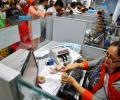
Major Indian banks, including Axis Bank, HDFC Bank, and RBL Bank, have reported a decline in employee headcount in FY26, attributing the reductions to significant investments in technology and automation yielding productivity gains across operations.

Nasscom President Rajesh Nambiar stated that artificial intelligence is not making India's Business Process Management (BPM) industry obsolete but is instead driving its significant reinvention. He highlighted that the sector has an opportunity to become the world's "intelligent operations and transformation hub" by leveraging AI, analytics, and cloud-based operations, moving beyond traditional call centres. Nambiar outlined three key priorities for the industry, including reimagining processes, building hybrid human-AI operating models, and redefining India's global BPM representation.

Bengaluru-based Remidio Innovative Solutions has secured a patent from the Japan Patent Office for its deep learning system that automates retinal image capture. This new patent enhances their existing intellectual property in Japan, strengthening their integrated AI platform and making retinal screening more accessible and cost-effective.
Women Inspiring Network (WIN) has launched 'WIN Connect', an AI-powered platform designed to connect global women leaders and enhance opportunities across various sectors. Unveiled in New York, the platform aims to leverage AI to facilitate networking, access to capital, and business growth for its 10,000-strong network across 50 countries.

The Goods and Services Tax (GST) Council is set to discuss proposals aimed at transforming the complex indirect tax system into a more business-friendly regime, focusing on simplifying compliance, reducing administrative burdens, and potentially raising the prosecution threshold.

The goal is to ensure that your bank works for you, providing liquidity and convenience without charging you for the privilege of holding your own money.
L&T Technology Services (LTTS) CEO Amit Chadha announced that artificial intelligence is a net positive for the company, with six key focus areas expected to contribute 80% of revenue in five years. These areas, including digital manufacturing and AI infrastructure, are projected to deliver higher growth and margins, offsetting pricing pressures in traditional IT services. LTTS also inaugurated an NVIDIA-powered AI manufacturing lab in Bengaluru.

The Enforcement Directorate has attached fresh assets worth Rs 442 crore belonging to online gaming company Gameskraft and its app RummyCulture, bringing the total frozen assets in the money laundering probe to Rs 2,843 crore. The agency alleges the company used bots to defraud users and generated proceeds of crime through platform commissions.

Jio Platforms (JPL) is preparing a capex-light strategy to commercially launch 6G services in the early 2030s through software upgrades, rather than fresh infrastructure investments, according to Akash Ambani, managing director of JPL.

Kerala Home Minister Ramesh Chennithala announced plans to strengthen the state police's Cyberdome to combat cybersecurity threats and deploy indigenously developed robots for traffic management and disaster response. He emphasised the need for coordinated efforts to address growing cyber challenges and protect critical infrastructure, while also highlighting the role of the CoCoN conference in sharing knowledge.

A World Bank report, 'The Promise of Artificial Intelligence', states that AI presents a historic opportunity for low- and middle-income countries to overcome development challenges, despite many being unprepared. It advises these nations to adopt and adapt existing AI tools rather than focusing on building frontier models immediately. The report also notes a significant gap in AI adoption and job automation between high-income and developing countries.

A global research report by HCLTech indicates that integration has surpassed supply chain constraints as the primary challenge for the semiconductor industry. The study, which surveyed 300 senior leaders, highlights increasing dependency on semiconductors across industries, with 98% of enterprises more reliant now than three years ago and 99% expecting further increases. AI is also driving the strategic importance of semiconductor architecture.

India's cybersecurity agency, CERT-In, has issued a critical advisory warning about autonomous AI agents accessing sensitive data of Indian organisations without authorisation. Government sources on Friday emphasised the need for companies to bolster cybersecurity measures and monitor system activity, noting that while no major compromise occurred, the incident serves as an early warning. Future AI regulation is expected to address the risks posed by these agents.
IBM India and South Asia MD Sandip Patel states that technology, especially AI, should not be "artificially paused." He advocates for vigilance and proactive governance to foster innovation while addressing potential risks. Patel also highlights IBM's India-specific initiatives like Bharat Core and a sovereign AI stack, and discusses the impact of AI on jobs and global supply chains.
Industry leaders at MRAM Expo 2026 highlighted that India's maintenance economy has the potential to unlock a 1 per cent GDP opportunity. This growth can be achieved by addressing productivity losses from equipment breakdowns, unplanned downtime, and inefficient assets through smarter asset management practices. The NITI Aayog also supports AI-based predictive maintenance for resilient infrastructure, while the Indian Asset Performance Management market is projected for substantial growth by 2033.

TRAI Chairman Anil Kumar Lahoti has called for robust safeguards, human oversight, and intervention capabilities as Artificial Intelligence becomes increasingly integrated into telecom networks. While acknowledging AI's potential to transform network management and threat detection, Lahoti stressed the need for responsible AI deployment, risk assessments, and clear accountability to ensure consumer trust and prevent misuse, especially in combating online fraud.

A new report by CIEL HR indicates a massive 260 per cent year-on-year surge in demand for Agentic AI engineers in India by 2026. This growth highlights AI's increasing role in automating routine tech functions and the evolving landscape of technology skills, prompting organisations to invest in reskilling and talent development to meet the rising demand for AI, cloud, and cybersecurity expertise.
Atomic Energy Commission chairman Ajit Kumar Mohanty stated that India is on the verge of a significant technological transformation, driven by advancements in AI, quantum technologies, and other fields. Speaking at BIT Mesra's convocation, he emphasised the need for strong indigenous capabilities, skilled professionals, and interdisciplinary collaboration to achieve a developed India. Other speakers, including BIT Mesra's Chancellor and Vice Chancellor, echoed the importance of continuous learning and contributing to national progress.
India's MSME sector faces a significant formal credit gap of approximately Rs 60 lakh crore, with traditional channels meeting only a fraction of the demand. A new report suggests that a centralised, interoperable digital layer could effectively bridge this gap and enhance productivity across the formal business sector by digitising workflows and enabling cash-flow-based underwriting.
Tata Consultancy Services (TCS) has inaugurated India's first Industrial Autonomy & Engineering Lab in Pune, a "lights-out factory lab" designed to advance AI-led manufacturing. The facility features a robotic battery pack assembly line, enabling manufacturers to prototype and scale AI-first production systems with minimal human intervention, simulating self-optimising factories.

Zoho cofounder Sridhar Vembu dismisses exaggerated fears about AI's catastrophic potential and global development pauses. He advocates for India to adopt an independent AI strategy, fostering partnerships while avoiding entanglement in US-China tech rivalry. Vembu stresses extensive investment in foundational R&D across sectors, distinguishing it from costly frontier AI model development. He also highlights concerns about AI's impact on human judgment, skill erosion, and job disruption, particularly in software engineering, while remaining optimistic about new economic opportunities.
Bharti Airtel's homegrown cloud platform, Airtel Cloud, has acquired approximately 40 customers within a year of its launch, with a significant portion coming from the manufacturing sector. The platform, designed for Indian companies, offers sovereign, telco-grade cloud infrastructure, connectivity, and GenAI-based provisioning, addressing the growing demand for secure, India-hosted data solutions, particularly for sensitive workloads and regulated sectors.
A joint report by Dell Technologies and Zinnov reveals that despite high ambition, nearly 70% of India's Global Capability Centres (GCCs) are stuck at the pilot stage for AI adoption. Foundational gaps in data, infrastructure, and governance are identified as key bottlenecks preventing the scaling of AI initiatives into enterprise-wide production. The report highlights the need for significant reskilling of the workforce and robust foundations for industrialising AI responsibly.

India's leading IT companies are anticipated to report subdued revenue growth and largely stable margins for the July-September quarter, as clients maintain tight discretionary budgets, with analysts closely watching the conversion of strong bookings into revenue and the impact of AI on traditional services.
