

Major Indian banks like Axis Bank, HDFC Bank, and RBL Bank are strategically reducing their employee headcounts, leveraging substantial investments in automation and artificial intelligence to enhance productivity and streamline operations across their services.
Key Points
- Axis Bank, HDFC Bank, and RBL Bank reported a decline in employee headcount in FY26, with Axis reducing its workforce by over 3,100 and HDFC by 3,343.
- The headcount optimisation is primarily driven by long-term investments in technology and digitisation, leading to significant productivity gains across various banking operations.
- While AI is currently enhancing processing speed and data usage, its full impact on workforce numbers is expected to materialise over the next year.
- Reductions are most visible in frontline operations, sales, and customer support roles, as digital product adoption and automated systems handle tasks previously performed by entry-level staff.
- Banks view technology as a strategic advantage, with HDFC Bank quadrupling its tech investments to approximately $1 billion to operate as a 'tech-first institution'.
Some of India’s major banks, including Axis Bank, HDFC Bank, and RBL Bank, reported a decline in employee headcount in 2025-26 (FY26) compared with 2024-25 (FY25).
Axis, India’s third-largest private sector lender, reduced its employee headcount by over 3,100 in FY26, as investments in technology (tech) over the years began yielding productivity gains.
The bank’s workforce declined from 104,400 at the end of FY25 to 101,300 at the end of FY26, with the reduction taking place gradually over the course of the year.
HDFC, the country’s largest private lender, reduced its employee headcount by 3,343 in FY26, with its workforce declining from 214,521 in FY25 to 211,178 in FY26.
Meanwhile, RBL cut headcount by 949 employees, from 14,265 in FY25 to 13,316 in FY26.
Technology Investments Drive Efficiency
According to Subrat Mohanty, executive director of banking operations and transformation at Axis Bank, the trend of headcount optimisation at Axis continues as investments made in tech over the years begin to yield productivity benefits.
The bank added around 400 branches during FY26.
“We are gaining productivity across the board — through training and employee enablement, improved branch productivity, and support from tech and digitisation,” he said.
He added that the impact of artificial intelligence (AI) on workforce numbers is yet to fully materialise.
“At present, AI is largely improving processing speed, enhancing data usage, and enabling faster end-to-end transaction completion,” Mohanty said.
According to him, the benefits of AI have so far been more visible on the business side, while its impact on headcount is expected to emerge over the next year.
“What we are currently seeing is continued investment in tech, along with employee enablement and training, leading to steady productivity gains on a quarter-on-quarter basis,” he added.
Frontline Operations See Initial Gains
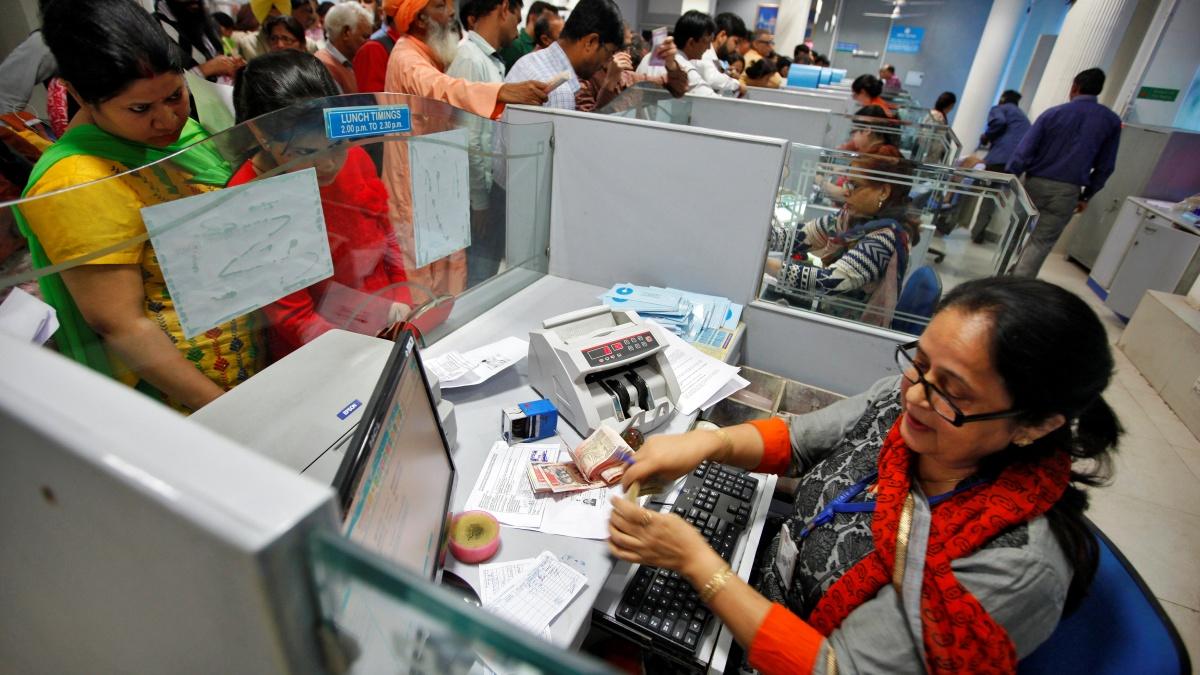
Axis did not specify the segments where the reduction in headcount took place. Mohanty said early gains are visible in frontline operations.
“As a large distribution organisation with a significant on-ground workforce, improvements in productivity at branches and customer touchpoints are where the initial gains are coming from,” he said.
Tech investments have remained consistent over the past three to four years at 9–10 per cent of Axis’ operating income.
"We view tech as a long-term strategic advantage and have continued to invest irrespective of the business cycle,” Mohanty said.
Meanwhile, Sashidhar Jagdishan, CEO of HDFC Bank said the bank’s tech investments have quadrupled to around $1 billion.
“The most important strength will be our leadership in the tech space.
"Over the past few years, we have focused on strengthening the bank’s long-term competitive position, anchored heavily in our tech architecture, to operate as a tech-first institution,” he said.
“This leadership position will enable us to harness efficiencies across the organisation and will be a key driver in enhancing return on assets over the next one to three years.
"The guiding principles are return on assets, loan growth, deposit growth, and balance-sheet quality from a risk standpoint.
"All of it should culminate in consistent earnings per share growth,” he said.
Automation, Not Just AI, Drives Changes
According to Kartik Narayan, CEO of Jobs Marketplace at Apna Group, the decline in bank workforce is mainly due to increased automation rather than AI alone.
While the number of branch-level staff remains largely unchanged, major reductions are occurring in sales and customer support roles due to digital product adoption, automated calls and tech-driven processes.
It is primarily automation at work, with AI enhancing efficiency and decision-making capabilities.
Entry-level roles can now be handled through automated or AI-assisted systems, reflecting a broader shift across the banking, financial services and insurance sector towards tech-led optimisation, Narayan said.










 © 2026