
India's Engineering Research and Development (ER&D) sector is projected to exceed USD 100 billion in revenue by 2030, driven significantly by the integration of Artificial Intelligence (AI) into engineering workflows. This growth, highlighted by Nasscom, positions India as a critical global engineering hub, necessitating focus on talent development and strategic partnerships.

Data infrastructure company NetApp has introduced Novus, a new storage architecture designed for large-scale AI factories, alongside significant enhancements to its AI Data Engine, hybrid multi-cloud operations, and strategic partnerships with Nutanix and SAP. These initiatives aim to improve data management, security, and efficiency for AI workloads and enterprise cloud infrastructure.

A global research report by HCLTech indicates that integration has surpassed supply chain constraints as the primary challenge for the semiconductor industry. The study, which surveyed 300 senior leaders, highlights increasing dependency on semiconductors across industries, with 98% of enterprises more reliant now than three years ago and 99% expecting further increases. AI is also driving the strategic importance of semiconductor architecture.

AI infrastructure firm AM Intelligence announced plans to invest over USD 20 billion in the next 15 months to significantly expand its data centre capacity, including firm orders for 20,000 NVIDIA Rubin GPUs. This expansion will bring its total capacity to 100 Megawatt initially, with a broader goal of 1 GW of compute-as-a-service capacity globally, establishing it as a major buyer of advanced AI hardware.
Ericsson CEO Andres Vicente emphasised the critical need for technology alignment and ecosystem collaboration to ensure security in the age of Artificial Intelligence. Speaking on Wednesday, he highlighted that AI's benefits in productivity and innovation cannot be forgone, making shared security concerns across interconnected tech layers paramount. Ericsson is actively working with partners through the Trusted Tech Alliance to establish common AI-era security understandings.

Nandini Gupta who interned at an IT firm explains how Artificial Intelligence can change our future.
Experts at a national symposium in Shillong discussed the role of Artificial Intelligence in tourism, emphasising that AI should support human judgment, local knowledge, and cultural values rather than replace them. Discussions highlighted the need for robust policies to address ethical concerns, safeguard livelihoods, and preserve cultural heritage while leveraging AI for innovation and sustainability in the tourism sector, particularly in Meghalaya.

India has secured a spot among the top 10 leading emerging-market performers in artificial intelligence (AI) readiness, with private investment in AI more than tripling to USD 4.1 billion in 2025, according to a new World Bank report.
A national study of top 75 Indian B-schools reveals a significant competency gap in AI skills among management graduates, with industry expectations far exceeding current MBA capabilities. A new framework by AIMS, EPSI, and IMC highlights the urgent need for management education to adapt to an AI-led workplace, emphasizing behavioural competencies alongside data fluency.

Punjab School Education Board announces integration of Artificial Intelligence as a core component of the school curriculum, with learning outcomes reflected on student certificates.

Experts at the TIS-H Clinical AI Summit 2026 highlighted the critical need for real-world evaluation of AI solutions in healthcare. They stressed that promising results from development or pilot programmes do not guarantee effective and safe deployment in hospitals, emphasising clinical relevance, validation, and integration into existing workflows.
The National Medical Commission is emphasising the importance of preparing doctors and healthcare systems for the responsible and effective use of artificial intelligence, highlighting the need for ethical and equitable AI adoption in healthcare.
Union Education Minister Pralhad Joshi announced that revised NCERT textbooks for classes 10 to 12 are being prepared in "mission mode," while textbooks for classes 1 to 9 under the new National Curriculum Framework have already been released. He emphasised NCERT's role in building a 'Viksit Bharat' and highlighted the need for curricula to evolve with AI advancements and the importance of India's young population as a global asset.
Atomic Energy Commission chairman Ajit Kumar Mohanty stated that India is on the verge of a significant technological transformation, driven by advancements in AI, quantum technologies, and other fields. Speaking at BIT Mesra's convocation, he emphasised the need for strong indigenous capabilities, skilled professionals, and interdisciplinary collaboration to achieve a developed India. Other speakers, including BIT Mesra's Chancellor and Vice Chancellor, echoed the importance of continuous learning and contributing to national progress.

Patrice Caine, Chairman and CEO of Thales, highlighted Artificial Intelligence as both a major cybersecurity challenge, accelerating attack speed and autonomy, and a crucial tool for defenders. He also warned about quantum computing's future threat to encrypted data. Thales introduced new AI-powered solutions like Luna 8 and CipherTrust DSPM at its Cyber Summit 2026 to combat these evolving threats.
A new report from Cambridge University Press & Assessment highlights the critical need for Indian policymakers to collaborate with teachers in developing AI education policies. The study emphasizes investing in teacher professional learning and involving educators and learners in the design and evaluation of AI tools to ensure policies are grounded in classroom realities and promote critical AI literacy.
ServiceNow has launched AI Workflow Factory and Autonomous Engineer, new solutions designed to help enterprises integrate and scale AI workflows, closing execution gaps caused by legacy infrastructure. These tools aim to accelerate business operations, with Indian partners already adopting them, reflecting India's faster AI operationalisation compared to the global average.

HCLTech has launched 'HCLTech Pulse', a new business unit designed to help enterprises with annual revenues between USD 500 million and USD 5 billion accelerate their adoption of artificial intelligence and modernise their technology infrastructure, targeting a USD 400 billion global market opportunity.
Former Chief Economic Adviser Krishnamurthy V Subramanian outlines India's strategy to become a USD 55 trillion economy by 2047. The plan hinges on leveraging its young demographic in AI, dominating sunrise sectors like space and defence tech, attracting FDI, and achieving sustained 8% GDP growth.

Nasscom President Rajesh Nambiar stated that artificial intelligence is not making India's Business Process Management (BPM) industry obsolete but is instead driving its significant reinvention. He highlighted that the sector has an opportunity to become the world's "intelligent operations and transformation hub" by leveraging AI, analytics, and cloud-based operations, moving beyond traditional call centres. Nambiar outlined three key priorities for the industry, including reimagining processes, building hybrid human-AI operating models, and redefining India's global BPM representation.

The Maharashtra government has approved the deployment of sovereign artificial intelligence solutions from Sarvam AI for its departments, with a two-year outlay of Rs 11.26 crore. This initiative includes the Indus AI workspace for 2,500 users, ensuring government data remains within India, along with citizen outreach agents and speech models for the MahaAI platform.
Uttar Pradesh Governor Anandiben Patel addressed AI Manthan 2.0, advocating for the comprehensive integration of Artificial Intelligence across all university subjects rather than as a standalone course. She urged universities to develop clear, time-bound AI roadmaps covering education, research, healthcare, and agriculture, emphasising indigenous AI development, employment creation, and the importance of "Safe and Trusted AI." The event also saw the formation of an AI Policy Advisory Group and an AI Implementation Group to drive these initiatives.
SEBI Chairman Tuhin Kanta Pandey stated that cybersecurity is now a board-level concern, not just an IT challenge, emphasising the need for caution when deploying artificial intelligence in critical infrastructure. He highlighted that AI for cybersecurity must be secure, governed, and accountable, and also addressed the emerging risks from quantum computing, urging collective resilience and sharing of best practices among regulators.

A PwC India report highlights that the competitiveness of India's industrial manufacturing sector hinges on the seamless integration of Artificial Intelligence (AI) into business strategies and operations. The report indicates that a significant majority of Indian manufacturers view AI as crucial for achieving strategic goals and are accelerating automation across various functions to build intelligent enterprises and gain sustainable competitive advantage.
Kerala Chief Minister V D Satheesan announced the state's vision to become a national hub for artificial intelligence and emerging technologies, coinciding with the launch of Naviq Technology by IBS Software Group. The state government is implementing initiatives like an AI-powered dashboard, a Global Job Watch Tower, and curriculum revisions to align with technological advancements and foster skill development in AI and semiconductor sectors.

Air India's use of artificial intelligence (AI) has had a huge impact on the airline major's call centre volumes and the technology integration has reduced costs by 100 times, a senior company executive said on Wednesday. The airline launched its own chatbot AI.g, earlier known as Maharaja, in May 2023. The chatbot has answered approximately two million queries since its launch, handling 93 per cent of customer inquiries without needing to pass them on to call centre agents, said Sathya Ramaswamy, Chief Digital and Technology Officer, Air India.
A new IDC report reveals that artificial intelligence is prompting organisations worldwide to retrieve and utilise previously archived, "cold-tier" data for AI training, significantly increasing its perceived value and leading to longer data retention periods and a burgeoning market for datasets.

Finance Minister Nirmala Sitharaman has called for enhanced accountability and safeguards for artificial intelligence, particularly as it integrates into critical sectors like finance. Speaking at the Global Fintech Fest, she highlighted the dual nature of AI, capable of accelerating transactions but also amplifying fraud and cyberattacks. Sitharaman stressed the need for human and institutional responsibility in AI-driven decisions, urging regulators and companies to scrutinise high-risk AI applications. She also proposed a federated industry platform for Indian tech companies to navigate international regulations and ensure tax compliance globally.
Adani Enterprises and US-based Jabil have signed a non-binding agreement to establish a 50:50 joint venture in India. This JV will manufacture artificial intelligence and data centre equipment, including AI racks, servers, storage, networking gear, and cooling systems, targeting both Indian and global markets. The collaboration aims to capitalise on India's accelerating data centre demand and the surging global investment in AI compute infrastructure.
Workday, a global HR tech major, has unveiled its new AI platform, Sana, designed to automate human resources and finance functions. Chairman and CEO Aneel Bhusri stated that AI is likely to replace low-cost, outsourced jobs due to increased productivity, rather than leading to jobs moving out of first-world countries. The platform uses AI agents for tasks like payroll and compliance, and Workday has acquired C1.ai to manage access rights for these agents. Bhusri emphasised that AI should augment humans, redefining roles rather than replacing them entirely.
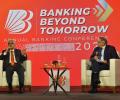
Bank of Baroda has launched 'bob World 2.0', an AI-powered mobile banking app featuring voice-command capabilities for payments and navigation. The updated app also includes a personal finance management module and a persona-based customer experience, aiming to offer intuitive, secure, and personalised banking services.

A report by Bain & Company and HealthQuad identifies remote patient monitoring, OT/ICU optimisation, and chronic disease management as key opportunities for Artificial Intelligence in Indian healthcare. The report highlights a shift from experimental AI to real-world applications, driven by government initiatives, increasing EMR adoption, and a robust startup ecosystem. AI's autonomous capabilities are rapidly advancing while costs decrease, creating significant growth potential for providers and startups.

The Central Board of Indirect Taxes and Customs (CBIC) is set to significantly increase its use of artificial intelligence (AI), machine learning (ML), and real-time analytics in Customs processes, aiming for a near-touchless, near-digital clearance experience, according to Chairman Vivek Chaturvedi.
Bihar Chief Minister Samrat Choudhary has called upon ministers and legislators to extensively use digital technology and Artificial Intelligence (AI) for balanced development and improved public outreach. He highlighted the state government's existing use of AI in welfare programmes and project cost reduction, stressing its importance for Bihar's progress in the digital era.
The Haldwani forest division has launched India's first AI-based forest acoustic surveillance system. This innovative technology uses AI, acoustic sensors, and long-range wireless communication to detect illegal logging, poaching, and other suspicious activities in real-time, even in remote areas. Powered by solar energy, the system provides continuous monitoring, significantly enhancing forest protection, wildlife conservation, and biodiversity monitoring efforts.
Karnataka Chief Minister D K Shivakumar met with AI major Anthropic to discuss a long-term partnership aimed at accelerating AI adoption across governance, education, healthcare, research, and the state's startup ecosystem. The collaboration focuses on deploying AI solutions responsibly, ensuring data privacy, and developing AI-focused skilling programmes and an AI University.
Cisco Chairman and CEO Chuck Robbins stated that attempts to slow down AI development are futile. He emphasised that the primary focus should be on enhancing security and defensive measures to match AI's rapid advancement. Robbins also discussed the need for guardrails in AI model releases, the importance of cyber hygiene, and the balancing act between innovation and regulation, particularly for countries like India. He believes AI will not be a net job disruptor but will move people up the value chain.

Mahindra Group CEO Anish Shah emphasizes the critical role of Artificial Intelligence, advocating for its meaningful integration at scale across all aspects of the company. He highlights that AI is redefining industries and decision-making, urging a proactive approach to leverage its potential. Shah also addresses global uncertainties, stating the group's commitment to accelerate amidst challenges and aim for global leadership.

InsuranceDekho and RenewBuy have merged to establish India's largest artificial intelligence (AI)-enabled insurance distribution platform, targeting a significant premium book and extensive reach across the country.
Infrastructure major Larsen & Toubro (L&T) has secured a mega order, valued between Rs 10,000 and Rs 15,000 crore, to construct India's largest single-cluster artificial intelligence (AI) infrastructure facility. This strategic move marks L&T's entry into the AI Factory business, aiming to establish an NVIDIA B300-based AI Factory in Chennai to power the AI-native cloud platform of US-based Together AI, thereby strengthening India's AI ecosystem and supporting global innovation.
