
The Supreme Court of India has made public the asset details of its judges, including Chief Justice Sanjiv Khanna who has Rs 55.75 lakh in a fixed deposit, a three-bedroom DDA flat in south Delhi, and a four-bedroom apartment measuring 2,446 square feet in the Commonwealth Games Village. The court has also uploaded the complete process of appointments to the high courts and the Supreme Court on its website for public awareness.

Underscoring the 'presumption of constitutionality in favour of law', the Supreme Court on Tuesday said petitioners challenging the waqf law needed a 'strong and glaring' case for interim relief.

Tamil Nadu Chief Minister M K Stalin has welcomed the Supreme Court's ruling that state governors must give assent to bills passed by state assemblies, calling it a 'historic' victory for all state governments in India. The court's decision came after the Governor of Tamil Nadu, R N Ravi, withheld assent to several bills passed by the state legislature. The court found that the governor's actions were in violation of the Indian Constitution, which mandates that governors must act on the advice of the council of ministers. The ruling is seen as a significant step towards strengthening the federal structure of India.

The Chief Justice of India (CJI) Sanjiv Khanna has assured bar leaders that he will consider their demand for withdrawal of the collegium's recommendation to transfer Delhi High Court's Justice Yashwant Varma. The decision came after representatives of six bar associations of different high courts met with the CJI and other collegium members. The bar associations are protesting the proposed repatriation of Justice Varma to his parent high court, alleging that the evidence in a fire incident at his residence was tampered with. The bar associations have also raised concerns about the non-registration of an FIR in the incident.
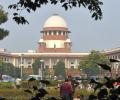
The Supreme Court on Monday said the pleas challenging the Waqf (Amendment) Act's constitutional validity will now be taken up by a bench headed by Chief Justice of India-designate Justice B R Gavai on May 15 as the incumbent CJI will be demitting office on May 13.
President Droupadi Murmu has given her assent to the Waqf (Amendment) Bill, 2025, which has sparked controversy and legal challenges. The Bill, passed by Parliament after heated debates, has been criticized by opposition parties as "anti-Muslim" and "unconstitutional". The government, however, maintains that the reform will benefit the Muslim community. Several petitions have been filed in the Supreme Court challenging the constitutional validity of the Bill, alleging discrimination against Muslims and undermining their religious autonomy. The Bill repeals the Mussalman Wakf Act, 1923, and introduces restrictions on Waqf properties and their management, which have raised concerns about the impact on the Muslim community.

Yogi said Waqf boards have become a den of selfish interests as well as loot khasot (property grabbing), and have done little for the welfare of Muslims.
The apex court had decided to hear the pleas related to the IOA and the AIFF together.
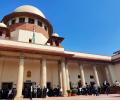
"It is shocking that the Supreme Court is adjudicating bail pleas in cases that should be disposed of at the trial court level. The system is being burdened unnecessarily," Justice Oka said while hearing a bail plea.

Reacting to the apex court verdict which upheld the death sentence awarded to Mohammed Ajmal Amir Kasab in the 26/11 Mumbai terror attack case, senior advocate Raju Ramachandran, who defended him in the apex court as amicus curiae, said he "bows down" to the ruling.
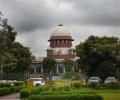
The Supreme Court of India has directed the directors general of police (DGP) of all states and union territories (UTs) to strictly adhere to safeguards available to persons in custody. The court made these observations after a man alleged he was held by Haryana Police in violation of the law on arrest and subjected to physical abuse. The court emphasized that even a 'criminal' enjoys certain legal protections and that police officers must be held accountable for any transgressions. It further directed its registry to send a copy of its judgment to all DGPs as a reminder to adhere to these safeguards.

Vice President Jagdeep Dhankhar has questioned the lack of an FIR in the case involving the discovery of burnt cash at a Delhi High Court judge's residence, raising concerns about potential immunity from prosecution for certain individuals. He criticized the delay in investigation and the in-house probe by a three-judge panel, highlighting the importance of transparency and the rule of law in addressing such a significant incident.
The Supreme Court of India has released an inquiry report into the alleged discovery of a large amount of cash at the residence of Delhi High Court judge Yashwant Varma. The report, which includes photos and videos, was uploaded on the court's website. Chief Justice of India Sanjiv Khanna has formed an in-house committee to investigate the matter and has asked the Delhi High Court Chief Justice to not assign any judicial work to Justice Varma. Justice Varma has denied the allegations, claiming they are part of a conspiracy to frame him. The inquiry report, submitted by the Delhi High Court Chief Justice, has been made public and calls for a deeper probe into the incident. The incident has raised concerns about judicial accountability and has prompted the Congress party to call for strong measures to uphold public trust in the judiciary.
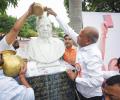
'There were deep discussions within the Sangh Parivar before this decision was made.' 'They were convinced, and only then did the Modi government proceed with the caste census.'

The Supreme Court of India has asked DMK leader V Senthil Balaji to choose between his ministerial post in Tamil Nadu and his freedom. The court expressed concern over Balaji's reinstatement as a minister despite being granted bail in a money laundering case related to the "cash-for-job" scam. The court fears that Balaji's presence as a minister could influence witnesses in the case. The court has given Balaji until April 28 to make a decision.

The Supreme Court of India has dismissed a public interest litigation (PIL) seeking to make dowry harassment and maintenance provisions "gender neutral." The court stated that it cannot legislate law and it is the responsibility of Parliament to look into such matters. The PIL, filed by an NGO, argued that these provisions are often misused to harass husbands and their families. The court, however, emphasized that every case must be judged on its own merits, and that the provisions are intended to protect women and children. The court also noted that the allegation of misuse was vague and that such claims should be examined on a case-by-case basis.

Speaking about the tough phase he went through, Allahbadia said he doesn't consider it as a punishment.
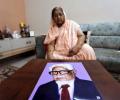
Zakia Jafri, the wife of former Congress MP Ehsan Jafri who was killed in the 2002 Gujarat riots, died on Saturday in Ahmedabad at the age of 86. Ehsan Jafri was among 69 persons who were killed inside Gulbarg Society, a Muslim neighbourhood in Ahmedabad, on February 28, 2002, a day after coaches of the Sabarmati Express train were burnt in Godhra, resulting in the deaths of 59 'karsevaks' returning from Ayodhya. The incident triggered horrific rioting across the state. Zakia Jafri hit the national headlines as she waged a legal battle all the way to the Supreme Court in a bid to hold top political leaders accountable for the large conspiracy for the riots post the Godhra train burning episode. Her son Tanveer Jafri said that his mother was visiting his sister's house in Ahmedabad when she complained of feeling uneasy. The doctor who was called in declared her dead at around 11:30 am. Social activist Teesta Setalvad, who was co-complainant in Jafri's protest petition in the Supreme Court, posted on X that Zakia Jafri was a compassionate leader of the human rights community.

'I represented India across the world, but here, in my own country, I was treated in this bad manner.' 'Everyone in Prayagraj respects me a lot and it is in this same city that I became homeless.'

The Supreme Court will hear on February 19 pleas challenging the appointments of the Chief Election Commissioner and Election Commissioners under the 2023 law. The court will take up the matter on a priority basis, after some urgent listed matters. The government has appointed a new CEC and ECs under the new law, which excludes the Chief Justice of India from the selection panel, despite a 2023 Supreme Court verdict directing the inclusion of the CJI in the panel. The petitioners argue that the exclusion of the CJI undermines the independence of the election commission.
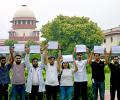
'Residence-based reservation in PG medical courses is violative of Article 14 of the Constitution.'

A five-judge bench of the Supreme Court will consider review pleas challenging the October 2023 verdict that declined legal sanction to same-sex marriage. The review pleas will be heard in chambers on January 9, with Justice P S Narasimha being the only member of the original bench that delivered the verdict.

The Supreme Court on Thursday refused to transfer the rape and murder trial pertaining to a doctor in Kolkata outside West Bengal.

Tamil Nadu Chief Minister M K Stalin has announced that the state's Assembly resolution seeking NEET exemption, which was sent for Presidential assent, has been declined by the Centre. Stalin termed the rejection as a "dark chapter in federalism" and accused the Centre of disregarding the will of the Tamil Nadu people. He also announced an all-political party meeting on April 9 to discuss the issue further.

On November 18, the apex court directed all Delhi-NCR states to immediately set up teams to strictly enforce anti-pollution GRAP 4 restrictions, making it clear that the curbs would continue till further orders.

A five-member Constitutional Bench of the Supreme Court led by Chief Justice Cholendra Shumsher Rana issued the verdict stating that President Bhandari's decision to dissolve the lower house upon a recommendation of Prime Minister K P Sharma Oli was an unconstitutional act, delivering a major blow to the veteran Communist leader who was preparing for snap polls.
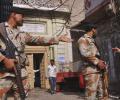
The chief priest of the biggest Hanuman temple in Pakistan, Sant Ram Nath Mishra, has said that the Pakistani Army has always supported Hindus in their struggle against extremist groups in the country. Mishra, who is currently on a visit to Hindu religious sites across India, recounted the struggle of the Panch Mukhi Hanuman Mandir in Karachi, which was encroached upon over the decades but was restored following a landmark Supreme Court ruling in 2018. He said that the Pakistani Army and government swiftly implemented the Supreme Court's decision to return the temple land, despite opposition from hardline groups. Mishra also highlighted the need for easing visa restrictions between India and Pakistan, allowing Hindus on both sides to visit religious sites in each other's countries.
The Centre said as a matter of judicial review, the court could declare the provisions to be unconstitutional, however, the relief sought by the petitioner effectively sought to read "life-long" instead of "six years" in all sub-sections of Section 8 of the Act.

The Supreme Court has adjourned pleas challenging the appointments of the chief election commissioner (CEC) and election commissioners (ECs) under the 2023 law. The court indicated the matter would be listed after the Holi festival break due to a paucity of time. Petitioners, including the NGO Association for Democratic Reforms, argued for an urgent hearing, emphasizing the importance of the issue and the potential impact on democratic processes. The appointment of the new CEC and ECs under the 2023 law, which excludes the Chief Justice of India from the selection panel, has been a point of contention, with petitioners alleging it undermines the independence of the election commission.
The Supreme Court on Thursday dismissed a batch of pleas seeking to review its October 2023 verdict declining legal sanction to same-sex marriage.
The Supreme Court of India has ruled that governors cannot indefinitely delay giving assent to bills passed by state legislatures, setting a timeline of one to three months for their actions. The court said the governor must act "as soon as possible" and that failure to comply with the timeline will make their inaction subject to judicial review. The ruling comes as several opposition-ruled states have accused governors of delaying assent to bills passed by their assemblies.

As votes for the Delhi assembly polls were counted on Saturday, latest data of the Election Commission showed that NOTA option got 0.57 per cent vote share as compared to 0.55 pet cent of the Bahujan Samaj Party and 0.01 per cent of Communist Party of India-Marxist.
The Supreme Court on Monday agreed to consider listing for urgent hearing the petitions challenging the constitutional validity of the Waqf (Amendment) Act, 2025.

The Supreme Court has announced it will decide in April whether to reconsider its 2022 verdict upholding the Enforcement Directorate's powers to arrest and attach property under the Prevention of Money Laundering Act (PMLA). The court is hearing a batch of pleas seeking a review of the July 2022 verdict, which upheld the ED's powers of arrest and attachment of property involved in money laundering, search and seizure under the PMLA. The verdict came on a batch of over 200 petitions filed by individuals and other entities questioning various provisions of the PMLA.
The Supreme Court of India has overturned an order by the National Green Tribunal (NGT) that halted construction activities at Auroville in Chennai. The court emphasized the need for a "golden balance" between the right to development and the right to a clean environment, upholding the principle of sustainable development. The decision comes as a victory for the Auroville Foundation, which had challenged the NGT order, and highlights the ongoing debate about balancing environmental concerns with economic growth in India.

The Supreme Court of India began hearing a batch of petitions challenging the constitutional validity of the Waqf (Amendment) Act, 2025. The bench, led by Chief Justice Sanjiv Khanna, asked both sides to address whether the court should entertain the petitions or relegate them to the high court. The hearing is underway with senior advocate Kapil Sibal arguing for the petitioners. The act, which was passed by Parliament following heated debates, has been challenged by various parties including AIMIM leader Asaduddin Owaisi, All India Muslim Personal Law Board (AIMPLB), and Jamiat Ulama-i-Hind.
The Supreme Court has dismissed a Public Interest Litigation (PIL) seeking the registration of an FIR over the alleged discovery of burnt wads of cash at the official residence of Delhi High Court judge Yashwant Varma. The court said an in-house inquiry was underway and there would be several options open to the Chief Justice of India after the probe's conclusion.

The Bombay High Court has ruled that Pushpa Ganediwala, the former HC judge who had faced criticism for a series of controversial judgments in POCSO Act cases, is entitled to receive pension on par with a high court judge. Ganediwala was demoted as district sessions judge at the end of her additional judgeship in 2022 following an uproar over some judgments passed by her on the interpretation of what constitutes a sexual assault under the Protection of Children from Sexual Offences (POCSO) Act. She had filed a petition challenging a communication issued by the HC registrar declaring that she was not eligible for pension of a HC judge. The court quashed the communication and directed the registry to fix her pension with 6% interest from February 2022.
The Supreme Court of India has expressed concern over the erosion of the family institution, stating that people in India, while valuing the concept of 'vasudhaiva kutumbakam' (the world is one family), are failing to maintain unity even within their immediate families. This observation came in a case involving a dispute between a mother and her eldest son over property and family relations.
The Supreme Court has sought a report from the Uttar Pradesh Police regarding allegations that Ashish Mishra, son of Union Minister Ajay Mishra, influenced witnesses in the Lakhimpur Kheri violence case. The court directed the Lakhimpur Kheri superintendent of police to file the report after a complaint was made by advocate Prashant Bhushan, representing the complainants. Bhushan claimed to have an audio recording of an attempt to influence witnesses and alleged that Mishra attended a public meeting in violation of his bail conditions. Mishra, through his lawyer, denied the allegations and stated that he was being targeted unnecessarily. The court has also asked for the authenticity of the material presented to be verified.
 © 2026 Rediff.com - Advertise with us - Disclaimer - Privacy Policy - Sitemap - Feedback - About us - Terms of use - Grievances