
'If the Opposition associates itself too much with the minorities, then it becomes easy for the BJP to get Hindu consolidation votes.'

What lessons opposition parties need to learn post defeat of Mamata Banerjee in West Bengal elections? The election saw spectacular victor of BJP which rose from 3 seats in 2016 to 206 seats in 2026 assembly elections.

A BJP government in Bengal inherits more problems than it might care to admit at its moment of triumph, points out Ramesh Menon

Building a party from scratch and leading it to electoral success is an entirely different challenge.

The Congress-led UDF has swept back to power in Kerala, sparking celebrations and discussions about forming the new government. Senior leaders are vying for the Chief Minister's post, while the defeated CPI(M)-led LDF grapples with the reasons for their loss after 10 years in power.

Kerala is set to hold its Assembly election, with the ruling LDF aiming for a historic third term, the UDF seeking a comeback, and the NDA striving to gain a foothold in the state's political landscape.

Voting has commenced in 142 constituencies for the second and final phase of the West Bengal assembly elections, with significant security measures in place. The outcome will determine whether the TMC maintains its dominance or if the BJP can gain ground in the state.

'He worked over time to become the natural claimant,' a senior UDF leader observed. 'Others had organisational stature, but Satheesan had momentum.' For the Congress, it may signal the beginning of a new leadership template -- one where performance, communication and grassroots credibility increasingly outweigh inherited power structures in deciding who leads the party into its next phase.

'Tamil Nadu has 42% of its population in the 18 to 39 age group. The bulk of the population in this age group voted for Vijay and women voters too voted for him in big numbers.'

The Left Democratic Front's defeat in Kerala marks a historic moment as Left parties are without power in any state for the first time in decades, highlighting their diminishing political influence across India.

In a state known for high political literacy and ideological mobilisation, the Congress' inability to quickly settle on a leader after securing a massive mandate has fed a narrative that the party remains excessively dependent on Delhi, deeply faction-ridden and vulnerable to internal sabotage

The BJP must respect Bengal's pluralistic ethos and with this historic mandate give the state the constructive change it truly deserves, expects Kolkata native Payal Singh Mohanka.

'...especially pressure on the rupee, the current account deficit, and foreign exchange outflows.' 'The key question over the next several months is whether the government can prevent external turbulence from feeding into domestic economic pessimism.'

Here are the main factors that impact the November 23 elections in the state.

Under the TMC, Bengal has seen expansion of welfare, but not big-ticket private investment.

'The AIADMK front comes second, and then the TVK.'

The first phase of the West Bengal assembly elections was disrupted by EVM glitches and overnight violence in several districts. Polling was halted or delayed at multiple booths due to malfunctioning Electronic Voting Machines. Incidents of violence were reported in Murshidabad and Cooch Behar, with political parties trading accusations.

This election is different. It is no longer simply about governance or welfare. It is about identity, fear, and who belongs. The BJP has successfully shifted the terms of the debate from what the government has delivered to who the real Bengali is and who is an outsider, points out Ramesh Menon.

Kerala's voters are sophisticated, educated, and unforgiving. They have once again made it clear that no government is entitled to remain in power. The Congress would do well to remember this, points out Ramesh Menon.

Prime Minister Narendra Modi launched a strong attack on the Mamata Banerjee government in West Bengal, accusing it of facilitating cultural changes through infiltration, presiding over a 'Maha jungleraj' in tribal areas, and betraying women, farmers, and youths.

'They will have to adjust themselves to the new reality. Because if they don't understand this changed political perception, their future will be difficult.'

'EPS exposed all the traitors. The DMK has given them political asylum. They are political orphans.'

Kerala's 2026 assembly election will see a three-cornered contest where religion and communalism have emerged as central themes for the first time, challenging the state's long-celebrated secular fabric.

'Narendra Modi -- a man with deep and vital experience of Indian politics -- has seen the BJP lose many elections between 1975 and 2015, and with every defeat, he learned lessons that made sure he would never allow his party to be defeated so easily again.'

Bhabanipur is set to be the focal point of the 2026 West Bengal assembly elections, with Mamata Banerjee and Suvendu Adhikari preparing for a high-stakes political battle. The constituency will witness rival processions and symbolic gestures as both parties aim to assert their dominance.

Uttam Ghosh offers his take on Prime Minister Narendra Damodardas Modi's interview where he denied any anti-incumbency against the BJP.

In West Bengal's assembly elections, fish has become a potent symbol of Bengali identity, with the Trinamool Congress and BJP clashing over food habits and cultural representation.

The BJP has nominated the mother of a victim in the RG Kar case from Panihati constituency for the upcoming West Bengal elections, aiming to leverage public outrage over the incident. This move is part of a broader strategy to challenge the ruling TMC by highlighting issues of women's safety and governance.

Union Home Minister Amit Shah accuses the West Bengal government of openly facilitating infiltration, defends the Special Intensive Revision of voter lists, and asserts BJP's prospects in upcoming elections.

Haryana is witnessing a multi-cornered contest this time, with the ruling Bharatiya Janata Party facing anti-incumbency and a resurgent Congress.

Tamil Nadu will elect a new government on April 23.
Will the DMK retain power? Can the AIADMK spring a surprise? And what about Vijay's TVK? A Ganesh Nadar surveys the election landscape a day after the Election Commission announced the poll schedule.

Bhupen Borah's resignation and swift switch to the BJP has dealt the Congress a major setback in Assam just weeks before the Assembly elections.

Winnability to be paramount in selection of candidates, followed by clean public image and proven loyalty to the BJP.
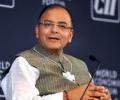
Buoyed by the BJP's show in the Lok Sabha and Assembly by-polls, party leader Arun Jaitley said that there was an anti-incumbency wave against the Congress across the country.

The PMK leader said that he came into the NDA fold to defeat the "anti-people" ruling DMK.

'The BJP will win comfortably if the Congress and AAP fight separately -- though not with 162 seats.' 'But if they form an alliance, it will become a major problem for the BJP. That's precisely why this expansion is happening now.'

Chief Minister K Chandrasekhar Rao-led Bharat Rashtra Samiti has pinned hopes on the development work his government undertook during the past ten years, while opposition Congress and BJP bank on anti-incumbency and the alleged failures of the incumbent.
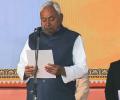
'Removing Nitish Kumar prematurely risks unsettling both the alliance balance and parts of the social coalition that delivered this victory.'

Singh stressed on discipline and unity in the party.

While the DMK depends on a 'silver sieve' of welfare schemes to stay in power, its support is slowly draining away under the weight of poor governance, corruption, and voters who are no longer satisfied with benefits alone and now want basic administration to work, observes N Sathiya Moorthy.
