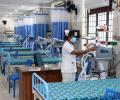
Two suspected cases of Nipah virus have been detected in West Bengal, prompting a national outbreak response team to be deployed. The central government is providing full support to the state.

The two nurses, who tested positive for Nipah virus, have been admitted to the Beliaghata ID Hospital in Kolkata, a senior state health department official said, while describing their condition as extremely critical on Wednesday.
India has reported 59 cases of Human Metapneumovirus (HMPV) and two deaths due to co-morbidities between January 6 and 29, according to Union Minister Prataprao Jadhav. The virus primarily affects young children, the elderly, and immunocompromised individuals, leading to respiratory illnesses. The government has taken measures to monitor and control the spread of HMPV cases and create public awareness.

A total of 43 districts in India are currently reporting AES cases.
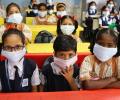
The H3N2, which has been in wide circulation for the past two-three months, causes more hospitalisations than other subtypes, said ICMR scientists who keep a close watch on ailments caused by respiratory viruses through the Virus Research and Diagnostic Laboratories network.

The Union health ministry has advised states to immediately review public health preparedness in view of recent reports indicating a surge in respiratory illness in children in northern China.

Till date eight cases of the disease have been detected in India, out of which five have foreign travel history, the minister of health and family welfare said.
'The fortunate part is that the severity is less. New strains are continuously forming and the virus is getting less severe.'
According to various global media reports, China is creating Covid-like pathogens in Pakistan that have the potential of causing virus contamination on a scale far higher than Covid.
Amid growing concerns over the detection of human metapneumovirus cases in India, health experts have emphasised the virus is not new, and advised people to stay calm and take basic precautions.
The ICMR-NICED authorities said it could be possibly because the kits "have not been standardized"
Rs 7,774 crore, has been provisioned for COVID-19 Emergency Response and the rest for medium-term support, ranging from one to four years to be provided under mission-mode approach.

Pune's Mylab Discovery Solutions' CoviSelf, which gives results in 15 minutes, gets ICMR nod
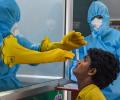
Private diagnostic laboratories have already approached the respective state governments and the municipalities where they are operating to approve protocols for such testing in clusters, reports Sohini Das.

Nanotechnology researcher Dr Anita Goel feels that India can benefit from the gene Radar sensing technology which can detect the presence or absence of a disease's pathogen with the same accuracy available only in a diagnostic lab, reports Suman Guha Mozumder.

The new test it will enable rapid testing amongst more people easily.

Those infected with the virus may have mild fever, skin rashes, conjunctivitis, muscle and joint pain or headache.

The ICMR said people having symptoms like fever, cough, sore throat and runny nose and residing in hotspots or cluster areas and in evacuee centres will now be tested for coronavirus infection.

The ICMR has validated 'TruenatTM beta CoV test on TruelabTM workstation' and has recommended it as a screening test,the apex health research body said on Friday.

Himachal Pradesh on Monday became the fourth state to report cases of bird flu after Rajasthan, Kerala and Madhya Pradesh, with officials confirming that migratory birds found dead at Pong Dam Lake in Kangra district have tested positive for the dreaded avian influenza.
The rapid molecular test is highly accurate and easy to use, making it a prime candidate for use in settings with limited testing capabilities, according to the researchers.

Why did the Chinese military take over the lab in Wuhan in end January? Did something go wrong? Claude Arpi glances at the mystery surrounding the origin of the coronavirus.
India's top vaccinologist Gagandeep Kang stressed the need to develop better vaccines that can deal with new variants, and strengthening of the regulatory mechanisms.
A 22-year-old man, who recently returned to Kerala from the UAE, allegedly died due to monkeypox on Saturday.
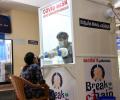
The diagnostic test kit developed by the Thiruvananthapuram institute can detect coronavirus in 10 minutes, and the sample to result time will be less than two hours, Vardhan tweeted. A total of 30 samples can be tested in a single batch on a single machine, he said.

Niclosamide, a drug on the World Health Organisation's list of essential medicines, has been used to treat tapeworm infestation for more than 50 years. The oral antiviral drug was also used to treat patients during the SARS outbreak of 2003-04.

While there is a shortage of testing kits, manpower and capacities, India does not have other scalable testing options.

'Serial testing is much more valuable than a single test which reflects just a point in time.'

While virologists say theoretically the vaccine that works on Delta should work on the Delta Plus variant as well, more research is needed.
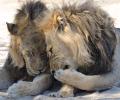
8 Asiatic lions in the zoo in have tested positive for COVID-19 after their saliva samples were thoroughly examined by CSIR-Centre for Cellular and Molecular Biology in Hyderabad, Rakesh Mishra, advisor of the premier research institute said.
'India is too large a place to have just 10 labs performing these Covid-19 tests.'
The researchers, including those from the Centre for DNA Fingerprinting and Diagnostics (CDFD) in Hyderabad, advise testing asymptomatic primary and secondary contacts followed by surveillance.

Named after Satyajit Ray's famed detective, the Feluda test, which is priced at Rs 500 and can deliver a result in 45 minutes, is able to differentiate SARS-CoV-2 from other coronaviruses even if genetic variations between them are minute.

Joint Secretary in the Health Ministry Lav Agarwal claimed that India has been doing better than many other countries on the outcome ratio, which is the number of recoveries from coronavirus infection versus the number of deaths.
Experts feel the figures are modest for a count of the size of 1.3 billion and "much more number of tests" are needed to combat COVID-19 outbreak in the country.

'We are a country of amazing ability and the way we have responded to the pandemic is evidence.'

It took 64 days for COVID-19 cases in India to touch the (May 19) one lakh-mark from 100 cases, and another fortnight to cross two lakh cases on June 3. It took 10 days for the tally to touch the three lakh-mark and another eight days for the cases to climb to four lakh.

Scientists associated with Indian SARS-CoV-2 Consortium on Genomics (INSACOG), the government panel that conducts research on different variants of the coronavirus, said they were surprised at noted virologist Shahid Jameel's decision to quit the group and wondered whether he was disillusioned with the government's handling of the pandemic.

'The more people get tested, the more people will come under isolation. So the spread will get limited with testing.'
'This year, we know the virus. Last year we didn't know anything about it.' 'The best part is that for the Indian population there has been some amount of cross protection.'
 © 2026 Rediff.com - Investor Information - Advertise with us - Disclaimer - Privacy Policy - Sitemap - Feedback - About us - Terms of use - Grievances