
Tata Consultancy Services (TCS), the group's biggest cash generator, overtook Vedanta to become the highest dividend payer in India in FY23. The IT services major paid Rs 42,090 crore for FY23, up 167.4 per cent from Rs 15,738 crore for FY22. The 10 biggest payers together shelled out Rs 2.06 trillion for FY23, more than double the Rs 98,371 crore for FY22.

Billionaire Anil Agarwal-owned mining firm Vedanta Resources on Thursday said it is in talks to buy a stake in Cairn India, the company that owns the nation's largest onland oilfield.

Clearly, Foxconn Chairman Young Liu and his team are looking to raise their game in India.


The UK-based Cairn Energy on Monday said it will sell 51 per cent stake in its Indian unit to mining firm Vedanta Resources Plc for $8.48 billion.
The group also has plans to spend Rs 50,000 crore (Rs 500 billion) on power generation. The London-listed giant will spend Rs 43,000 crore (Rs 430 billion) to enhance its capacity, in addition to its Rs 50,000-crore (Rs 500-billion) plan in power generation.
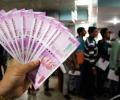
Future Gaming and Hotel Services whose director is the lottery magnate Santiago Martin is the top purchaser of electoral bonds having purchased bonds worth Rs 1,368, according to data uploaded by the Election Commission of India on its website on Thursday.

The National Company Law Appellate Tribunal on Monday stayed industrialist Anil Agarwal's Twin Star Technologies' Rs 2,962.02 crore-takeover bid of debt-ridden Videocon Industries. A two-member NCLAT bench headed by its Officiating Chairperson Justice A I S Cheema stayed the order passed by the Mumbai bench of the National Company Law Tribunal on June 9. The National Company Law Appellate Tribunal's (NCLAT) direction came over two petitions filed by unsatisfied creditors -- Bank of Maharashtra and IFCI Ltd. The appellate tribunal has issued notices to the Committee of Creditors, the Resolution Professional of Videocon and the successful resolution applicant Twin Star.
In a big blow to Vedanta Resources, the government on Tuesday rejected environment clearance to its $1.7-billion bauxite mining project in Orissa after accepting recommendations of its key panel clearing such ventures.

Which entrepreneur would willingly part with her or his hard-earned money for grasping, self-serving politicians? asks Debashis Basu.

'This government is not in the hands of M K Stalin but in the hands of the bureaucracy -- the IAS and IPS.'
Vowing not to give an 'inch of land belonging to Lord Jagannath of Puri' for the proposed Vedanta University in Orissa, Vishwa Hindu Parishad international secretary General Pravin Bhai Togadia on Wednesday said his outfit would fight tooth and nail to protect the 'land of the Lord'. "We vehemently oppose the move of the Naveen Patnaik-led government to hand over thousands of acres of land belonging to Lord Jagannath and the VHP," he said.

Interview with chairman, Vedanta.

Politely decline to be prime minister, and hand the baton to someone else in the BJP -- like Sonia did to Manmohan Singh -- advises Krishna Prasad.

Hindustan Zinc (HZL), a subsidiary of Vedanta, announced an interim dividend of Rs 21 per share last week, resulting in an outflow of Rs 8,863 crore. The announcement has turned the spotlight on India Inc's dividend-paying policy - more so for reasons driving the generosity of firms. An analysis of BSE 500 companies by Business Standard Research Bureau shows that some of the top 20 dividend-paying companies in 2021-22 (FY22) include Vedanta, Tata Consultancy Services, HZL, Oil and Natural Gas Corporation (ONGC), Indian Oil Corporation (IndianOil), Hindustan Unilever (HUL), Reliance Industries (RIL), and Bajaj Auto, among others.

The Nationalist Congress Party, the main opposition outfit, accused the neighbouring state, ruled by the Bharatiya Janata Party, of 'snatching morsel from Maharashtra's mouth.'
State industries minister Uday Samant alleged the previous Maha Vikas Aghadi dispensation was responsible for the loss as it sat on the project offer for seven months whereas the new government approved incentives worth Rs 38,831 crore in July.

The government has already said it is keen on starting ore mining and exports.

The maintenance work will include operations such as removal of remaining gypsum and leachate handling operations among others. Based on this, the district administration has now allowed the firm to maintain the plant after five years.

Rajya Sabha MP Kapil Sibal on Friday described the electoral bonds scheme as a 'very big scam' and demanded that a special investigation team (SIT) be set up with court-appointed officials to probe the alleged quid pro quo and wrongdoings under it.
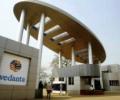
Sourcing bauxite from other states to add Rs 600 crore to cost.

'While lower steel prices may impact a part of the quarter, this will be offset by softer raw material prices.'

The Congress on Friday alleged that the electoral bonds data has exposed 'corrupt tactics' of the Bharatiya Janata Party such as quid pro quo, seeking donations for the company's protection, kickbacks and money laundering through shell companies.

Asia's richest man, Mukesh Ambani, signed off an address to employees last week by assuring them that 2024 would be better than 2023 for both Reliance Industries and India. Ambani isn't an exception. Promoters and their representatives from several other conglomerates have expressed similar optimism.
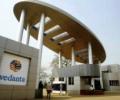
The company shut down its 1-mtpa (million tonnes per annum) alumina refinery at Lanjigarh in Kalahandi district in the state on December 5 due to acute shortage of bauxite to feed its plant.

The Sensex ended in red on domestic concerns.

Nearly 90 per cent of the stocks comprising the National Stock Exchange Nifty 500 Index and 49 of the 50 stocks that make up the Nifty50 are trading above their respective 200-day moving averages (DMAs). The 200-DMA is considered one of the most relevant trend indicators by investors and traders. They believe that stocks and indices trading above this key level exhibit strength and are likely to rally, while those trading below this level are viewed as bearish, with the stock/index expected to see a selloff.

The Supreme Court on April 18 ordered the villagers be provided with basic forest rights in form of the land titles

As the world celebrated International Day of Persons with Disabilities (PwD) on December 3, corporate India has kept up with efforts to make workplaces more inclusive and accessible. Organisations across sectors are taking initiatives such as equipping offices with practical work tools like Braille-friendly and voice-enabled lifts and screen readers. While inclusion has gained pace, only 11.3 per cent (or 3.4 million out of 30 million) Indians with disabilities have jobs.

Capital expenditure by Indian companies is likely to see an uptick in the upcoming quarters as capacity utilisation has surpassed the critical threshold of 75 per cent, and numerous companies have deleveraged their balance sheets, according to analysts. The first quarter of the current financial year has shown improved profitability, driven by a decrease in input prices. This, according to analysts at Care Ratings, should stimulate a revival in the private capex cycle.
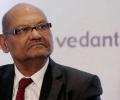
A reception often reserved for rockstars came the way of mining mogul Anil Agarwal when he started revealing nuggets of his ascent from a scrap-metal dealer to one of India's most prominent self-made industrialists on social media. And now he has been flooded with booking writing proposals and has even been offered money for a biopic. In February this year, Agarwal, 68, started tweeting his journey from Bihar to Mumbai first and then to London to head a globally diversified natural resources company with interests in zinc-lead-silver, iron ore, steel, copper, aluminium, power, oil and gas.

Oil Minister Hardeep Singh Puri on Thursday indicated that the much-delayed privatisation of oil major BPCL may not happen in the near future, saying there is "no proposal whatsoever" on his table for now. As part of its asset monetisation plan, the government had in November 2019 put Bharat Petroleum Corporation (BPCL) on the block and said it would completely sell its 52.98 per cent stake in the country's second largest state-run oil refiner and marketer. Though it had received three tentative bids, it got only one financial bid from Vedanta group, forcing it in May 2022 to shelve the plan pending a "comprehensive review".

This State-corporate 'cooperation' didn't begin with the arrival of the Modi government.
Many of the big licences, contracts, and even environmental clearances for the Adani group had come in the UPA's time, points out Shekhar Gupta.

'You can do anything after retirement. You have to pursue it. You have to take it up as a challenge.'

'Interim Budget has ignited the entrepreneurial spirit.'
Corporate India continues to be generous in rewarding its shareholders with big dividend payouts. This is especially true for shareholders of companies such as Tata Consultancy Services (TCS), Hindustan Zinc (HZL), and Coal India (CIL) which are seen as cash cows of large business groups and the government. Boosted by a big payout by these three companies, the combined equity dividend payout by listed companies was up 38 per cent year-on-year (YoY) to a record high of Rs 2.27 trillion in 2022-23 (FY23), compared with Rs 1.65 trillion in 2021-22 (FY22).

As many as six merchant bankers are vying to handle and manage the sale of the government's 29.53 per cent residual stake in Hindustan Zinc Ltd (HZL), according to an official notice. ICICI Securities, SBI Capital Markets, HDFC Bank, IIFL Securities, Axis Capital and Citigroup Global Markets will make their presentations via video conferencing before the government officials on Friday, highlighting their plans in managing the offer for sale. The bankers to manage the sale process would be finalised after the presentation and opening of financial bids on August 12, as per the notice.

The next auction for bauxite blocks in Odisha may see heightened interest with Adani Group charting an entry into alumina refining and existing players looking to boost capacity. Hemant Sharma, principal secretary, Odisha industries department, said that three bauxite blocks have been scheduled for auctions this year. Adani Group - which will be setting up a 4-MMTPA alumina refinery and may enter aluminium production - is expected to bid for mines, though raw material linkages shall be available from Odisha Mining Corporation (OMC).

Billionaire Mukesh Ambani's Reliance Industries Ltd climbed eight spots to the 45th rank, the highest for an Indian company on Forbes' latest Global 2000 list of public companies worldwide.
