
By targeting the salon-going consumer through Tresemme, Hindustan Unilever is taking its premiumisation agenda to the next level.
Dominant market leader has been adding new users every year, but there are stiff challenges ahead.
The companies include Larsen & Toubro, Hindustan Unilever, Infosys, TCS and Sun Pharma

Development issues of vital interest to India are expected to receive focused attention at the G20 Summit beginning in Cannes on Wednesday, a Ficci Paper on the B20 Working Group on Development said.
Sector insiders and analysts say this is due to combination of slowing property markets and liquidity issues.

Salaries are performance-linked and FY12 was good on both counts; now, persistent inflation and patchy rains show on rural market.
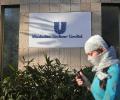
Relatively new brands of HUL, such as Closeup, play second fiddle to other legacy brands such as Colgate from Colgate-Palmolive and Vicco.

A dip in 'dream job' applications could also mean that students are bagging their desired offers in the first go itself.

Patanjali, to a large extent, has penetrated the target group for its products. As a result, increasing the consumer base and revenue by 100 per cent in FY18 will be a stiff challenge.
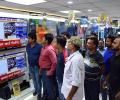
Nearly all FMCG companies like Marico, HUL, ITC and the rest have been indicating that the operating environment has been challenging, with drop in consumption, especially in rural areas, severe crunch in market liquidity conditions, and disruptions and floods in several parts of the country. To overcome this, they are boosting their direct reach in the countryside.
Profitability and cash reserves have halved since the global financial crisis.

Hindustan Unilever on Tuesday reported 15.59 per cent jump in net profit at Rs 871.36 crore (Rs 8.71 billion) for the third quarter ended December 31, 2012, on account of robust sales across various business verticals.

The Street was hoping that investors will lap up shares of high-dividend companies on optimism that their payouts will increase further, thanks to the 20 per cent tax saving. However, the trade failed to materialise as wealthy investors stayed away fearing high tax outgo, and experts raised doubts on whether companies would actually increase cash dole outs.
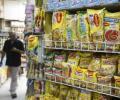
In 2019, the growth in sales of the Maggi brand of products surpassed the pre-ban level of 2014, in terms of both volume and value. While, Nestle raised prices of Maggi products by an average 3.1 per cent, its volume rose by 9.6 per cent year-on-year.
Having delivered the numbers, Nitin Paranjpe talks about his plans to make Hindustan Unilever future-proof.
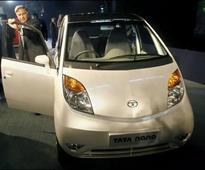
In the annual Best Companies for Leadership Study by the global HR consulting firm, the Tata group shared the limelight with other global companies like Procter & Gamble, IBM, Coca-Cola and Unilever.
The five tea brands were among 19 oolong products that were found not adhering to regulatory standards.


The NSE Nifty ended 55.75 points, or 0.57 per cent, higher at 9,912.80 after moving between 9,925.75 and 9,882.
The Advertising Standards Council of India (ASCI) has rapped the fast moving consumer goods majors Hindustan Unilever and Paras Pharma for their objectionable deodorant commercials, and asked them to pull them off air.

Ajit Mishra, vice president, Research, Religare Broking, answers your queries.

Footfalls will invariably come down to a trickle even after lockdown restrictions go away, and the only way to prevent someone else from poaching your consumer is to go down to the consumer herself. Consumers will prefer products and services to be delivered to their doorstep, hygienically and safely.

The beauty and wellness formats will be started in Reliance Hypermarkets in May.

CSD was created to provide easy access to quality products of daily use, at prices less than market rates to the soldiers, ex-servicemen and their families

Reckitt Benckiser's Dettol brand appears to be the target of arch-rival Hindustan Unilever (HUL)'s Lifebuoy for the second time in a row, with a new commercial saying the latter is far more effective than the former.
HDFC Bank, Reliance Industries and Housing Development Finance Corporation (HDFC) -- with free-float market cap of over Rs 3 trillion -- have the highest weight in the Sensex and the Nifty.
Most companies reporting an improvement in operating margins in Q1 as they cut ad spends and other expenses.
Business leaders, among others, ask govt to let go of fiscal target, seek stimulus, and direct cash transfer.
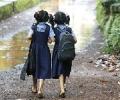
Titled India's Favourities, it was launched in September last year, to raise money for various causes concerning underprivileged children.
There is much gloom about macroeconomic fundamentals. Yet consumer sentiment seems to contradict any sense that the India story is stuttering.
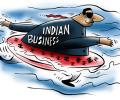
Across the country, companies have stepped up their act to contain the crisis. IT and other new economy firms seem to have taken a lead.

No respite in sight as not many big deals, initial public offerings in pipeline.
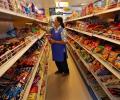
The regional players are outrightly opposed to the idea, while MNCs are looking for procedural changes that, they say, will align the labelling criteria with global practices.

Procurement Leaders Awards is a benchmark for Global Procurement Excellence given by the Procurement Leaders Forum.

'Even the most basic water amenities, people like us used every day, didn't exist there at all.'
Indians are increasingly rising to the top of global corporate ladders and just 10 of them are together managing business worth over $400 billion -- an amount nearly double the total exports from India in a year.

India's largest FMCG company expects a rent of Rs 200-250 a sq ft or a capital value of Rs 300 crore (Rs 3 billion) from the prime Mumbai property.
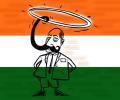
Equity investors should thank cash-rich biggies such as TCS, ITC, HUL, Nestl, and Bajaj Auto for this.
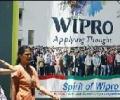
With the appointment of Mahendra Kumar Sharma, former vice-chairman of Hindustan Unilever Ltd, as an independent director of Wipro, it is clear that the tech giant wants to strengthen its corporate governance practices.

Ajit Mishra, vice president, Research, Religare Broking, answers your queries.
