
Indian space scientists are designing a new generation satellite with unfurlable antenna for mobile television services - the proposed spacecraft would have multimedia applications as well.

GSAT-6, the country's latest communication satellite has been successfully positioned in its orbital slot, Indian Space Research Organisation said on Sunday.
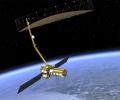
NISAR will not be used for surveillance and will be used to observe the earth.

Twice every 12 days, the NISAR satellite will scan nearly all of earth's land and ice surfaces to measure changes in the planet's ecosystems, growth and retreat of its land and sea ice, and deformation of its crust.

A key feature of the satellite is providing mobile communication to India through multi beam coverage facility.

"First orbit raising operation of GSAT-6 was successfully completed by firing the Apogee Motor for 3385 seconds at 8:35 pm IST on August 28," the ISRO said.
The feat is the second one for the Indian Space Research Organisation scientists in using the indigenously made cryogenic stage after the January 5, 2014 launch of GSLV-D5.

"Efforts are underway to establish the link with the satellite," it added.

The ISRO lost communication with the satellite when it attempted to ignite the engine in a third and final move to its desired location.

The satellite would provide a thrust to mobile communication through multi-beam coverage facility, the ISRO said.

The RISAT-2B would replace the RISAT-2, which has been actively used by India to monitor activities in camps across the border in Pakistan to thwart infiltration bids by terrorists.
 © 2026 Rediff.com - Advertise with us - Disclaimer - Privacy Policy - Sitemap - Feedback - About us - Terms of use - Grievances