
Notwithstanding the recent uproar over the UK data theft, a well-known US author has said that America is a huge beneficiary of outsourcing.
Friedman was participating in a session on India Outlook at the World Economic Forum in Davos on Wednesday where Finance Minister P Chidambaram was present.

The pause gives the US time to breathe, to regroup, to move its expeditionary force into position without risk of interception along the way. It gives Iran nothing -- on the ground, attacks against its infrastructure continue apace. Prem Panicker in his must read daily blog on the Gulf War.
The Dalai Lama will speak on 'the art of happiness' at the fifth edition of the annual Penguin Lecture in New Delhi on Saturday. The previous speakers at the prestigious event have been journalist Thomas Friedman in 2007, diplomat Chris Patten in 2008, Nobel Prize winning economist Amartya Sen in 2009 and eminent historian Ramchandra Guha in 2010.
In Globality*, authors Harold L Sirkin, James W Hemerling and Arindam K Bhattacharya from Boston Consulting Group, show how, over the past two decades, a range of corporations from the developing world have begun to disrupt traditional paradigm of development and tilted the balance of competition in their favour with their predilection for 'rapid-fire innovation'.

Now comes news that, for the first time ever, a major Hollywood release will hit India's shores before it launches domestically in the US, a true milestone for conscious Indian moviegoers. The record-setting film? It's the next James Bond installment, Quantum of Solace, which premieres here on November 7.
As the world shrinks, international cybercrime is growing in scope and sophistication.
Fortune 500 CEOs' vision of a flat world created by large and super efficient corporations without boundaries has hit a roadblock being posed by growing geopolitical and socio-cultural risks across the world, including India, a new study says.
The reasons why American journalism is against the Tata Nano are obvious. The Nano was 'not invented here (in the United States).'

Perhaps one aspect of the way modern media particularly print and news television works need some soul-searching: Their tendency to "frame" news stories as a conflict between two personalities, says Ajit Balakrishnan.
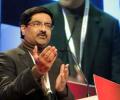
'While the march of globalisation is perhaps inevitable, what is certain is that the world is no longer flat as, the emerging pattern of trade is more regional. 'This new trend of 'slowbalisation' raises some questions that challenge conventional wisdom on how businesses should distribute their capacities,' Birla said.
BBC presenter Nik Gowing speaks about the rise of India and China, the nuclear deal, terrorism and more.

India Inc was, perhaps, watching out for a repeat of the dot-com bubble burst of the early 2000s.

'No two countries that are part of a global supply chain will fight ever a war against each other as long as they \n\nare each part of the supply chain.'

'India is developing call centres and Saudi Arabia is developing madrassas. One is calling the world, in a perfect accent, the other is calling God, in only one language.'
An interview with Rafiq Dossani, author, academic and entrepreneur.

The change of government in Goa changed THiNK's character. Literary or intellectual luminaries were replaced by big-ticket celebrities, says Sunil Sethi

Neither pharma nor IT would have become the stars of the economy without the active but largely invisible hand of the Indian State, says Ajit Balakrishnan.

'We are making a transition from governance to campaign mode.' 'The speed of execution is picking up,' says Union Minister Jayant Sinha.

'In India, China's capacities to conduct new types of warfare is critically underestimated,' says Claude Arpi.

The reversal of Trump's policy with regard to Iran, like the withdrawal from the Paris Agreement, may not be a matter of just turning the clock back, but one of patient negotiations, with uncertain consequences in the post-COVID-19 world, observes Ambassador T P Sreenivasan.

'The Reserve Bank's independence has remained a work in progress, an enduring challenge that the nation has been grappling with on an ongoing basis,' says RBI Deputy Governor Dr Viral Acharya.
