
In the extremely fragile India-Pakistan relationship, flying visits of leaders can prove to be counter-productive. They create completely unrealistic expectations which are invariably dashed on the altar of ground realities and critical national interests, says Sushant Sareen.

Sarabjit's murder will certainly add bitterness in relations and serve as a setback to efforts to promote people-to-people ties between the two countries, says Sushant Sareen
It remains to be seen how this phenomenon of public activism will translate in the political sphere. Unless this outpouring of outrage over the Delhi gang-rape can be channelised politically, the change that many of us hanker for will not come. The crowds might be politically alive, but they are not politically aligned or active, says Sushant Sareen.

With Sushil Kumar Shinde as the new home minister, Rehman Malik probably felt he could force his way into India and get away with saying the sort of things he said on Indian soil without any fear of being put in his place, says Sushant Sareen
With an opposition party so compromised and so complicit in the rampant loot and corruption that we have witnessed in recent years, isn't Roberrt Vadra quite on the mark when he calls India a 'banana republic', asks Sushant Sareen
While Indian officials never stop berating the Americans and Europeans for mollycoddling Pakistan despite its rank bad behaviour, the Republic of BCCI and the Republic of India have gone ahead and done something similar to what the West does, says Sushant Sareen.
Until Nawaz Sharif walks the talk on peace with India, he can never be considered a credible partner in the normalisation process. Indian meanwhile must respond and react appropriately and proportionately to any and every provocation from Pakistan. Equally important, India needs to disabuse the West of any notions of playing a mediatory role on the issue of Kashmir, says Sushant Sareen
If Pakistan's new government lives up to the commitments given by Nawaz Sharif that he will not allow Pakistan's soil to be used against India and will put the jihadist networks out of business, it will create a lot of space for the next government in India to move forward on the bilateral track, says Sushant Sareen
The Indian people need to know what the Manmohan Singh government expects to achieve from the dialogue from Pakistan. This obsession of normalising of relations with Pakistan, even if this is at the cost of India's territorial unity and integrity, is acquiring dangerous dimensions, says Sushant Sareen.
If India's nuclear and missile capability before Agni-5 was not enough to deter China, then it is unlikely that Agni-5 will, argues Sushant Sareen
What Musharraf doesn't understand is that deposed dictators are like used toiler paper: No one has any use for them and hence, they are best discarded, says Sushant Sareen.

'If you fire two missiles at Jamnagar or ten missiles there, what do you think India will do?' 'India will fire 500 missiles on Tarbela and Mangla, destroy the Sukkur Barrage, destroy Karachi port.' 'When you start issuing threats, it should be with some sense and sensibility.' 'You shouldn't just shoot your mouth off just because you have appointed yourself field marshal.'
So remarkable are the parallels that can be drawn between Kejriwal and Khan, that it almost seems that they are clones of each other, says Sushant Sareen.
The United States cannot expect India to surrender its vital interests for the sake of the Americans on the issue of Pakistan's aggression on the Line of Control. Once India makes clear to the international community where it gets off, the so-called pressure that is likely to be brought on India will disappear, says Sushant Sareen
The trouble is that trying anything more than the routine CBMs to affect a paradigm change in the bilateral relationship is a bit of a catch-22 situation: without trust, bold initiatives are not possible; but how do you build trust without bold initiatives, writes Sushant Sareen.
Instead of the assassination strengthening Pakistan's war against the Taliban, its leadership seems scared of taking on the terrorists, notes Sushant Sareen.
Other than the satisfaction of seeing a US bounty on Saeed and Makki, India shouldn't expect anything much at this stage, certainly not any concrete action against either of these two terrorist chieftains, says Sushant Sareen
With its judgment against Prime Minister Yusuf Raza Gilani, the Pakistan judiciary has in the name of rule of law ensured that there is neither any law nor any rule in Pakistan, says Sushant Sareen
Apart from religious hatred that makes it kosher for the Sunnis to massacre the Shias, the targeting of Shias serves a political objective of the Islamists in destabilising the Pakistani state. As a result, the Sunni extremists are killing two birds with one stone, says Sushant Sareen.
It would be a real shame if after having demonstrated strong resolve in acting against terrorists like Ajmal Kasab and Afzal Guru, the government was to fritter away the gains on the altar of politics of appeasing fringe groups, says Sushant Sareen.
The bottom line is that carrying out Kasab's death sentence is not going to bring closure to the 26/11 case. For that matter, the conviction of the terrorists being tried in Pakistan will not end the menace of terrorism in India. The real closure will come only with the closure of the Jihad factory in Pakistan, which in turn will happen only if Pakistan takes concerted and sincere efforts to de-radicalise its society and its polity, neither of which are on the anvil.
If Pakistan forsakes the use of Islamist terror and other forms of sabotage and subversion as an instrument of state policy against India and accepts the reality and existence of India, then it will find India a more than willing partner, one that will go the extra mile like it has done in the case of Bangladesh, says Sushant Sareen.
The recent arrest of 'ISI's event-manager' Ghulam Nabi Fai in the United States must be celebrated as it will make it very difficult for other Fais in places like London or Brussels to peddle their hatred of India in the name of 'struggling' for the 'right of self-determination' of the Kashmiris, feels Sushant Sareen.

'Are Pakistan and India such small and insignificant countries that we can be pressurised?' asks Pakistan Foreign Minister Khurshid M Kasuri.
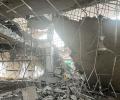
'India won't take anything from Pakistan lying down.'

''The avoidance of the 'P' word had less to do with reality and more to do with the politics -- domestic and international -- of Mr Modi and his efforts to both appear statesman-like (vis-a-vis Pakistan) and rid himself of the taint of being some kind of Muslim-baiting hardliner.'
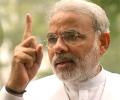
To be sure, Modi is no Vajpayee; at least that is the impression he gives. However, this doesn't mean that he will be looking for a fight. All it means is that if Pakistan seeks a fight, he will not back down. What it also means is that the pusillanimous approach of the previous governments to ceaseless provocations from Pakistan will probably change, says Sushant Sareen.
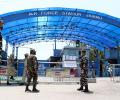
'The fact that this happened and the fact that we were not able to bring it down, we were not even able to trace from where it came from and where it went, certainly raises questions on our level of preparedness.'

How will India respond to an attack which keeps haemorrhaging India but stays below the threshold of tolerance?

India can stay relevant in Afghanistan not by being a bystander but by actively bolstering anti-Taliban forces monetarily, militarily and politically, say Lt Gen R K Sawhney and Sushant Sareen

'It is not something that is going to unfold in the next few weeks or even the next few months.' 'This process will continue for some time. And that's how it should be.' 'If the politicians are coming on board, then that is a welcome step.'
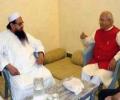
'There are all sorts of characters moving around acting as unofficial representatives of the government and engaging in their own personal foreign policy initiatives. Clearly, the government needs to shut these characters down if it wants to continue enjoying any credibility, both domestically and internationally,' says Sushant Sareen.
.jpg)
Pundits in Pakistan and also some western diplomats are predicting that the next army chief will be forced, partly by institutional pressure and partly by circumstances, to indulge in some tough talking with the civilian leadership. How the civil-military equation settles in this sort of a situation is something that will determine the future of Pakistani politics, and also Pakistan's relations with rest of the world, says Sushant Sareen.

'General Bajwa is believed to consider the internal threats to Pakistan's security as far more serious than the bogey of the Indian threat.' 'This doesn't mean that he is soft on India, only that he is more rational and sensible than his predecessor who had a bit of a chip on his shoulder about India,' points out Pakistan expert Sushant Sareen.

'ISI mouthpieces in the media have been quick to blame India for the attack. Clearly, the intellect and worldview of these characters (which includes fairly senior retired military officers) is based on Bollywood movies like Ek Tha Tiger and Agent Vinod... More seriously, the fact that ISI touts have been using this opportunity to train their guns on India raises serious questions about all the talk of the army being on the same page as the civilian government on the issue of improving relations with India,' says Sushant Sareen.

The tragedy is that, at least on social media, the narrative that was being lapped up by many Indian Muslims was that Yakub Memon was being victimised. The purveyors of this poisonous line of thinking of course want this sentiment to grow since communal polarisation is the primary pillar of their political strategy, says Sushant Sareen.

'I don't see how any Indian government or any Indian military leadership can now ask the soldiers to patrol without weapons.'

'The Mansoor Taliban is really an extension of the Haqqani Network which in turn is an instrument of the ISI. With Ashraf Ghani ready to dance to Pakistani tunes and with the Haqqani Network becoming part of the Afghan government, Pakistan is all set to see the fruition of its strategic policy,' says Sushant Sareen.

'The Congress has finally drawn a line in the sand over its pro-poor credentials.'
'The rich better watch out.'

'India will keep trying to avoid conflict.' 'This is the moment when we draw a line in the sand.'
