
India is well-stocked with inventories of crude oil and key petroleum products, including petrol, diesel, and aviation turbine fuel (ATF), to deal with short-term disruptions as the war intensifies in West Asia, Union Minister of Petroleum and Natural Gas Hardeep Singh Puri said on Tuesday.

India possesses approximately 100 million barrels of commercial crude oil stocks, capable of covering 40-45 days of its requirements if flows through the Strait of Hormuz are disrupted, according to Kpler.

S&P Global Ratings warns that Indian oil marketing companies like IOC, BPCL, and HPCL may face reduced profit margins due to rising crude oil prices and government pressure to maintain stable retail prices.

When asked about Bessent's announcement allowing certain Russian oil sales to India and whether the US is considering any other moves, including tapping the Strategic Petroleum Reserve (SPR), Trump said, "If there were some, I would do it just to take a little of the pressure off."

Indian refiners are negotiating for additional crude cargoes from the US, Russia, and West Africa to ensure adequate supplies amid Middle East tensions. Refineries are maintaining normal processing rates and deferring maintenance to build reserves. The move comes as conflict impacts tanker movements through the Strait of Hormuz, a key energy transit route.
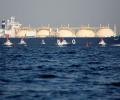
Analysts predict India will face oil price volatility and macroeconomic effects due to the escalating Iran crisis, though the country's oil supply chain is not yet structurally insecure.

If the conflict continues for a prolonged period, State-run oil companies may have to review retail fuel prices accordingly.

Will rising tensions between US-Israel and Iran threaten crude oil supply through the Strait of Hormuz, putting India's fuel prices, imports, and economic stability at risk?

The US government, under President Trump, justifies the intervention as a security necessity rather than a resource grab. The primary official reasons include: narco-terrorism charges, national security and migration crisis.
State-owned Indian Strategic Petroleum Reserves Ltd (ISPRL), which operates India's strategic crude oil storage, will make awards by December to lease around 1 million tons of crude oil storage space (7.3 million barrels) at two of the country's three existing Strategic Petroleum Reserves (SPRs), around a fifth of the total SPR capacity. This will enable the refilling of crude caverns even as escalating hostilities in the Gulf threaten disruptions in crude supplies, two industry sources said.

Where are the most oil reserves in the world? Who owns them? Find out!
'The immediate impact for India will be very minimal as the share of Venezuela in our total overseas production is very low.'

After dropping a Rs 5,000 crore plan to fill parts of strategic oil storages, the government will lease out space in the underground rock caverns to domestic and international firms to store oil, a top executive said on Tuesday. India Strategic Petroleum Reserve Ltd has built underground storages at Visakhapatnam in Andhra Pradesh and Mangalore and Padur in Karnataka to store 5.33 million tonnes of oil that can be used in any emergency situation like supply disruption or war. UAE's Abu Dhabi National Oil Company (Adnoc) has already hired half of the 2.5 million tonnes storage capacity at Padur and 1.5 million tonnes facility at Mangalore.

India will send a technical team to the United States and Japan to prepare a blueprint for building strategic oil reserves for the 70 per cent import-dependant country as an insurance against contingencies like disruption of supplies.\n\n\n\n

India is building its oil reserves in underground rock caverns and tanks

India is the 4th largest oil consumer after the US, China and Japan.
Oil prices have declined by more than 60 per cent since January with benchmark crude falling well below $30 per barrel, driven by an acute oil demand decline caused by the coronavirus and a lack of production cuts by OPEC and other oil producing countries.
India plans to release about 5 million barrels of crude oil from its emergency stockpile in tandem with the US, Japan and other major economies to cool prices, a top government official said on Tuesday. India stores about 38 million barrels of crude oil in underground caverns at three locations on the east and west coast. Of this, about 5 million barrels will be released, starting as early as 7-10 days, the official, who wished not to be named said.
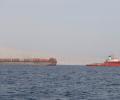
US strikes on Iran's three main nuclear facilities have once again raised concerns that Tehran might shut down the Strait of Hormuz - one of the world's most critical chokepoints, through which a fifth of global oil and gas supply flows.
The government is considering building a strategic storage of crude oil to provide for a 45-day cover, Lok Sabha was informed on Thursday.
.jpg)
India, which is 79 per cent dependent on imports to meet its crude oil needs, is building underground storage at Visakhapatnam in Andhra Pradesh and Mangalore and Padur in Karnataka.
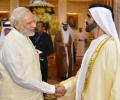
UAE would help India develop strategic petroleum reserves

'He keeps reminding me he is senior. There is no debate in this. I have never shown any disrespect to you since you are a senior,' the PM said.
The government is mulling building a Rs 2,760 crore (Rs 27.60 billion) strategic storage facility by 2007-08 to stock 45-days requirement of liquefied petroleum gas as cover for emergencies.

Modi was honoured with the 'Order of Zayed', the UAE's highest civilian award, in 2019 as a mark of appreciation for his efforts to boost bilateral ties between the two nations.

It is for the first time he's publicly invoked the word genocide since Putin began his deadly assault on Ukraine on February 24.

Fresh plans of privatisation or divestment in central public sector enterprises and public sector banks might take a back seat this financial year because these may require a large consensus among coalition partners.

What stood out in his 15-year journey as a member of the political executive at the Centre was his glowing record as India's most successful and effective finance minister. Both as prime minister and finance minister, he understood the importance of gradualism, except when the economy or the polity was in a crisis.
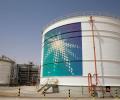
Estimated to cost $44 billion, the project was expected to be commissioned by 2025.

With general elections on the horizon, the government's privatisation bandwagon has almost but stalled as a government wary of being accused of selling family silver opts for minority stake sales on stock exchanges over outright privatisation. The result -- the divestment target for current fiscal year is again likely to be missed. Big ticket privatisation plans such as that of Bharat Petroleum Corporation Ltd (BPCL), Shipping Corporation of India (SCI) and CONCOR are already on the backburner and analysts feel meaningful privatisation can happen only after April/May general elections.

Capital expenditure (capex) by 54 large central public sector enterprises (CPSEs) and five departmental arms with an annual capex target of Rs 100 crore and above has reached around 42.5 per cent of their annual target of about Rs 7.33 trillion in this financial year so far, a senior official from the Ministry of Finance told Business Standard. "The Centre is pushing the big public undertakings in the infrastructure and refinery sector to achieve 90 per cent of their target by the end of the third quarter," he said. The capex by this group of CPSEs stands at around Rs 3.1 trillion in the April-August period so far.
The Centre could further moderate its divestment target for 2024-25 (FY25), as it does not expect large receipts from asset sales - except some ongoing strategic ones, including IDBI Bank, which could spill over into next financial year. Also, it may drastically reduce its FY24 divestment target of Rs 51,000 crore. "We are still evaluating the Budget estimates for FY25. "New big-ticket asset sales are unlikely.
Petroleum Minister Ram Naik said on Monday the government planned to boost the country's strategic crude oil reserves to 45 days from 15 for an estimated cost of Rs 43.50 billion.\n\n\n\n
Given that India will get a huge part of its oil supplies from Iran through its government-owned oil PSUs, any unwelcome shocks in global crude rates could be absorbed well enough.

Capital expenditure by 54 large central public sector enterprises and five departmental arms, having a capex minimum target of Rs 100 crore, rose 93 per cent year-on-year (YoY) in the April-May period to Rs 1.39 trillion. The National Highways Authority of India (NHAI) and the Railways have started this financial year's capex cycle on a stronger note. In the first two months of FY24, the 54 CPSEs, along with the departmental arms, achieved 19 per cent of their combined budget target of Rs 7.33 trillion, Business Standard has learnt.

Saudis are interested in expanding their relationship with India, given it is becoming the main driver of crude demand growth in Asia

Major General S C N Jatar, who passed into the ages on Monday night, thwarted anti-national forces at the peak of the Assam agitation. Colonel Anil A Athale (retd) salutes this officer and gentleman.
 © 2026 Rediff.com - Investor Information - Advertise with us - Disclaimer - Privacy Policy - Sitemap - Feedback - About us - Terms of use - Grievances