
The Bombay High Court has granted bail to two NESCO Ltd employees, Sunny Jain and Balkrishna Balram Kurup, who were arrested in connection with the alleged drug overdose deaths of two students at a concert in Goregaon. The court rejected the police's request to stay the bail order, allowing the employees to be released on a surety of Rs one lakh each.
The Bombay High Court has granted bail to two NESCO Ltd employees, Sunny Jain and Balkrishna Balram Kurup, who were arrested in connection with an alleged drug overdose case at a music concert in Goregaon. The court found no evidence of their conspiracy or abetment with drug peddlers, noting no narcotics were recovered from them and the investigation was complete.
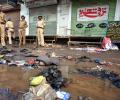
The Bombay High Court has discharged four men accused in the 2006 Malegaon blast case, overturning a special court order that had framed charges against them. The accused were charged under the Indian Penal Code and the UAPA.

The Bombay High Court has upheld a lower court's decision to frame murder charges against eight police officers in connection with the 2014 custodial death of Agnello Valdaris, citing inconsistencies in police records and evidence of custodial torture.
The Bombay High Court has upheld a trial court's decision to frame murder charges against eight police personnel in connection with the alleged custodial death of Agnello Valdaris in 2014, citing inconsistencies in police records and evidence of custodial torture.
The Bombay High Court has discharged four men accused in the 2006 Malegaon serial bomb blasts, overturning charges including terror-related offences. The ruling raises questions about who was responsible for the explosions that resulted in 31 fatalities.
The Bombay High Court has discharged four accused in the 2006 Malegaon blasts case, criticising the NIA for ignoring crucial evidence. The court highlighted contradictions in the NIA's investigation compared to the initial probe by the ATS, leaving the question of responsibility for the blasts unanswered.
The Bombay High Court has discharged four accused in the 2006 Malegaon blasts case, criticising the NIA for ignoring evidence collected by the previous investigating agency. The court's decision leaves the question of responsibility for the blasts, which killed 31 people, unanswered.

A timeline of the key events in the 2006 Mumbai train blasts case, culminating in the acquittal of all 12 accused by the Bombay High Court.
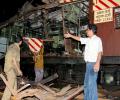
The Supreme Court has stayed the Bombay High Court verdict acquitting all 12 accused in the 2006 Mumbai train bomb blasts case, issuing notices and seeking responses from the accused.
The Bombay High Court has repeatedly flagged the 'copy-paste' culture in confessional and witness statements in chargesheets, calling it a 'dangerous' trend. This issue was highlighted again after the acquittal of the 2006 Mumbai train blasts accused, with the court noting similarities in their confessional statements.
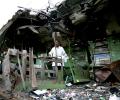
The investigation for 7/11 blast in which 189 people died was under question mark from the very first month after the Mumbai Anti-Terrorism Squad started arresting the accused from different parts of city. Within 10 days of blast by July 22, 2006, ATS arrested all the 13 terror accused in the case under the leadership of ATS chief, K P Raghuvanshi.

Survivors of the 2006 Mumbai train blasts express shock and disappointment after the Bombay High Court acquitted all 12 accused, citing lack of evidence. They feel justice has not been served after 19 years.

The Bombay High Court acquitted all 12 accused in the 2006 Mumbai train blasts case, citing a failure by the prosecution to prove their guilt and raising serious concerns about the investigation and evidence presented.
The collegium said the Chief Justice of the Delhi high court, in consultation with his two senior-most colleagues, had on May 30 recommended the elevation of the judicial officers as judges of that high court.

Shops, schools and other commercial establishments were closed in parts of Bihar, Rajasthan, Madhya Pradesh, Uttar Pradesh and Punjab but the shutdown call by anti-reservation bodies had little impact elsewhere in the country.
