
Prime Minister Manmohan Singh's special envoy Satinder Lambah Monday met Pakistan Muslim League leader Nawaz Sharif, who is set to become the prime minister, and discussed ways to take forward the dialogue process to address all the issues of concern between the two countries.

Our focus is not on substance, but communicating how we did not shake hands and how we made angry faces. This is what India's foreign policy has become, notes Aakar Patel.

Chastened by the Kargil conflict, Pervez Musharraf will be remembered for gradually lowering the profile of terrorism and seeking a realistically negotiated settlement to the issue of Jammu and Kashmir, notes Ambassador G Parthasarathy, who served as India's high commissioner to Pakistan when Musharraf seized power in a coup in October 1999.


'No prime minister of India is averse to normalise relations with Pakistan, if it is possible to do so without altering our fundamental position on Jammu and Kashmir,' notes Ambassador T P Sreenivasan.
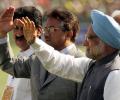
Manmohan Singh and Musharraf felt that what they were embarking upon, if successful, could lead to a future of boundless potential for the two countries and for the relationship that was hard to foresee from the prism of the existing situation and the historical position and orthodox ideas on both sides.
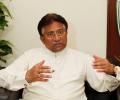
Learning perhaps from the Kargil debacle, Musharraf tried hard to evolve as a statesman in his dealings with India, recalls Rana Banerji, who headed the Pakistan desk at RA&W.

'The people of Pakistan and India will begin to understand what the bottom lines are. What India can accept maximum is known to Pakistan. What Pakistan can accept minimum is known to India.' 'In the absence of atmosphere you can't even talk, you can't think of writing agreements and frameworks. You have to have the right atmosphere. With the previous BJP government it had started and I hope the new BJP government will continue with that.'

In perhaps the first major conference on the United States-India strategic partnership in the aftermath of the Khobragade controversy that plunged the bilateral relationship in a downward spiral and is now in the process of being resurrected, the undeniable consensus among the panelists and participants was that much ballyhooed strategic convergence between Washington and New Delhi has dissipated.
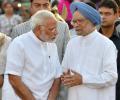
Singh issued a statement on Monday, listing those who attended the dinner, and stressed that the election was not discussed during the meeting.

United States Special Representative for Afghanistan and Pakistan James Dobbins, who was in New Delhi on Thursday said in an interaction with the press that improvement in Indo-Pak ties will automatically improve the situation in Afghanistan, even as he discussed the current state of play in US-Afghan relations and attempts to work towards reconciliation with top officials.
