
The advantage of leasing is that you can get a new car every few years. You can also get to drive a high-end car without paying its entire price.

The Karnataka election is being seen as the semi-final to the 2019 general elections and appears to be heading towards a close fight

market rally, especially in mid-caps, has also been driven by a pick-up in the monsoon and the government's resolve to get the goods and services tax (GST) Bill cleared in the recent session of Parliament.

Omkeshwar Singh, head, Rank MF, a mutual fund investment platform, answers your queries.
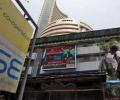
The S&P BSE Midcap and the S&P BSE Smallcap indices gained 0.3% and 0.5%, respectively
Adani Power will also be dropped from the S&P BSE 100 index
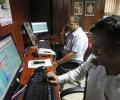
S&P BSE Midcap and the S&P BSE Smallcap indices gained 2% and 1.6% respectively

The performance has been a clear contrast to the movement in the first two months of 2014, when the S&P BSE PSU index massively underperformed the S&P BSE Sensex (down 0.2 per cent) by slipping nearly seven per cent.

Omkeshwar Singh, Head, Rank MF, a mutual fund investment platform, answers your queries.

TCS, Bajaj Auto, Adani Ports and Cipla were the top gainers on BSE Sensex while Coal India, GAIL, Dr Reddy's and Infosys lost the most on the index.
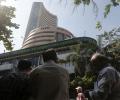
In the broader market, the S&P BSE Midcap ended 0.1% down, while the S&P BSE Smallcap index gained 0.3%.

The S&P BSE Midcap and the S&P Smallcap indices rallied over 1% each
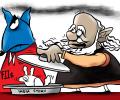
Foreign portfolio investors (FPIs) turned net buyers in October after being net sellers in the previous month. In October, FPIs bought shares worth nearly Rs 8,430 crore ($1 billion) against net selling of Rs 13,405 crore ($1.6 billion) in September. Positive flows during three of the previous four months have pushed the domestic markets towards fresh all-time highs. At present, the Sensex and Nifty are less than 2 per cent shy of breaching record highs logged in October 2021. A rally in equity markets in the US and Europe is in hopes that the Federal Reserve may go soft on rate hikes after its November meeting.

The major US indexes pared losses late in the session.

The S&P and Dow dipped the most in a day since September 28.

S&P expects India to grow at 7.4 per cent in 2015, similar to the central bank's forecast for the fiscal year ending in March.

The S&P BSE Midcap and the S&P BSE Smallcap indices slipped in red to shed over 1% each

The Adani group will have understood the fragility of investor trust in the group. The group needs to improve transparency including in areas like share-ownership (which they have long and mistakenly believed can be side-stepped) and related-party transactions, among others, Amit Tandon and Hetal Dalal point out.

It has mostly been a one-way street for markets that have moved up sharply since July. The front-line indices - the S&P BSE Sensex and the Nifty50 - have gained 6.7 per cent and 7.3 per cent, respectively, in the past three months. The rally in mid- and small-caps has been sharper, with both indices surging 14 per cent and 9 per cent, respectively, during this period. This sharp run has made analysts at Jefferies cautious.
Standard and Poor's has launched two new investable Shariah indices for the Indian equities market.

The underperformance comes amid liquidity concerns in the non-banking finance companies space and Essel Group default news.

It won't be easy for the banking sector to better its performance every quarter, predicts Tamal Bandyopadhyay.

Stating that an economic recession gripped global economy following the lockdowns due to COVID-19 pandemic, Fitch Ratings on Friday said the initial disruptions to regional manufacturing supply chains in China have now broadened to include local discretionary spending and exports.

Kotak Bank rose the most among Sensex scrips, spurting 2.92 per cent amid reports that LIC will up its stake in the private lender to 10 per cent. Gains in HCL Tech, TCS, Infosys, HDFC Bank, Bajaj Finance and Titan helped Sensex close in the green. NSE Nifty edged higher by 27.50 points to end at 17,053.95.

Conventional wisdom is that when the US sneezes, emerging markets like India catch a cold. And yet the Indian stock market went up last year, points out Debashish Basu.
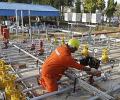
It is rare for Cabinet ministers to tick off state-owned companies publicly, yet that was what then petroleum and natural gas minister Dharmendra Pradhan did for ONGC. Speaking at an event on June 29, Pradhan said he has asked India's premier exploration company to find fresh oil acreages fast. "Do it yourself through some joint venture (or) through a new business model. But the government cannot permit you to hold resources for an indefinite time." The reason for this stricture is India's rising dependence on imported oil and gas. Or, to put it another way, falling domestic production (see chart: "Crude truth"), especially from ONGC, which faces a simple problem.

Stating that COVID-19 has not yet been contained in India, the rating agency in a statement said the government stimulus package is low relative to countries with similar economic impacts from the pandemic. "The COVID-19 outbreak in India and two months of lockdown -- longer in some areas -- have led to a sudden stop in the economy. That means growth will contract sharply this fiscal year (April 2020 to March 2021)," it said. "Economic activity will face ongoing disruption over the next year as the country transitions to a post-COVID-19 world."

Global rating agency Standard and Poor's (S&P) has said it expects India to grow by 6.5 per cent during 2013, amidst the possibility of global economic recovery continuing during the year.
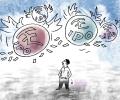

Clock 11% growth in the first 11 months of 2022.
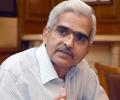
Government hits back, tells rating agency to introspect on processes.
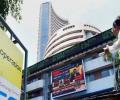
Broader market outperformed with the S&P BSE Midcap index adding 0.7%, while S&P BSE Smallcap index gained 0.6%.

From the 30-share pack, Asian Paints, Reliance Industries Limited, Bajaj Finance, Mahindra & Mahindra, Indusind Bank, Bajaj Finserv, Maruti Suzuki, HDFC Bank and UltraTech Cement were the major gainers, jumping up to 5.56 per cent.

Over the past one-and-half years, the number of stocks trading below their respective face value has increased 29 per cent after a sharp correction in stocks of small-cap companies.
Tuesday's was the S&P's worst drop since August 24.

Noting that external risks to global growth has increased significantly now, the Crisil report quotes its parent S&P's forecast of a recession in the US and in the Eurozone, and a record low growth in China, which is seen crashing to 2.9 per cent now, almost half of what it had said on March 5 when it has pegged the same at 4.8 per cent.

IndusInd Bank was the top loser in the Sensex pack, plummeting over 23 per cent. PowerGrid, Kotak Bank, Bajaj Finance, HDFC Bank and NTPC also finished significantly lower. ONGC and ITC were the only stocks in the index that ended with gains. US President Donald Trump has proposed an economic package which could approach $1 trillion, a rescue initiative not seen since the great recession of 2008.

All nine Adani stocks saw a rise in their share price in H1FY23, ranging from 6.1% in case of Adani Ports to 102% in case of Adani Power.

Rating agency Standard & Poor's on Friday revised upwards the long-term corporate credit ratings of software majors TCS, Infosys and Wipro to 'A' from 'BBB+.'
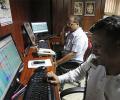
Broader market outperformed the benchmark indices with S&P BSE Midcap gaining over 1%
