
Recently, Standards and Poor's had said that there is one third possibility of a rating downgrade of India.
PM's economic advisory council chairman C Rangarajan has asked microfinance institutions (MFIs) to overhaul their "flawed" business model for sustainability.
Rajya Sabha member and former Chairman of Prime Minister's Economic Panel C Rangarajan on Monday said he expects inflation to ease to 10 per cent by December. He said inflation last year was moderate almost at the end of December, so base effect will be to heighten inflation in the current year.
C Rangarajan, chairman of the Prime Minister's Economic Advisory Council, on Thursday said he expects the Indian economy to grow by 8.5 per cent in FY'12 on the back of services sector and industry expansion, though he hinted that agriculture might not be a big contributor.
The rupee has recovered to trade at 63 level after hitting its life-time low of 68.85 towards August-end.

With major sectors of the economy showing signs of slowdown, the list of those pegging India's economic growth at below eight per cent in the current financial year is expanding.

India's economic growth rate is expected to be at least 6 per cent in the 2013-14 fiscal, Prime Minister's Economic Advisory Council (PMEAC) Chairman C Rangarajan said.

Food inflation rose to 17.47 per cent in the third week of November against 15.58 per cent in the previous week.

Regarding the impact of drought on economy, he said, the growth rate could slip to 6-6.5 per cent from 6.7 per cent in the previous fiscal. Stressing that the government should ensure that imported pulses reach the targeted people, Rangarajan said, there is a need to strengthen the public distribution system.
The proposed move would lead to dismantling of the administered price mechanism.

Amid projections that inflation could touch the double-digit mark, the Prime Minister's advisory panel on Thursday said it could fall to 7 per cent by fiscal-end.
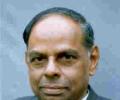
Although the economy did well during the second quarter (July-September) recording a growth of 7.9 per cent, the output of agriculture and allied sector slipped to below 1 per cent.
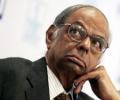
He feels that RBI could be waiting for a period or an opportune movement when there could be sustained reduction.

Based on the panel's formula, the base price of domestic natural gas comes to around $7.4 per million British thermal unit (mBtu), but the pricing formula proposed by RIL, officials say, translates the price into $13-14 an mBtu.
Fiscal correction is needed even after the changes that have been made now, otherwise the fiscal deficit would tend to be high.
Slower growth in the developed world is expected to impact emerging economies like India by reducing demand for their exports in rich country markets.
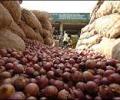
Rangarajan, who was answering questions on onion prices touching Rs 100 per kg in some cities, said the impact on inflation would not last long.

Prime Minister's economic advisory panel has said there was no need for any stimulas package to help the industry tide over the impact of the crisis following downgrade of the US credit rating by Standard and Poor's.

Although the government had pegged fiscal deficit for the current financial year at 5.1 per cent of the GDP in the budget, it has revised the target to 5.3 per cent in view of subdued revenue collection and rising fuel and food subsidy bills.

With the dissolution of former chief statistician Pronab Sen-led Standing Committee on Statistics (SCoS) by the Ministry of Statistics and Programme Implementation (MoSPI), the National Statistical Commission (NSC) has regained prominence as the primary statistical body to address issues regarding results, methodology and questionnaire, among others. A MoSPI official in an email informed the 16-member SCoS about the decision to dissolve it, citing that its work was "overlapping" with that of the Steering Committee for National Sample Surveys (NSS), which was set up in June this year.
Pegs the current account deficit for the current fiscal at 3.5 per cent of the GDP.

Industrial growth has entered the negative zone in October, two years after the global financial crisis. But Prime Minister's Economic Advisory Council chairman C Rangarajan pins hopes of a revival in the fourth quarter.
He exuded confidence that the Indian economy will grow at 5.3 per cent in 2013-14.
Retail inflation in February has come down to a 25-month low of 8.1 per cent.
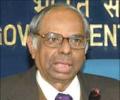
I think the overall growth rate of the economy will be between 5.5-6 per cent, says C Rangarajan.

Tax devolution shares, which threaten to create a north-south divide among states, may have more to do with per capita income, and not so much with population.
In the January, 2013 Cabinet note on revision of prices of all domestically produced natural gas, the ministry had proposed immediate implementation of the formula suggested by a panel, headed by Prime Minister's Economic Advisory Council Chairman C Rangarajan, for all producers except in cases where the current rate is valid for a certain period.
Budget has laid emphasis on increasing social spends
'The terminal year could yield nine per cent.'

In an interview to Business Standard, Rangarajan says CAD will be brought under control at around two per cent of the gross domestic product.

The Standing Committee on Petroleum and Natural Gas in a report tabled in Parliament said the proposed formula is a simple average of two methodologies -- price of imports of LNG into India by different suppliers, and weighted average of prices of natural gas prevailing at Henry Hub in USA, National Balancing Point in London and netback import price at the well head of suppliers into Japan.
C Rangarajan, chairman, Prime Minister's Economic Advisory Council tells Business Standard that the measures taken by the government will lead to economic growth of at least 6 per cent in FY14 against a decadal-low growth of 5 per cent in FY13.
He says though agriculture and industry would get a fillip in the second half of this financial year, a complete economic revival is expected only in 2013-14.

Of the eight RBI governors who have held office since the 1991 economic liberalisation, Bimal Jalan had the longest stint and S Venkitaramanan, the shortest. Current Governor Shaktikanta Das will overtake Bimal Jalan before completing his second term in December, points out Tamal Bandyopadhyay.

More than 500 scientists, academicians and students have written to the Bengaluru-based IISc expressing dismay over the cancellation of a discussion on anti-terror law UAPA that was to be led by student activists Natasha Narwal and Devangana Kalita.
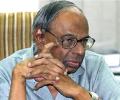
'It appears the growth rate could be around six per cent'.

'Even the President does not have the power to overrule the ECI.'

'There are occasions when the prices of individual items like food raise inflation; then supply-side measures must be taken.' 'But if there is continued inflation, it means liquidity is aggravating the situation.'

Ask rediffGURU and tax expert Mihir Tanna your income tax-related questions.
