
Loan rates will change at the next reset, while deposit rates will continue till maturity.

Yet, no bank has been taken to task for its actions, says Harsh Roongta.
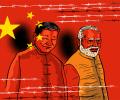
'As China rises and India grows to reclaim their earlier positions on the world stage as two of the largest economies and most important countries, there will indeed be some contention between these two powers.' 'There will also be plenty of space and room for cooperation amongst the two of us.' 'As our economic size increases to match the fact that we are the two most populous nations on earth, it will be all the more important for us to keep the interests of our peoples as well as those of the rest of the world in mind.' 'We shall have to grow together rather than as separate and disparate entities,' points out Ambassador Gautam Bambawale -- who served as India's ambassador to China -- in the 7th annual lecture of the Indian Association of Foreign Affairs Correspondents on March 1, 2019.

Current account deficit is expected to narrow to 1 per cent.

Educate yourself about your car insurance policy's terms and conditions before buying or renewing it, suggests Animesh Das, head of product strategy, ACKO General Insurance.

"I think her bodyguards should drop all weapons. Disarm immediately. Take their guns away, let's see what happens to her," Trump said at an election rally in Miami, Florida.

The meeting was facilitated by Pakistan's spy agency -- the ISI
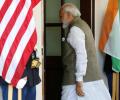
We see none of the euphoric build-up customary to India's encounter with US presidents in recent times. This gives Modi wriggle room to work on the much-needed reset of India-US ties.

'It is crucial today to realise where we have reached in this 15 year-period in order to fully and properly assess the profundity of what General Rawat has said,' points out Ambassador M K Bhadrakumar.

'It was like a f---ing firing squad,' The New York Post reported.

Hosts England became the first team to qualify for the ICC Champions Trophy semi-finals after hammering New Zealand by 87 runs to stay top of Group A at Sophia Gardens in Cardiff on Tuesday.

'There are reports of political dissent mounting on Xi Jinping's handling of the Wuhan fallout.'

'What made him different was that he was not a banker at all by temperament.' 'He was a businessman, a typical lalaji at that.' 'He had to win at any cost.'
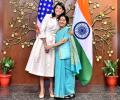
External Affairs Minister Sushma Swaraj and her American counterpart Mike Pompeo have agreed to reschedule the postponed '2+2 dialogue'.
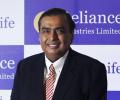
If Reliance Jio resets the rules of the game with low voice and data tariffs, most incumbents will find themselves back to square one.

Patel rejected the charge as "completely baseless" and urged the Bharatiya Janata Party not to politicise matters pertaining to national security and divide the peace-loving Gujaratis.

'It is the moment where compassion and empathy must supersede our identity, politics, or our ambitions.'

Pak seeks US help to ease tensions with India.

It was largely made possible by Manika Batra, who ended up winning four medals, the most by an Indian in Gold Coast.

'By the time he gets done, he'll not only be the best player of his generation, but the best ever.' 'It'll take another 100 years for someone to break his records.'

Income tax online return accounts of certain people have been unauthorisedly accessed, the Finance Ministry has warned.

'We are on the world map. Every country is watching this event.'
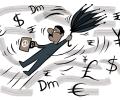
'From a retail investor's perspective, therefore, it is essential not to get swayed by the short-term correction in the equity market and macro noise, and stay the course with their long-term financial plans,' notes Ashwin Patni.

The CEOs of Cricket Australia, the National Rugby League and Football Federation Australia, have signed up to the "Pathway to Pay Equality" report by the Male Champions of Change Institute (MCC), which details a milestone-based approach to achieving pay equity between male and female athletes.

The former president will have two funerals -- a state funeral at the National Cathedral and a local funeral at St. Martin's Episcopal Church in Houston.

With home loan rates headed north, experts advise how borrowers should cope with their rising liabilities.

None of the four benchmarks suggested by the RBI is ideal as banks in India create loan assets from their deposits and not borrowing from the regulator or market, says Tamal Bandyopadhyay.

Apple has said the watch will launch in April

'New Delhi showed itself willing -- at least for a period -- to tolerate the risk of conflict and to withstand Beijing's implicit and explicit threats.' 'But it also continued to try to cut some kind of deal with China to reduce tensions.'

Lewis Hamilton can become only the third driver to win 50 grands prix when Formula One returns from its month-long August break and gets back to business at Sunday's Belgian Grand Prix.

Are you an innocent smartphone user in a perilous online world, asks Geetanjali Krishna.

A dummy's guide to all you must know about before availing an education loan
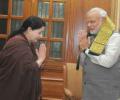
In the wake of arrests of Indian fishermen by Sri Lankan Navy, Tamil Nadu Chief Minister Jayalalithaa on Sunday wrote to Prime Minister Narendra Modi seeking laying down a time-bound action plan to achieve a "long-term, permanent solution to the problem and also to put in place a strong and robust diplomatic response".

The Caterham Formula One team have made 230 staff redundant while still planning to race in next weekend's Abu Dhabi season-ender, an administrator said on Sunday.

'Clearly, the warming of ties can be a 'win-win' for India and China,' says Ambassador M K Bhadrakumar.
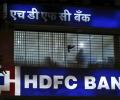
Sebi, RBI discuss monitoring foreign investors in real time after foreign shareholding cap breach in HDFC Bank on February 17
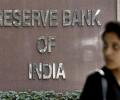
'The rate cut could have been higher in the current economic conditions which would have had a stronger impact on business sentiment and spurred investment in a big way.'

Hero ISL received, in its third edition, a total viewership of 216 million as compared to around 207 million last year. One of the highlights of the season was the sharp increase in rural India viewership registering a cumulative figure of 101 million, indicating the widespread appeal of the sport.

Seven-time champion Serena Williams endured an unlikely scrap in her Wimbledon opener and will look to shake off more rust in the second round on Thursday when she faces another qualifier in 18-year-old Kaja Juvan.

All it took was "one stupid move" for Roger Federer's season to fall into an abyss.
