
India's power sector is undergoing a significant transformation, driven by a planned shift towards renewable energy and ambitious capacity expansion targets, with major players like NTPC, JSW Energy, Adani, and Tata Power prioritising predictable returns. However, execution challenges and valuation concerns remain critical factors for sustained growth.

IndiGo operator InterGlobe Aviation had a mildly encouraging third quarter in financial year 2026 (Q3FY26).

The ministry will meet domestic carriers next week to discuss how the upper limit in each bucket could be reduced to bring down average airfares, which have been rising in the past few months.
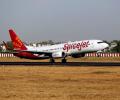
However, the meeting of the company's board of directors, through video conferencing, started at 1.30 pm and ended only at 11.50 pm on Tuesday, according to a filing made to BSE at 12.51 am on Wednesday. In the 2024 December quarter, the airline, which had been facing multiple headwinds, raised Rs 3,000 crore from qualified institutional investors.

Power generation decelerated 4.7 per cent year-on-year (Y-o-Y) to 155 billion units (BU) in August 2024. This was the first downtrend in many years, albeit on a high base - generation had increased 19 per cent Y-o-Y to 163 billion units (BU) in August 2023. The dip was partly due to excess rainfall, which pared cooling demand and also reduced need for irrigation.

Management and leadership changes, in addition to synchronising operations between all its airlines, are showing visible results for Air India. Data from the Directorate General of Civil Aviation (DGCA) show that there has been a marked improvement in key operational parameters of Air India after the Tata group took complete control of the national airline in January. One of the most dramatic improvements has been noticed in Air India's passenger load factor (PLF) - a crucial metric of capacity utilisation of an airline's fleet that shows how many seats it has been able to fill on every flight.
There's a straightforward relationship between economic activity and power consumption. If economic activity increases, so does power consumption. Since the latest GDP (gross domestic product) data indicates India's growth rates exceeded expectations in the second half if the 2022-23 financial year (H2FY23) and GDP estimates of FY24 are strong, we would expect power consumption to rise as indeed it has. There is also a direct relationship between power consumption and National Thermal Power Corporation or NTPC's results since the public sector undertaking (PSU) is the largest power generator in India.
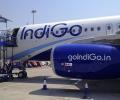
IndiGo share price today: IndiGo share price fell as much as 4.8 per cent to a low of Rs 4,275 per share on the BSE in Monday's intraday trade as investors booked profit in the stock post a its April-June quarter (Q1) results for financial year 2024-25 (FY25). The stock ended 1.36 per cent lower at Rs 4,430 as against a 23-points gain in the benchmark BSE Sensex. The selling also got exacerbated as the management commentary, post Q1FY25 results, highlighted that inflationary pressure could likely dent July-September (Q2FY25) performance.

As the political uncertainty settles down, investors are reviewing their assumptions about the power sector. Demand here is likely to continue to grow strongly in the long-term at around 5-6 per cent CAGR (compounded annual growth rate) during the next 6-7 years. Given policy continuity, several trends will persist.
Airline stocks have been soaring following a steep decline in crude oil prices and sustained passenger traffic. Analysts have particularly turned bullish on the stocks of InterGlobe Aviation and SpiceJet. On December 20, shares of InterGlobe Aviation (IndiGo) hit a record high of Rs 3,009 on the BSE, having surged 43.24 per cent year-to-date (YTD).

India's domestic air passenger traffic nearly doubled to 1.25 crore in January compared to 64.08 lakh recorded in the year-ago period, according to official data released on Monday. In January, IndiGo saw its domestic market share decline for the fifth consecutive month at 54.6 per cent. It carried 68.47 lakh passengers last month.

Airlines are now pushing up fares and hopes to improve margins over the next three months to make up for the poor September quarter, even if it leads to a slight fall in their passenger load factor.

India's domestic passenger traffic slipped to a 10-year low at an estimated 53.4 million in the just-concluded financial year, a report said. However, in the previous fiscal there were no passenger flight operations for almost two months due to the pandemic-induced lockdown. During the financial year 2010-11, all domestic air operators together had flown a total of 53.8 million passengers on local routes, according to ratings agency ICRA. The domestic passenger traffic in March 2021 has been estimated at around 77-78 lakh, a marginal decline of about 1 per cent over February during which airlines had flown around 78.30 lakh passengers, it said.

Domestic air travel demand contracted by 41 per cent year-on-year to around 76 lakh passengers in January with sequential growth also slowing down to 3.5 per cent during the month over December 2020, a report said on Monday. Indian carriers had flown a total of 1.27 crore passengers on domestic routes in January 2020. Indian aviation industry has witnessed a continued recovery in domestic passenger traffic in January 2021.
While the latest airline to join the Star Alliance has met its target on occupancy for May, it remains woefully short on several other counts.

Newly launched Vistara has a passenger load factor of 55% in the busy Delhi-Mumbai sector, compared with 80-85% in other airlines.

Earlier, in August, the finance ministry had asked banks to put pressure on real estate developers to cut prices.

In March this year, domestic air traffic had spiked by 1.6 per cent to 5.18 million passengers, compared to 5.1 million in March 2012.

Vistara reported a passenger load factor of 45.4 per cent.

NTPC to be the worst hit, stock slides to five-year low on announcement.

Given its network and fleet, it has garnered the highest share of passenger growth.
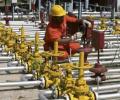
Pooling will also kick-start projects of Reliance Power, Torrent, Lanco.
Since Thursday, several carriers, mainly international, have cancelled their flights in and out of Mumbai due to sparse load factor or the inability of the crew to reach the airport. Amongst the domestic carriers, Kingfisher Airlines combined around eight flights. Air India also clubbed some of its flights in the domestic routes. Jet Airways, JetLite, IndiGo and SpiceJet did not cancel any flight.

Vistara needs to launch more aircraft into service.
The economic slowdown has made companies look at low-cost carriers with new respect. As a result, corporate travellers now constitute over 35 per cent of the traffic on LCCs, up from ten per cent a year ago. This has caused LCCs to record passenger load factor in excess of 70 per cent, though overall traffic has fallen 10 per cent in the last one year. Full-service carriers, in contrast, are known to have lower PLF of around 60 per cent.

To increase gas availability for power plants, the Ministry of Petroleum and Natural Gas has taken various steps.

Affected firms note practical problems in getting discoms, consumers to pay for costlier supply; viability shadow on investments
In an attempt to improve the power generation scenario, the government has asked the old power units to undertake modernisation and renovation under the Rs 10,000 crore scheme launched through the two financial institutions.

Five states -- Maharashtra, Haryana, Rajasthan, Punjab and Gujarat -- face a massive power crisis.

IndiGo maintained its lead position with 49 per cent share of the domestic passenger market in May. SpiceJet's market share increased to 14.8 per cent in May, giving it the number two spot. The market share of Air India, GoAir, AirAsia and Vistara were 13.5 per cent, 11.1 per cent, 6.3 per cent and 4.7 per cent, respectively, in May this year.

All Indian carriers flew 60.22 lakh (6.02 million) passengers in May compared to 57.10 lakh (5.71 million) in April, while the January-May figure stood at 267.22 lakh (Rs 2.67 million) as against 260 lakh (2.6 million) in the same period last year recording a 2.78 per cent growth, latest official air traffic data showed.

Solar equipment manufacturing, however, is unlikely to pick up in India as Chinese imports are more cost-effective

To sell five Boeing 777s, replacing these with cheaper aircraft

'The transmission sector is going to be the next sunrise industry.'

Phee Teik Yeoh says that the worst is behind them.
