
Clearing the way for oil refiners to pay Iran in Indian rupee, the Union Budget has exempted the payments made for crude oil purchased from the Persian Gulf nation, from any local tax.

The clock on the ceasefire is running out. But everyone's already whispering about round two, possibly as soon as this weekend.

Iran on Thursday spelled out three conditions to end the war with Israel and the United States, which entered its thirteenth day today. Taking to X, Iran's President Masoud Pezeshkian said he reaffirmed the country's commitment to peace during talks with leaders of Russia and Pakistan.

The question is no longer whether the war will expand. It has. The next few days will tell us whether the war stabilises around Hormuz or whether the Strait itself becomes the trigger for a far larger rupture. What to watch for over the next 48 hours is simple: Any move by the US toward direct naval control of the Strait; any credible Iranian attempt to disrupt or mine shipping lanes and, critically, whether energy infrastructure in the Gulf continues to be targeted.If those lines are crossed in tandem, the war will no longer be containable within the region.

India's handling of the Iran crisis reflects a growing strain between strategic autonomy and geopolitical alignment, observes Ambassador M K Bhadrakumar.
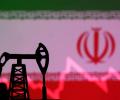
The United States has imposed sanctions on at least half a dozen Indian companies accused of trading in Iranian petroleum and petrochemicals as part of broader action targeting 20 entities worldwide.

It cannot, however, use the money to invest in India or buy shares or companies.

The LPG squeeze on India's restaurant sector is the quotidian face of a deeper crisis.

What we are watching is something different: A fog manufactured and maintained by the people who started the war, so that the question of why it was started never has to be answered, observes Prem Panicker in his must read blog on the war in the Middle East.

"We are exploring if Indian oil firms can open accounts in banks like Dubai-based Noor Islamic Bank so they can undertake a direct transfer of money for oil they buy from Iran," a senior government official said.

Under the scheme, National Iranian Oil Co, too, will open an account in a UAE or Turkey-based bank to receive direct money transfer from oil companies.

Officials from India's biggest private refiner recently visited Iran to chalk out the details for resumption of trade ties with Tehran.
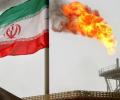
Indian Ambassador to the US Harsh Vardhan Shringla said India has stopped importing oil from Iran after the United States refused to extend exemption from sanctions earlier this month.

Carter was in politics, but not a politician, certainly not a transactional politician, points out Shreekant Sambrani.

Iran has complained of irregular shipments
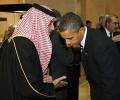
Further deterioration of the US-Saudi relationship will have geo-economic and geopolitical effects, says Nitin Pai.

America had postponed the much-awaited dialogue due to "unavoidable reasons" last month.

'The stage is set for increasing tensions in a highly volatile region as crucial as ever from a geopolitical standpoint,' predicts Claude Smadja.
'None of these three countries -- Turkey, Iran or Malaysia -- ever made a hostile move against India to support the Pakistan-based terrorist elements,' notes Ambassador M K Bhadrakumar.
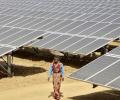
Arunabha Ghosh on why India will increasingly become an energy great power, but not an energy hegemon.

'I believe one of the most critical issues is the common threat we face from Islamist radicals and the continuing and unimpaired financing of Al Qaeda, the 'D' Company, the Haqqani network, the LeT and the Jaish-e-Muhammed.'

He was merely responding to the changing currents in the region, which, unfortunately, are not favourable to the Palestinians, says P R Kumaraswamy.
 © 2026 Rediff.com - Advertise with us - Disclaimer - Privacy Policy - Sitemap - Feedback - About us - Terms of use - Grievances