
The NTAGI has recommended that those who need to travel overseas can take the precaution dose of Covid vaccine as required by the country they are travelling to, before the stipulated nine-month waiting period, sources told PTI.
According to officials, an additional dose of vaccine is different from a booster dose.
Zydus Cadila COVID-19 vaccine for children above 12 years is expected to be available by August as its trials are likely to be completed by July-end, said Dr N K Arora, Chairman, National Technical Advisory Group on Immunisation (NTAGI).

The Delta plus variant of COVID-19 has greater affinity to lung tissues as compared to other strains but it does not mean that it will cause severe disease or is more transmissible, head of coronavirus working group National Technical Advisory Group on Immunisation (NTAGI) Dr N K Arora said.
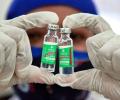
The NTAGI has not yet suggested any change in the schedule of Bharat Biotech's Covaxin.

The Union health ministry has reduced the gap between the second and precaution dose of COVID-19 vaccine for all beneficiaries from nine to six months following a recommendation by National Technical Advisory Group on Immunisation (NTAGI).
The Union health ministry on Wednesday dismissed media reports claiming there was dissent from technical experts about increasing the gap between two Covishield doses and said the decision was based on scientific reason about the behaviour of adenovector vaccines.
The government is likely to soon reduce the gap between the second dose of Covid-19 vaccine and the precaution dose from the current nine months to six months, official sources said on Wednesday.
The government on Friday said there is no need to panic on the need for an immediate change in the dosage interval of Covishield vaccine, underlining that reducing the time gap requires proper scientific study in the Indian scenario.
The Standing Technical Sub-Committee (STSC) of the National Technical Advisory Group on Immunisation (NTAGI) on Thursday recommended reducing the gap between the second and precaution doses of COVID-19 vaccines from the current nine to six months, official sources said.
'Antibodies remain in the blood for at least seven to nine months.'
The decision to increase the gap between two doses of Covishield from 4-6 weeks to 12-16 weeks was based on scientific decision and there was no dissenting voice among the National Technical Advisory Group on Immunisation members.
The minister will review the COVID-19 situation at 11:30 am on Wednesday 'considering the international scenario', they said.

The decision empowers pregnant women to make an informed choice on taking the Covid vaccination, the ministry said, adding these women can now register on CoWIN or walk-in to the nearest Covid vaccination centre to get themselves inoculated.

In the major Indian cities, the Omicron variant of the coronavirus is accounting for more than 50 per cent of the fresh cases of the infection and the massive surge in the number of cases over the last one week is indicative of a third wave of the pandemic, as is being witnessed in several countries, Dr N K Arora, chairman of the COVID-19 working group of the NTAGI, said on Tuesday.
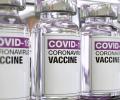
Zydus Cadila has agreed to bring down the price of its COVID-19 vaccine to Rs 265 a dose following persistent negotiations by the government but a final deal is yet to be reached, sources said on Sunday.

The NTAGI has also stated that those having laboratory test proven SARS-CoV-2 illness should defer COVID-19 vaccination for six months after recovery, the sources said.

Of the estimated 7.4 crore (7,40,57,000) population in the 15-18 age bracket, over 3.45 crore have received the first dose of Covaxin so far and their second dose is due in 28 days, he said.
With talks underway between the central government and Zydus Cadila over the pricing of the COVID-19 vaccine ZyCov-D, the pharma company is learnt to have proposed a price of Rs 1,900 for its three-dose jab that can be given to those above 12 years of age.
Mandaviya reviewed the pandemic situation, status of vaccination drive and the global scenario of new variants of Covid.

Serum Institute of India (SII) and Bharat Biotech have also stopped producing the Covishield and Covaxin vaccines respectively.
These decisions were taken by the ministry based on the fresh recommendations by The National Expert Group on Vaccine Administration for COVID-19 (NEGVAC) and have also been communicated to the states and union territories, an official statement said.

Under the National COVID-19 Vaccination Programme, more than 148 crore vaccine doses have been successfully administered.
According to some experts, there is not much difference in the number of seasonal flu cases and that of COVID-19, even though they stressed that surveillance for newer variants should continue in the off chance of a new lineage of coronavirus catching the country off guard.

There is no scientific evidence so far to support the need for a booster vaccine dose against COVID-19, ICMR Director General Dr Balram Bhargava said on Monday underlining the completion of second dose for India's adult population is the priority for the government for now.

The current Covid situation in India is under control and there are no reasons to panic, said Dr N K Arora, the chairperson of National Technical Advisory Group on Immunization (NTAGI).
This decision of revised time interval between two doses is applicable only to Covishield and not to Covaxin vaccine, the ministry said.
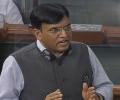
Union Health Minister Mansukh Mandaviya on Tuesday told Bharatiya Janata Party MPs that Covid vaccination for children is likely to start soon, sources said.

Prime Minister Narendra Modi is likely to announce a host of initiatives for the health sector on Independence Day with the highlights being the 'Heal in India' and 'Heal by India' projects and a roadmap to eliminate sickle cell disease by 2047, official sources said.
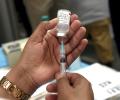
He explained, "Children between the age of 12 and 18 years, particularly those in the age group of 15 to 18 years, are very much like adults. Our research within the country also says that almost two-thirds of the deaths below 18 years which occurred due to COVID in India are within this age group. So, this decision was mainly taken to protect the adolescents."

According to these experts, a monkeypox outbreak can effectively be tackled by strong surveillance.
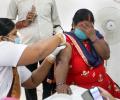
Not enough data has been generated locally to decide on the need for a booster dose of COVID-19 vaccine for those fully inoculated, say experts amid the possibility of a third wave of the viral disease hitting the country between September and October.

The reason is that because of the hybrid immunity after three waves of natural infection and a large proportion of adults receiving both doses of COVID-19 vaccine, the susceptible pool has come down drastically, Lahariya said.

These kinds of assumptions to be used for a nation of India's size and "to put us in poor light is not desirable"
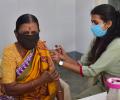
'Better to prevent than to wait for evidence. Protection delayed can also mean protection denied'

Stressing on the need to protect both lives and livelihoods, he said public health action in India and across the world must be continually guided by evidence from four key questions -- how transmissible is the variant, severity of the disease it causes, how well vaccines and prior SARS-CoV-2 infection protect and how common people perceive risk and follow control measures.

Cautioning that the country is passing through a phase when there are festivals and potential gatherings, he said this is a critical phase as the virus can spread again.
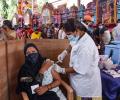
It will be unfair to put a date for any COVID wave as the behaviour of coronavirus is unpredictable and a disciplined and effective pandemic response can help the country get away from any significant outbreak, COVID Task Force chief V K Paul said.
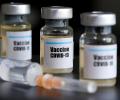
The procurement and distribution will be centralised though the government is yet to take a call on the initial number of doses that will be procured.
Phase-I clinical trials have revealed "excellent safety" of the two candidate vaccines indigenously developed by Bharat Biotech in collaboration with Indian Council of Medical Research and Cadila Healthcare Ltd and their immunogenicity testing is now in progress, minister of state for health Ashwini Choubey informed the Rajya Sabha on Tuesday.
