
Most analysts have downgraded the stock of SBI Cards and Payments (SBI Card) as the credit card issuer posted weak results during the December quarter (Q3) of financial year 2023-24 (FY24). The sub-par show, analysts said, was for the eighth straight quarter. With this, they have slashed their earnings estimates by as much as 20 per cent over FY24-26 amid near-term pressure points in the company's growth outlook.

Poor earnings show in the September quarter (Q2FY24), with hints of likely weakness in asset quality going ahead, forced analysts to cut earnings estimates of SBI Cards and Payment Services (SBI Card). On the bourses, shares of the State bank of India arm tumbled 7.4 per cent to Rs 732 apiece on the BSE in the intraday trade as investors factord in near-term concerns. Analysts at Motilal Oswal Financial Services, for instance, slashed SBI Card earnings by 8 per cent and 10 per cent for FY24 and FY25, respectively, as they expect the company to face pesistent magin pressure.

The team consisted of trainee mountaineers from the Nehru Institute of Mountaineering and their trainers.
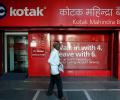
Kotak Mahindra Bank on Saturday reported a 25 per cent growth in its March quarter net profit at Rs 5,302 crore, limited by a drop in the core income due to narrow interest margins. On a standalone basis, the city-headquartered lender's Q4 net profit grew 18 per cent to Rs 4,133 crore. The FY24 consolidated net profit grew 22 per cent to Rs 18,213 crore.

Of the 16 bodies retrieved, 14 are of trainees and two of instructors, NIM said in a bulletin.
ICICI Bank on Saturday said its March quarter consolidated net profit grew 18.5 per cent to Rs 11,672 crore, helped by lower provisions. On a standalone basis, the second largest private sector lender showed a 17.4 per cent growth in its profit after tax at Rs 10,708 crore for the reporting quarter against Rs 9,122 crore in the year-ago period. For fiscal 2023-24, its standalone net profit grew to Rs 40,888 crore from Rs 31,896 crore a year ago.

The country's largest lender SBI on Saturday reported a 9.13 per cent rise in consolidated net profit to Rs 16,099.58 crore for the September quarter, weighed down by money it had to set aside for employees' impending wage and pension revisions. On a standalone basis, the State Bank of India (SBI) had a 8.03 per cent increase in the profit after tax for the reporting quarter at Rs 14,330 crore. However, the same was down 15.13 per cent compared to Rs 16,884 crore in the June quarter.

The affordable housing segment may be seeing an uptick which is a good sign of consumption momentum. This is the biggest-ticket purchase for middle income and lower income families. The current activity is at least partly driven by a pause in interest rate hikes.

Given the uncertain macroeconomic conditions, most brokerages have turned slightly cautious on the pace of growth in State Bank of India's (SBI's) earnings going ahead. While they don't see any significant risk arising for now, its sheer balance sheet size and systematic importance has nudged them to cut earnings estimates for fiscal year 2023-24 (FY24) and 2024-25 (FY25) up to 5 per cent. India's largest state-owned bank, on Thursday, reported standalone net profit of Rs 16,694.51 crore for Q4FY23.

In August, the Reserve Bank of India Governor Shaktikanta Das held a meeting with chief executive officers/ managing directors (CEOs/ MDs) of large non-banking financial corporations (NBFCs). The discussions included diversifying borrowing sources for NBFCs and housing finance companies (HFCs) to contain increasing reliance on bank borrowing, risks associated with high credit growth in retail segment in unsecured loans, prioritising IT upgrades and cyber-security, improving provisioning, monitoring of stressed exposures and slippages, ensuring robust liquidity and asset-liability management, ensuring transparency in pricing, creating robust grievance redress mechanisms.

The Reserve Bank India's (RBI's) decision to ban the onboarding of new accounts on the "bob World" mobile digital platform led to a selloff in the Bank of Baroda (BoB) stock. The stock of the public sector bank dropped by around 3 per cent. The central bank cited "material supervisory concerns"; news reports claimed mobile numbers were randomly linked to accounts to purportedly inflate registrations on bob World.

Credit-to-deposit (CD) ratio of major public sector and private sector banks during the October-December quarter of FY24 inched up as compared to the previous quarter though government-owned lenders reported a lower rate than their private peers. CD ratio is the ratio of the funds that banks lend as compared to the funds raised in the form of deposits. The CD ratio of top public sector banks (PSBs) - State Bank of India, Punjab National Bank, Bank of Baroda and Canara Bank - was lower than their private counterparts.

Nirma University Institute of Management-Ahmedabad, invites applications for admissions to its two-year MBA programme.

SBI Cards & Payment Services reported mixed results for the January-March quarter (Q4) of FY24. While it managed to deliver strong earnings growth, it saw a perceptible decline in net interest margin (NIM) and suffered deteriorating asset quality. Taken together, the market was disappointed with the share dropping 3.5 per cent.
Shares of ICICI Bank may outperform those of HDFC Bank in the near-term, analysts said recently, after the Sandeep Bakhshi-led private sector lender reported a strong set of numbers for the July to September quarter (Q2) of financial year 2023-24 (FY24). The result, they said, reiterated that ICICI Bank is maintaining a sustainable and prudent growth led by tech-driven initiatives as against HDFC Bank, which is facing merger related challenges. According to analysts at Prabhudas Lilladher, ICICI Bank is valued at par with HDFC Bank at 2.2x/1.9x on FY25/26E core adjusted book value (ABV) basis.

While rising interest rates and tighter liquidity are giving negative signals for the financial sector, increasing economic activity could mean higher business volumes for lenders. Liquidity in the banking system has moved from Rs 8 trillion surplus into a deficit of Rs 33,000 crore over the 2022 calendar year. By the end of November, bank credit had grown 17.5 per cent YoY (year-on-year).
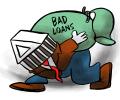
Mounting repayment pressure for some borrowers, particularly micro, small and medium-sized enterprises, amid India's interest rate hikes will test banks' loan underwriting quality, Fitch Ratings said on Thursday. However, asset-quality risks from higher rates should generally be moderate for most banks, it said in a statement. Higher rates will also affect securities valuations and could make it harder for banks to raise fresh capital, particularly at state banks, although wider net interest margins (NIM) will have offsetting positive credit effects, it added.

The sector seems set for a rally that may be somewhat temporary.

MMFS is looking at a compounded annual growth rate (CAGR) of 18 per cent in assets under management (AUM) during FY23 to FY26 on the back of the strong recovery. The company has initiated risk-mitigating initiatives, including diversification into non-vehicle loans, building digital capacity and re-classification of customer profiles into affluent and mass-affluent in semi-urban segments to better target marketing.
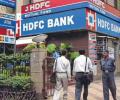
This will be the lender's first result after its merger with HDFC Ltd, effective from July 1, and will keep analysts glued to the management's earnings growth guidance for the merged financial behemoth.

Operating margins have been the primary driver of corporate earnings in India in recent quarters, despite revenue growth suffering from weak consumer demand. Companies across sectors have reported a sharp improvement in earnings before interest, tax, depreciation, and amortisation (Ebitda) margins over the past two years, benefiting from lower commodity and energy prices. Higher margins more than compensated for slower revenue growth, resulting in double-digit growth in net profit for five consecutive quarters.

'The stabilisation of interest rates followed by reduction is going to happen over the next year.'
Despite a largely stable December quarter, investors booked profit in shares of IndusInd Bank (IIB) as an increase in slippages took them by surprise. Analysts, on their part, believe investors may, now, wait for actual delivery on slippage decline, potentially limiting near-term upside. "The management has indicated that corporate slippages (from legacy stressed book) have ended and inch up in consumer finance slippages was more one-off, and should meaningfully improve Q4FY24 onwards.

A strong business update for the April-June quarter of the 2023-24 financial year Q1FY24 has led to a big jump of over 7 per cent in the share price of Bajaj Finance on Tuesday (July 4). The non-banking financial company's (NBFC's) new loan book grew 34 per cent with 9.9 million new loans booked in Q1FY24 from 7.2 million loans booked in Q1FY23. The company's total customer franchise rose to 72.98 million (as on June 30, 2023), compared to 60.30 million year-on-year (YoY) with the highest-ever quarterly increase of 3.84 million in Q1FY24. Assets under management (AUM) grew by 32 per cent to about Rs. 270,050 crore in Q1FY24 from Rs. 204,018 crore in Q1FY23.

Gold prices hit record high in the third week of March as fears of bank collapses and high inflation led investors to the traditional safe haven. Gold prices are often inversely correlated to dollar strength because the international price is dollar-denominated. The Federal Reserve's (Fed's) stance indicates that the dollar may appreciate further since it is prepared to keep pushing up policy rates. But demand for gold is also up - the World Gold Council claims central banks are buying in addition to private demand.
Bandhan Bank has declared disappointing results for the first quarter of the 2023-24 financial year (Q1FY24). While the market has been braced for known issues around microfinance exposures in West Bengal and Assam, there is higher stress in the portfolio. This means higher credit costs and poorer asset quality, leading to target downgrades by analysts.

The two teams will go up against each other again on Wednesday for the second leg

Axis Bank has strengthened its positioning -- on both the assets and liability side -- and it may be set to deliver sustained improvement in performance. The valuation gap between Axis Bank (which trades at 1.4x core book value (or BV) and peers like ICICI Bank (valued at 2x BV) is expected to narrow.
HDFC Bank Q1FY24 results analysis: Shares of HDFC Bank, the world's seventh largest financial entity, have advanced 2 per cent in two days, as against 1 per cent rise in the benchmark S&P BSE Sensex, after the lender reported its April-June quarter (Q1) results for financial year 2023-24 (FY24) on July 17. The S&P BSE Bankex index, meanwhile, has gained 1.3 per cent. While the near-term stock performance may remain sideways due to merger-related hiccups, analysts remain bullish on the stock's long-term prospects.
Defying trends, the country's largest private sector lender, HDFC Bank, has shifted its asset mix significantly towards high-rated segments. As a result, its wholesale-to-retail mix has tilted heavily in favour of wholesale, even at the cost of margins. Further, it is even looking to ramp up its branch network, with an aim to service clients within a 1-2 km radius rather than the current 5-6 km radius.

Manappuram declared consolidated assets under management (AUM) growth of 27 per cent year-on-year (Y-o-Y) (5.1 per cent quarter-on-quarter or Q-o-Q) to Rs 38,950 crore. Net interest income (NII) saw a margin expansion of 24 basis points (bps) Q-o-Q to 15.44 per cent.

Colonel Ajay Kothiyal, Kirti Chakra, Shaurya Chakra, is one of the most decorated soldiers to join politics. He still has two bullets lodged inside his body sustained in a gun battle with terrorists in J&K.
Despite rising interest rates, and high inflation, the banking sector is doing well, on the back of a recovering economy. The last couple of quarters indicate credit demand is picking up and Return on Assets (RoA) is more than acceptable at the moment. The PSU bank pack may be more interesting at the moment simply due to being valued at far lower multiples than the private banks.

Collectively, the pack of 12 has posted a 50 per cent rise in profits -- Rs 25,685 crore. On a quarter-on-quarter basis (that is, September over June), the rise is 68 per cent. Public sector banks have never had such a stellar performance, explains Tamal Bandyopadhyay.
The banking sector emerged as an outlier when the rest of India Inc witnessed a slowdown in earnings in FY23. The combined net profit of listed public and private sector banks was up 39.4 per cent year-on-year (YoY) last financial year and their share in India's gross value added (GVA) or gross domestic product (GDP) at factor cost rose to a record high of nearly 1 per cent up, from 0.8 per cent a year ago. Listed banks' combined net profit grew to Rs 2.36 trillion in FY23, from Rs 1.69 trillion a year ago. In comparison, India GVA at current prices was up 15.2 per cent YoY at Rs 247 trillion in FY23; it was around Rs 214 trillion a year ago.

Should deposit growth continue to outpace credit growth, banks may end up ceding some hard-earned 25-50 bps improvement in profitability or net interest margin gained in the past two years.
Bajaj Finance's quarterly business update, coupled with around 24 per cent fall over the past six months, has turned risk-reward favourable for investors, observe analysts. They see up to 39 per cent upside in the stock, from a one-year perspective. Global brokerage CLSA, for instance, has upgraded the stock from 'underperform' to 'outperform' with an increased one-year target price of Rs 6,600 (vs Rs 6,000 earlier) as it believes the risk-reward has turned favourable for the counter, and there is scope for expansion if growth remains robust.
Axis Bank's results for the fourth quarter of the 2022-23 financial year (Q4FY23) were skewed due to large one-off charges related to its acquisition of Citi's retail business. Axis reported a loss of Rs 5,730 crore on account of exceptional items of Rs 12,350 crore (net of tax) towards Citi's acquisition, policy harmonisation etc. Excluding this one-off, the adjusted net profit or profit after tax (PAT) would be Rs 6,630 crore, up 61 per cent year-on-year (YoY).
HDFC Bank Q4 review: HDFC Bank's January-March quarter (Q4) results, for financial year 2022-23 (FY23), brought no cheer to investors as elevated costs, and merger-related uncertainties continue to dent the sentiment. Moreover, analysts fear that merger-related costs may put pressure on margins and cost to income ratio in the near-term, while the return on equity could moderate owing to low leverage of the parent. Analysts, therefore, opine that the stock's re-rating may be some time away. "While the risk of a de-rating on a standalone basis appears to be quite low given that the business performance is holding up well, we believe a re-rating in the stock would happen as and when more clarity emerges on the smooth transition (merger)," said a report by Sharekhan.

The drop in net interest margin will separate the men from the boys, explains Tamal Bandyopadhyay.
