
Banerjee, 58, was educated at the University of Calcutta, Jawaharlal Nehru University and Harvard University, where he received his Ph.D in 1988. He is currently the Ford Foundation International Professor of Economics at the Massachusetts Institute of Technology.

On Monday, the Royal Swedish Academy of Sciences announced that Abhijit Banerjee, Esther Duflo and Michael Kremer had won the 2019 Nobel Prize for economics "for their experimental approach to alleviating global poverty". The research conducted by them has considerably improved the ability to fight global poverty. In just two decades, their new experiment-based approach has transformed development economics, which is now a flourishing field of research, said the Royal Swedish Academy of Sciences. Here are some interesting facts about the Indian-origin Abhijit Banerjee.

Indian-American economist Abhijit Banerjee and his French-American wife Esther Duflo along with their colleague Michael Kremer received the 2019 Nobel Prize in Economic Sciences on Tuesday for their work to alleviate global poverty that has helped millions of children in an experimental approach that favours practical steps over theory.

Rahul Gandhi said he had helped the party conceptualise its 'Nyay' scheme to help remonetise the economy.

Delhi government had introduced the scheme in 2016 seeking to check dropout of the students and improve education quality with special focus on the weakest students.
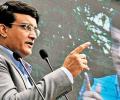
BCCI president-elect Sourav Ganguly said the achievement of Nobel prize winner and fellow Bengali Abhijit Banerjee is much bigger than his.

MIT, in a release, said the 'work of Duflo and Banerjee has emphasised the use of field experiments in research, to bring the principles of laboratory-style randomised, controlled trials to empirical economics'.

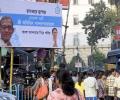
People from all walks of life carrying posters, pictures and placards gathered at the airport to welcome Banerjee. Slogans of 'Bharater Gorbo (pride of India) Abhijit Banerjee' echoed in the airport.

Amartya Sen was the other Presidency alumni to win the Economics Nobel. Banerjee won the 2019 Nobel Economics Prize along with two others - his wife Esther Duflo and Michael Kremer on Monday "for their experimental approach to alleviating global poverty."

'In the last five-six years, at least we could witness some growth, but now that assurance is also gone,' Banerjee told a news channel from the US.

"I am very happy and proud of his achievements. I am yet to speak to him. I think he must be sleeping as it's still night in the United States," she said.

For Duflo and Banerjee, an important part of their work has been ensuring that the agency of the "beneficiaries" -- usually, in developing countries like India, poorer individuals -- is put at the centre of any policy design. This is a crucial way in which experimental results are often better than large scale data-based inference, says Mihir S Sharma.

The West Bengal chief minister during the meet said that the state government was keen to utilise the Nobel winner's services.

Banerjee joins the list of Indians and people of Indian origin who have received the prestigious Nobel prize in fields like Physics, Chemistry, Peace, Economic Sciences and Medicine.

According to a 2011 impact assessment study of the programme by Banerjee and Duflo, along with economists Raghabendra Chattopadhyay and Jeremy Shapiro, Bandhan's THP results in a 15 per cent increase in household consumption and had a positive impact on wealth and welfare, such as assets and emotional well being.

"Excellent meeting with Nobel Laureate Abhijit Banerjee. His passion towards human empowerment is clearly visible. We had a healthy and extensive interaction on various subjects. India is proud of his accomplishments. Wishing him the very best for his future endeavours," Modi said in a tweet, sharing a picture of their meeting at his official residence.

Uddalok Bhattacharya looks back at his friendship with 'Jhima', the Nobel Laureate.

This year's Laureates have shown how the problem of global poverty can be tackled by breaking it down into a number of smaller - but more precise - questions at individual or group levels, he Royal Swedish Academy of Sciences said.

There's no silver bullet to get rid of poverty, says Alok Sheel.

From his economist mother to politicians and academia -- all hailed Banerjee's achievement.

What does Nobel Laureate Abhijit Banerjee thinks about India's education sector?
'The fruition of Nobel's hope lies in the response of a caring government that can rise above politics and propaganda, not in the frenetic raptures of a public that worships fame for fame's sake,' says Sunanda K Datta-Ray.
