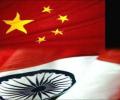
China has invited India to be part of its new initiative to build a Maritime Silk Road which it says is aimed at improving connectivity and trade among Asian nations through the sea on the lines of ancient Silk Route.

The enduring legacy of trade routes lies in shared stories and religious diversity. Can the India-Middle East-Europe Economic corridor harness this legacy to empower nations, asks Arundhuti Dasgupta.
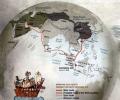
China's desire to have India as part of its ambitious Maritime Silk Route makes strategic sense for both nations. However, it would involve substantive assurances from Beijing, says Dr Rahul Mishra

In many ways, 17th century India occupied a position in the global economy comparable to that of the United States today. Just as millions of people now look towards America because of its economic opportunities, merchants, adventurers and trading companies once looked towards India.

Giving final touches to its most ambitious plan to build a wide network of new silk roads on land and seas to enhance global connectivity, China has invited India to join President Xi Jinping's pet project that would revive the ancient trade route and benefit the region.
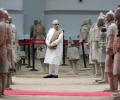
India, China must further strengthen business ties for growth.

China will also set up 50 joint laboratories with countries participating in the Belt and Road initiative to enhance cooperation on innovation.
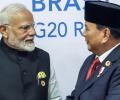
India is trying hard to erase Indonesia's wariness about New Delhi, building security cooperation in the Indian Ocean and Pacific Ocean. If Indonesia decides to buy the Brahmos missile, it would further strengthen relations between the world's most populous nation and the most populous Islamic country.
China has demonstrated that it has the power to not be isolated, and it is likely to become more powerful over time.

'Gwadar has the potential to facilitate PLAN's operations in the Arabian Sea and Indian Ocean.' 'Reports of China setting up electronic eavesdropping posts at Gwadar to monitor US and Indian naval activity and shipping traffic through the Straits of Hormuz and the Arabian Sea lend credence to this,' says former RA&W officer Jayadeva Ranade.
Right from conducting nuclear deterrence patrols in 2015 to its destructive space programme, from its back-tracking on economic commitments to its hardened positions on Sino-India border deal -- its approach with India spells Adversarial with a capital A, says Shehzad Poonawalla
'Chinese companies have acquired stakes in 13 ports in Europe, including in Greece, Spain and, most recently, Belgium.' 'Those ports handle about 10 percent of Europe's shipping container capacity,' points out Ambassador M K Bhadrakumar.
'India should respect Maldivian nationalism and their desire to be not over-dependent on India.' 'India should not behave like a big brother towards Maldives as many times, we tend to behave like that.'

Hometown diplomacy mixed with a Silk Road touch is expected be part of Chinese President Xi Jinping's reciprocal gesture when Prime Minister Narendra Modi visits China before end of May.
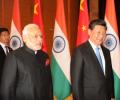
While the two sides' objectives may appear to differ, it is clear that both India and China are emphasising on the common minimum possible areas of cooperation between them, says Srikanth Kondapalli.

'There is no Buddha or Gandhi among countries, existing for the service of others; they all exist for the good of themselves.' 'For each country, its own interests should be paramount, and it is futile and churlish to expect China to be an exception to this rule,' says B S Raghavan, the distinguished civil servant and long-time China-watcher.

If the aim is to become a player with some strategic space of its own, not just in the Indian Ocean region but also in the adjoining region, then greater interaction with China is desirable, even necessary.

Thinking big, China is changing the world order; with mixed priorities, we can but tag along, writes T J S George.
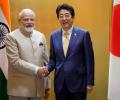
With the signing of the pact, the Quad grouping of India, Japan, Australia and the US is set to gain more heft now, notes Dr Rajaram Panda.

China will increase its defence spending by "around seven per cent" this year, as it vowed to guard against "outside meddling" in its territorial disputes.

'Both Modi and Xi know that if all that there is to show for Modi's visit -- barely eight months after Xi's India trip -- is a repeat of the same old declarations, there will be a terrible sense of letdown in the public mood resulting in future summits losing credibility. Only the possibility of new ground being broken can justify Modi's trip at this time,' says B S Raghavan.

As India rises, creating niche areas for itself in the Asian landscape, China and India are bound to step on each other's vital areas of importance, says Srikanth Kondapalli.
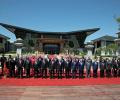
'Whichever option India chooses, it should be clear to the government that the China-Pakistan nexus poses a clear and present danger to national security,' says Brigadier Gurmeet Kanwal (retd).

'Chinese leaders rarely receive their foreign guests in cities other than Beijing. Such respect for India!' 'Does it mean that Modi could replicate "the warmth and unconventional way" by sending Indian troops into Tibet, as Xi did in Chumur (Ladakh) when he arrived in India? Of course, Indians are far too polite to do so,' says Claude Arpi.

Gwadar port India is hardly taking any note of developments in Balochistan. To counter and restrict China influence there, India needs to aggressively move forward on further consolidating its friendly relationship with Iran and Afghanistan, says Abhay Jere.

The developments in Af-Pak region, particularly the fall out of Pak political paralysis, would make President Xi Jinping's task a little more complicated, says Colonel R Hariharan.

'It is a pattern of behaviour of the Chinese that whenever a Chinese leader visits India or an Indian leader visits China, some incidents take place.' 'When Modi visits China, we should look out for some similar demonstration by the Chinese.'

'Building on the potential for closer ties is the changing narrative in each country about the other. The Chinese narrative on India has become significantly more positive over the past few years,' says Walter Andersen and Zhong Zhenming.

PM Modi seems to be gradually ending India's strategic ambiguity
'The intrusion in Chumar, during and beyond the Chinese president's visit, is unprecedented and has qualitatively changed the tone of the India-China relationship,' says Jayadeva Ranade, a member of the National Security Advisory Board.

Once again an Indian prime minister has realised that with Pakistan and China, things will not move as he wishes.

'The logical step is to challenge the very legitimacy of the Chinese claim over Tibet,' recommends Inspector General Gurdip Singh Uban (retd).

'The Modi-Xi and Modi-Obama meetings, with an interval of just 12 days, are juxtaposed superbly at a crucial point in the prime minister's life. Can Modi carve out a win-win situation with the superpower and the emerging superpower at the same time?'

Four major political takeaways from Narendra Modi's much-anticipated trip to China

A sensational interview on India-China ties, with the man most qualified to answer.

Modi's arrival has changed the optics of the visit. There is a different demonstration of the confidence level in the Indian leadership, but not much has changed beyond that, reports Sheela Bhatt/Rediff.com.
