
The Supreme Court expressed dissatisfaction with the Centre's cap on anti-cancer drug trade margins, questioning why similar controls aren't applied to other medicines. The court highlighted significant markups on common drugs and medical devices, urging the government to expand its price regulation efforts and present modalities by October 27.

The Supreme Court has questioned the Centre's decision to cap trade margins on anti-cancer drugs at 30 per cent, asking why similar restrictions could not be extended to other medicines and medical consumables, citing glaring disparities between procurement costs and maximum retail prices (MRPs).

The RSS-affiliated Bharatiya Kisan Sangh (BKS) is set to host its inaugural women's conclave in New Delhi, aiming to advocate for increased representation of women farmers in agricultural policymaking. The event will bring together 7,000 women farmers to discuss their significant contributions to farming, livestock, and fisheries, and to push for policy changes, including a shift from MSP to MRP for produce.

The Supreme Court has strongly criticised the exorbitant markup on cancer drugs by hospitals, calling it "carnage" and "broad daylight dacoity." The court highlighted a case where a cancer drug was marked up ten times its retail price and urged the Centre to implement a uniform 16% margin on all medicines. It also raised concerns about hospitals forcing patients to buy medicines from their in-house chemists.

The directive comes amid concerns over steep mark-ups on medicines and medical consumables sold at hospital pharmacies.

The Indian government has decided to cap trade margins on all non-scheduled anti-cancer drugs at 30 per cent of their maximum retail price. This move aims to improve affordability and ensure continued availability of these life-saving medicines, potentially saving cancer patients an estimated Rs 2,500 crore annually. The decision, expected to be implemented later this month, will affect 110 anti-cancer drugs, including 35 patented ones.

Rediff Movies columnist Dinesh Raheja's second book of poems ... Unfulfilled Desires will release on August 14.

The government has asked manufacturers to revise the maximum retail price (MRP) on unsold stocks in line with the change in GST rates. The government has reduced GST on various products and services, which will come into effect from September 22.

Supreme Court Justice V Mohana has recused herself from hearing the anticipatory bail plea of DMK leader V Senthil Balaji in a new corruption case related to alleged irregularities in the Tamil Nadu State Marketing Corporation (TASMAC). The plea, seeking pre-arrest bail, was filed after the Madras High Court dismissed Balaji's petition. The case involves a systematic cash-kickback scheme and overcharging at TASMAC retail shops.

The Excise department in Thane seized 73,440 bottles of Goa-made Indian Made Foreign Liquor (IMFL) worth Rs 1.89 crore from a truck on the Panvel-Mumbra highway. The liquor, lacking batch numbers and MRP, is banned for sale in Maharashtra, leading to the driver's arrest under the Maharashtra Prohibition Act.

An intensified DVAC probe into a multi-crore liquor scam, allegedly involving former DMK Minister V Senthil Balaji, has led to a suggestion to privatise retail liquor sales in Tamil Nadu. The investigation targets alleged collusion in TASMAC bar licences, transport tenders, and procurement, with the Madras High Court dismissing Balaji's anticipatory bail plea. The FIR details systemic corruption, significant revenue loss, and illicit fund generation, prompting political reactions.

The Chhattisgarh Anti-Corruption Bureau/Economic Offence Wing (ACB/EOW) has filed a supplementary chargesheet against four individuals for alleged irregularities in the procurement of medical equipment and reagent chemicals in 2023, resulting in significant financial losses to the state.

Delhi Police have arrested three individuals involved in the manufacturing and distribution of counterfeit two-wheeler spare parts, seizing fake components and packaging material worth approximately Rs 10 lakh.

The domestic cigarette industry is expected to see a 6-8 per cent volume contraction next fiscal following the imposition of additional excise duties and increase in goods and services tax (GST) rates from February 1, Crisil Ratings said on Wednesday.

GCMMF, which markets dairy items under Amul brand, on Saturday announced reduction of retail prices of more than 700 product packs, including ghee, butter ice cream, bakery and frozen snacks, as it decided to pass on benefits of the GST rate cut to consumers. The new price will be effective from September 22.
With lower GST rates taking effect, fast-moving consumer goods players face challenges in setting reduced prices for their products in round figures, but expect the magical price points to be restored within two months.
Lower rates effectively increase disposable income, strengthen purchasing capacity, and support broader consumption growth.
Recalling or relabelling medicines already in the supply chain before September 22 will not be mandatory, the finance ministry said on Tuesday, issuing a fresh set of frequently asked questions (FAQs) to address industry concerns following the announcement of goods and services tax (GST) revisions.

The National Pharmaceutical Pricing Authority will monitor how companies are increasing prices of non-scheduled drugs.
Several fast-moving consumer goods (FMCG) companies have said that they would pass on the full benefit of goods and services tax (GST) rate cuts to consumers starting September 22. Dairy major Mother Dairy, on Tuesday, announced rate cuts in products spanning its portfolio-- from milkshakes to paneer and jams to frozen products under its Safal brand.
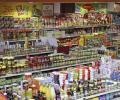
Daily essentials and food products will be cheaper from Monday, as leading FMCG companies have slashed prices, extending GST cut benefits to consumers.

The rationalisation of goods and services tax (GST), announced on Wednesday, directly lowers the cost of everyday medical consumables, and also high-end therapies in oncology and rare diseases, helping reduce out-of-pocket patient expenditure and better adherence to medication.

18% cent GST on iPhones continues to weigh heavily on the final cost to Indian consumers, limiting the impact of price cuts.

The idea of the MRP is becoming less relevant and should be replaced by portfolio pricing.
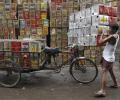
Major edible oil companies, including Adani Wilmar and Ruchi Soya, have reduced the maximum retail price (MRP) of their products by 10-15 per cent to provide relief to consumers, industry body SEA said on Monday. The prices have been reduced by Adani Wilmar (on Fortune brands), Ruchi Soya (Mahakosh, Sunrich, Ruchi Gold and Nutrella brands), Emami (Healthy & Tasty brands), Bunge (Dalda, Gagan, Chambal brands) and Gemini (Freedom sunflower oil brands), it said. OFCO (Nutrilive brands), Frigorifico Allana (Sunny brands), Gokul Agro (Vitalife, Mahek and Zaika brands) and others have also reduced prices, it added.

India's MRP and Packaged Commodities Acts are dated and not in line with the modern world's digital price mechanisms and comparisons.

'Government is saying that I will not be responsible for ensuring you get MSP but traders and large corporate will be responsible. 'India now is the only country that is saying such things'

Customers can now WhatsApp their complaints on 9869691666 or dial 022-22886666 between 10 a.m. to 5.30 p.m. to register their complaints.
The government's decision to impose excise duty on the maximum retail price of all drugs -- which took effect from January 8 -- may have an adverse impact on the domestic operations of drug makers, said analysts.
Broadcast regulator TRAI is likely to fix the maximum retail price for television channels under the Conditional Access System regime, which will require a nine-month transition period as per the consensus, the government said on Monday.

State Bank of India (SBI), in a report on Friday, claimed a significant decline in the headline poverty ratio in rural areas on account of enhanced physical infrastructure, higher consumption growth in the bottom fractile and direct benefit transfers (DBTs).

Appearing on Rediff Chat, G Srikanth, partner in GSV Associates, Chartered Accountants, Chennai, and member of the Institute of Cost and Management Accountants, answered readers' queries on the Goods and Services Act.

The government has been stringent with pricing changes. Prices of 651 essential medicines came down from April 1, 2023 by 6.73 per cent with the government capping ceiling prices of these drugs.

For instance, a pack of 20 Classic branded cigarettes (from ITC) now costs Rs 120.

The government has capped the trade margin on oxygen concentrators at 70 per cent in order to keep in check the price of the much in demand critical life saving component amid the second wave of the coronavirus pandemic. The trade margin has been capped at 70 per cent on price to distributor level on oxygen concentrators. In an official release, the chemicals and fertilisers ministry said the decision has been taken in view of the extraordinary circumstances arising due to the pandemic which has resulted in volatility in Maximum Retail Prices (MRP) of oxygen concentrators.

The Gujarat Cooperative Milk Marketing Federation (GCMMF), which markets its dairy products under the Amul brand, on Tuesday increased the prices of its Gold, Taaza and Shakti milk brands by Rs 2 per litre. The new prices will be effective from Wednesday, the GCMMF said in a statement. This price hike is being done due to an increase in the overall cost of operation and production of milk, it said.

This move is expected to benefit 22 lakh cancer patients in the country.

Not only chemists, but several known private hospitals are selling medicines at higher prices than MRP, said Singh, adding that the matter was not peculiar to Punjab, but afflicts the whole country.

From Samsung to Apple iPhone XR, smartphone firms are showering discounts in April.
