
Investors with a 6 to 12 month horizon may consider them. They should align their holding period with the fund's maturity profile and prefer schemes with a lower expense ratio.

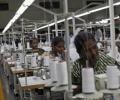
The Indian Textile Industry is currently one of the largest and most important industries in the Indian economy in terms of output, foreign exchange earnings and employment.

MMFs invest in fixed-income instruments maturing in less than one year, minimising interest-rate risk.

The Cabinet on Wednesday approved the production-linked incentive (PLI) scheme worth Rs 10,683 crore for textiles sector with an aim to boost domestic manufacturing and exports. The decision was taken in a meeting which was chaired by Prime Minister Narendra Modi. The Cabinet "has approved the PLI scheme for textiles for MMF (man-made fibre) apparel, MMF fabrics and ten segments/ products of technical textiles with a budgetary outlay of Rs 10,683 crore," Textiles Minister Piyush Goyal told reporters.

The prime minister will be part of the launch of several development initiatives on his birthday.
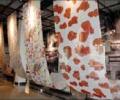
The textile sector seeks cut in Excise duty on MMF to provide level playing field and hike in allocation under Technology Upgradation Fund Scheme

Discussions are also going on to bring PLI scheme for toys, furniture, bicycles and containers. The objective of the scheme is to make domestic manufacturing globally competitive, create global champions in manufacturing, boost exports and create jobs.

rediffGURU and yoga expert Radhika Iyer offers advice on how yoga can help you improve your overall health and wellness.
Heeding to demands made by several states, the GST Council on Friday put on hold a decision to hike the tax rate on textiles to 12 per cent and referred to a panel of state ministers to recommend rate by February, Union Finance Minister Nirmala Sitharaman said. The panel, the highest decision-making body for indirect taxes, met under emergency provisions after states made a request for deferring the tax rate hike on textiles, from the current 5 per cent, to be effective from January 1, 2022. Currently, the tax rate on manmade fibre (MMF) is 18 per cent, MMF yarn 12 per cent, while fabrics are taxed at 5 per cent.
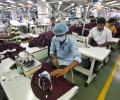
'A change we have seen after the Russia-Ukraine war is the energy crisis in Europe.' 'Earlier, in Europe, people used to change their clothes after 5 washes, now they are using it till 15-20 washes.' 'They used to change their entire wardrobe after 2 months or so, but because of the economic conditions, it has changed.' 'It has affected exports as 40% of our exports is to Europe, 30% to the US and 10% to the UK.' 'The war has to end for better days to come.'
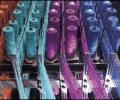
Abolition of customs duty and special additional duty on man-made fibres as it would help the industry to source fibres from global markets during the time of shortage or a sharp increase in domestic prices.

MMFs are a good option for the current environment, observes Sarbajeet K Sen.

Backed by the 'China Plus One' sentiment globally, India's textile exports is expected to grow by 81 per cent to $65 billion by 2026 from the pre-Covid level of around $36 billion in 2019, said a report by the Confederation of Indian Industry (CII) and global consulting firm Kearney. This jump is likely to generate 7.5-10 million new jobs. A large chunk of this targeted increase, or around $16 billion may come from the China Plus One sentiment due to India's relatively large strategic depth compared with Vietnam or Bangladesh, the report said.
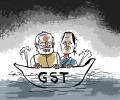
Experts said the rate hike would improve working capital position of the manufactures as it would correct the inverted duty structure but may lead to increase in price of the finished goods.
Textiles: Slaps mandatory excise duty on RMG and apparels with 40% abatement on MRP

Exemption of excise and customs duty on liquid fuels, abolition of service charge, rescheduling of loans for all textiles and clothing units will reduce pressure on the industry and will help to improve liquidity.
Contrary to expectations of the chemical sector, Budget turned non event.

The government hopes that the PLI schemes would provide 200,000-300,000 direct employment over five years, according to sources in the know.

Money funds represent less than 5 per cent of broad money supply in India, Canada, Korea and Taiwan.
In the last five years of NDA rule, 2018-2019 was the worst for exporters.
 © 2026 Rediff.com - Advertise with us - Disclaimer - Privacy Policy - Sitemap - Feedback - About us - Terms of use - Grievances