
Despite volume growth in the export segment and strong demand in the domestic market, pricing uptick is eluding Indian agrochemical companies.

The average cost of a vegetarian thali became dearer by 10 per cent in June due to the jump in onion, potato, and tomato prices, a report said on Friday. However, a decline in the broiler price contributed to a decrease in the cost of a non-vegetarian meal, as per Crisil Market Intelligence and Analysis' monthly "Roti Rice Rate" report. The cost of veg thali, which comprises roti, vegetables (onions, tomatoes and potatoes), rice, dal, curd and salad, increased 10 per cent to Rs 29.4 per plate in June from Rs 26.7 in the year-ago period, and was higher when compared to Rs 27.8 in May 2024, it said.

Dr Nagesh Kumar, one of the three new MPC members, wanted the MPC to reduce the repo rate by 25 basis points to 6.25%.
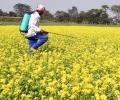
Pulses are most vulnerable to pests and diseases if the monsoon remains patchy for the rest of the season.
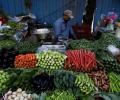
Wholesale inflation fell to a 3-month low of 2.04 per cent in July on decline in prices of food items especially vegetables, government data released on Wednesday showed. The decline in wholesale price index (WPI) based inflation in July came after it rose for four months in a row till June, when it was 3.36 per cent. It was (-) 1.23 per cent in July last year. In April wholesale inflation stood at 1.19 per cent.

Retail inflation declined to a five-year low of 3.54 per cent in July mainly on account of subdued prices of food items, and base effect, according to official data released on Monday. The Consumer Price Index (CPI) based retail inflation was 5.08 per cent in June 2024 and 7.44 per cent in July 2023.

Addressing a public event in Kolhapur city on Monday evening, Fadnavis pointed out instances wherein women were tricked into inter-faith marriage and subsequently abandoned after they gave birth to children.

Automobile (auto) retail sales in India grew by an impressive 14 per cent in July compared to the same period last year, driven by a surge in the rural economy, good product availability, and product launches. While passenger vehicles (PVs) saw a 10 per cent increase during this period, inventory levels have surged to a historic high of 67-72 days in PVs, equating to Rs 73,000 crore worth of stock, according to the Federation of Automobile Dealers Associations (Fada). This poses a risk to dealer sustainability. Inventory levels in July 2023 were only 50-55 days, equating to a stock worth Rs 49,833 crore. In June 2024, inventory was between 62 and 67 days, with a stock value of Rs 60,000 crore.

June rainfall accounts for 15 percent of the total precipitation of 87 cm recorded during the four-month monsoon season in the country.
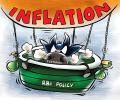
The Reserve Bank of India on Friday retained its projection for retail inflation at 4.5 per cent for the current fiscal assuming a normal monsoon, while emphasising that uncertainties related to food price outlook warrant a close monitoring. Consumer Price Index (CPI)-based retail inflation has been projected at 4.5 per cent with quarter-wise projections at 4.9 per cent in Q1 (April-June), 3.8 per cent in Q2, 4.6 per cent in Q3, and 4.5 per cent in Q4.

On May 15, the weather office had announced the onset of monsoon over Kerala by May 31.

"This year, the Southwest Monsoon is likely to set over Kerala on May 31 with a model error of four days," the India meteorological department said on Wednesday.

'Whether I am optimistic or pessimistic is not the issue; I am just going by the evidence available.' 'The Indian economy and financial sector are now well-placed and very resilient in dealing with any kind of spillover coming from the external world.'

In the coming months, globally as well as in India, rice might remain a hot potato.

The Reserve Bank of India on Friday revised upwards the GDP growth projection for the current fiscal to 7.2 per cent from 7 per cent on rising private consumption and revival of demand in rural areas. Unveiling the bi-monthly monetary policy, RBI Governor Shaktikanta Das said estimates released by the National Statistical Office (NSO) placed India's real gross domestic product (GDP) growth at 8.2 per cent in 2023-24. "During 2024-25 so far, domestic economic activity has maintained resilience," he said, adding that manufacturing activity continues to gain ground on the back of strengthening domestic demand.

As a panel of senior ministers deliberates on the need to review curbs on exports of some rice varieties, data shows that since outbound shipments saw restrictions in July-August last year, the non-basmati segment has suffered more than basmati exports. Sources said the panel is expected to soon deliberate on a few suggestions to ease the export curbs on some rice varieties due to higher-than-required stocks in the central pool. The panel, some observers feel, may also postpone the decision to ease the export curbs till a firm picture emerges on the latest kharif paddy sowing.

The rains after arriving over Kerala will quickly cover Tamil Nadu and Karnataka, but then might slacken a bit, which could delay its arrival over Northwest India.
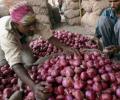
The government on Saturday imposed a minimum export price (MEP) of $800 per tonne on onion exports till December 31 this year with a view to increase availability of the vegetable in the domestic market and contain prices. The decision will come into effect from October 29. Besides, the government has also announced the procurement of additional 2 lakh tonnes of onion for the buffer, over and above the 5 lakh tonnes already procured.

India has received 20 per cent less rainfall since the start of the monsoon period on June 1, with the rain-bearing system making no significant progress between June 12 and 18, according to the India Meteorological Department (IMD).
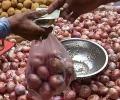
The wholesale inflation rose to a 13-month high of 1.26 per cent in April fuelled by rising prices of food articles, especially vegetables, amid expectations of RBI holding interest rates in the policy review next month. The wholesale price index (WPI) based inflation has been rising for two months in a row.

The government's decision to impose a 20 per cent export duty on parboiled rice and a $1,200 per tonne minimum export price (MEP) on basmati rice has pulled down overseas shipments of the former by almost 83 per cent and around 30 per cent of basmati exports in a month. Data sourced from various trade agencies and shippers showed that between August 25 and September 20, export of basmati rice has shrunk from 342,605 tonnes in 2022 to around 241,083 tonnes in 2023. Similarly, export of parboiled rice, after the imposition of 20 per cent duty during the same period, has dropped from 1.16 million tonnes in 2022 to just around 204,190 tonnes in 2023.
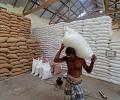
Amid the ongoing festival season and ahead of the elections for five state assemblies, the Centre is closely monitoring inflation, particularly in food items, to enable it to take steps to increase their supplies. "There is a complete no-nonsense attitude when it comes to food inflation, and instructions have been issued at all levels to be very sensitive to any possible price movements in any commodity," a senior official explained. Sources have said that all departments dealing with food items have been instructed to keep a close eye on all commodities and maintain a weekly record of their price movements.

The El Nino impact on the Indian monsoon typically manifests by way of extended break in rainfall.

Elections may be a few months away, but the government may get into election mode much earlier than that, predicts A K Bhattacharya.

The southwest monsoon has started on a weak note and this has delayed the sowing of kharif crops. Though a cause for concern, the situation hasn't reached a stage where it warrants any panic response. Moreover, according to meteorologists and industry players, monsoon rains will witness a revival in the coming few weeks.

Even before NCP-Ajit Pawar leaders came to meet in Delhi, the central government decided to buy 200,000 tonnes of onions from farmers at Rs 24.1 per quintal. This was among the highest prices at which onions have ever been bought from farmers.

'Our target will come from rural areas as there are more outlets there.'
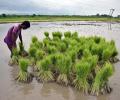
Trade and market players have already started factoring in at least 10 million tonnes drop in production in rice in the kharif season as compared to last year due to delayed sowing.
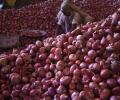
The government expects onion prices to fall below Rs 40 per kilogram by January from the current average price of Rs 57.02 per kilogram, Consumer Affairs secretary Rohit Kumar Singh said on Monday. Last week, the government banned onion exports till March next year after the retail sales price of the kitchen staple crossed Rs 80 per kg in the national capital and the prices in mandis remained around Rs 60 per kg. To a query on when the onion prices are expected to fall below Rs 40 per kg, Singh said, "very soon... January"

The size of Reserve Bank's balance sheet increased by 11.08 per cent to Rs 70.47 lakh crore as on March 2024, leading to the highest-ever dividend payout to the government, according to the central bank's annual report. In actual terms, the increase was Rs 7,02,946.97 crore over Rs 63.45 lakh crore as on March 2023.
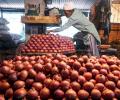
The government has banned exports of onion till March next year with a view to increase domestic availability and to keep prices in check. "Export policy of onions... is amended from free to prohibited till March 31, 2024," the Directorate General of Foreign Trade (DGFT) said in a notification. Local vendors in the national capital are selling onions at Rs 70-Rs 80 per kg.
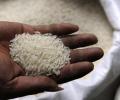
The government on Thursday imposed a 20 per cent export duty on non-Basmati rice except for parboiled rice to boost domestic supplies amid a fall in area under the paddy crop in the current Kharif season. According to a notification by the revenue department, an export duty of 20 per cent has been imposed on 'rice in husk (paddy or rough)' and 'husked (brown) rice'. The Central Board of Indirect Taxes & Customs further said the export of 'semi-milled or wholly-milled rice, whether or not polished or glazed(other than Parboiled rice and Basmati rice)' will also attract a customs duty of 20 per cent.

The Reserve Bank on Friday retained the inflation forecast for 2023-24 at 5.4 per cent, and vowed to take timely measures to prevent any spillovers of global food and fuel price shocks. Stressing that the Reserve Bank has identified high inflation as a major risk to macroeconomic stability and sustainable growth, Governor Shaktikanta Das said the September retail inflation number may be lower than August and July prints. The headline inflation based on Consumer Price Index (CPI) moderated to 4.6 per cent in first quarter of 2023-24 as compared to 7.3 per cent in the same period a year ago.

The fast-moving consumer goods (FMCG) sector has underperformed the Nifty over the past year as its 20 per cent return is trumped by 29 per cent of the benchmark index. The FMCG index saw a 2.2 per cent drop in the last session, while the Nifty lost 1 per cent. FMCG is seen as a defensive segment. The demand for staples like personal care products, groceries and snacks tend to be stable. FMCG companies are consistent dividend-payers.

The rains were being caused due to a cyclonic circulation lying over north east Arabian sea and adjoining Saurashtra and Kutch regions, the IMD said in its bulletin.

The ruling Congress is seeking to retain power in Chhattisgarh by banking on the welfare schemes of the Bhupesh Baghel government, while the Bharatiya Janata Party is hoping to corner it on the issues of alleged corruption, religious conversions and unfulfilled poll promises.

After imposing 20 per cent export duty on non-basmati rice, the government has banned the export of broken rice with an aim to increase domestic availability, according to a government notification.

Automobile retail sales in India rose by 9 per cent in August aided by sales growth in all segments, including passenger vehicles and two wheelers, dealers' body FADA said on Tuesday. The total retail sales across segments rose to 18,18,647 units last month, up 9 per cent, from 16,74,162 units in August 2022. Passenger vehicle registrations increased by 7 per cent to 315,153 units last month from 295,842 units in August 2022.

Kharif crops were sown in only 4.15 lakh hectares against the target of 28.27 lakh hectares till July 21 or only in 14.71 per cent of the arable land.
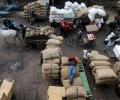
The economy may grow by around 7 per cent this financial year as estimated by the Monetary Policy Committee (MPC) of the Reserve Bank of India (RBI), say economists with various organisations. The first advance estimates for 2023-24 will be released on Friday by the National Statistical Organisation (NSO), an exercise done for calculating ratios such as the fiscal deficit. The interim Budget will be presented on February 1.
