
Against predictions by most exit polls that the ruling Congress had an edge in the state, the BJP banked heavily on the charisma of the PM.

'Due to rural stress, volumes continue to remain an issue for the industry, and we are yet to see any revival in demand.'

The meeting came in the backdrop of protests by farmers bodies against the release of Cauvery river water to Tamil Nadu.
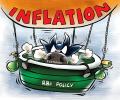
"We have to stand in readiness to go beyond keeping Arjuna's eye to deploying policy instruments, if necessary" to contain inflation, said Reserve Bank Governor Shaktikanta Das on Thursday. Headline consumer price index-based inflation projection for the second quarter of 2023-24 has been revised up substantially, primarily due to the price shock from vegetables, at 6.2 per cent by the RBI form 5.2 per cent estimated in June. Unveiling the bi-monthly monetary policy, Governor Das said the moderation in headline inflation to 4.6 per cent in the first quarter of 2023-24 was in line with the projections set out in the June MPC meeting.
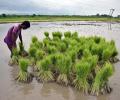
The government on Wednesday raised the minimum support price (MSP) of paddy marginally by Rs 72 per quintal to Rs 1,940 per quintal for the 2021-22 crop year, while the rates of pulses, oilseeds and cereals were hiked substantially. Among the commercial crops, the MSP of cotton was increased by Rs 211 per quintal to Rs 5,726 for medium staple variety, and by Rs 200 per quintal to Rs 6,025 for long-staple variety of cotton for the 2021-22 crop year (July-June). The decision taken by the Cabinet headed by Prime Minister Narendra Modi will help farmers take a call on which kharif (summer) crop to grow as sowing picks with the spread of the Southwest monsoon in the coming weeks.

Barely days after imposing a 40 per cent export tax on onions to cool down soaring prices, which, in turn, triggered widespread protests across the main growing belts, the Centre on Tuesday sought to mitigate both political and economic tensions gripping parts of Maharashtra. It decided to procure an additional 200,000 tonnes of onions at Rs 2,410 per quintal for its buffer stock from farmers, a rate that is strikingly close to the price at which they were being exported before the 40 per cent duty was levied on August 19. The export price before the imposition of the duty stood at around $320 per tonne free on board (approximately Rs 2,650 per quintal).
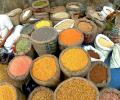
After a steady surge, prices of pulses, except those of urad and masoor to some extent, are showing signs of stabilising amid a revival of monsoon rains over major growing areas of Maharashtra and Karnataka, and on expectations of a rise in imports. Chana prices, which too had moved up in recent months, have dropped by almost 3 per cent since the end of August due to increased liquidation of government stocks, official data shows. Monsoon rains seem to have benefitted the standing soybean crop as well.
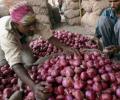
The government on Saturday imposed a 40 per cent duty on the export of onions to increase domestic availability amid signs of increasing prices. The export duty, which is the first time ever on onion, has been imposed as the retail sale price of the kitchen staple, according to government data, touched Rs 37/kg on Saturday in Delhi. The finance ministry through a Customs notification imposed a 40 per cent export duty on onions till December 31, 2023.

The state was asked not to publicise the disbursement during the poll code as part of the condition.

NCP led by the former Union minister said the Election Commission had sought its response to a petition filed by Ajit Pawar, and the party submitted its "preliminary response" to the poll panel on September 7.
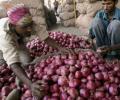
The government on Friday announced it will release onion from its buffer stock in the targeted regions with immediate effect to ensure prices remain under check till the new crop arrives from October onward. The government is exploring multiple options for disposal of onion: e-auction, e-commerce as well as through states at discounted rates via retail outlets of their consumer cooperatives and corporations, it said. The government has currently maintained 3 lakh tonnes of onion under the Price Stabilisation Fund (PSF) to meet any exigencies, if rates go up significantly during the lean supply season.

A ramp-up in COVID-19 vaccination, healthy advance estimates of kharif (summer) crop and faster government spending were the factors which led to the revision, the agency said in a statement. It can be noted that after the 7.3 per cent contraction in 2020-21, there were expectations of a higher growth number in 2021-22.

Vegetable rates may ease from September, led by tomato prices, which have started showing signs of correction on the back of increased supply, Reserve Bank of India (RBI) Governor Shaktikanta Das said on Wednesday. "Looking ahead, the spike in vegetable prices in July is starting to see a correction, led by tomato prices. "New arrivals of tomatoes in mandis are already softening the prices, coupled with proactive supply management in the case of onions.
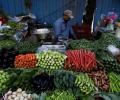
The finance ministry has cautioned that global and regional uncertainties and domestic disruptions may keep inflationary pressures elevated in the coming months, warranting "greater vigilance" by the government and the Reserve Bank of India (RBI). "Russia's decision to terminate the Black Sea grain deal, along with dry conditions in major wheat-growing areas, caused a price spike in cereals. Domestic factors like white fly disease and an uneven distribution of monsoon exerted pressure on vegetable prices in India," the ministry said in its latest Monthly Economic Report for July, released on Tuesday. However, the report maintained, the recent price surge in certain food items "is expected to be transitory". "Tomato prices are likely to decline with the arrival of fresh stocks by the end of August or early September.

Reddy directed the officials to treat the storm as a major challenge to avoid loss of life and property as the winds are expected to blow gales reaching speeds of up to 110 kilometres per hour.

There is no near-term respite for the country's largest fast-moving consumer goods maker, Hindustan Unilever (HUL), which is facing multiple challenges on the growth front. With demand showing no signs of improvement, especially in the rural segment, the October-December quarter (Q3) of 2023-24 (FY24) is likely to be similar to the previous quarter, with volume growth in the low single digits. The stock, which is down 7 per cent over the past year compared to the 11 per cent jump for the S&P BSE Sensex, could underperform the benchmark in the near term as well.
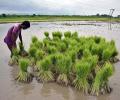
The area under paddy - the biggest foodgrain during the kharif season - was almost 13 per cent lower in the week ended August 5 as compared to the same period last year despite a slight pick-up in rains in the main growing regions, triggering fears of a 10-12 million-tonne drop in final output. Sources said with the peak sowing season for paddy almost coming to an end in the big-growing states, any uptick in coverage from here onwards may not give the desired yields. With 30 per cent of normal average area in which paddy is grown every year remaining unsown till early August, there is a limited chance of a big uptick in output, trade and market sources said.
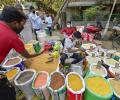
India's consumer price index (CPI)-based inflation could ease in the coming months thanks to the arrival of kharif crops, lower international commodity prices, and a pass through of lower input costs to consumers, the finance ministry said in its Monthly Economic Review (MER) for October, which was released on Thursday. The MER, however, warned that the global macroeconomic situation remained precarious and a recession in many advanced economies would impact India's exports. "Easing international commodity prices and new Kharif arrival are set to dampen inflationary pressures in the coming months.

Retail inflation jumped to a 15-month high of 7.44 per cent in July as prices of vegetables and other food items spiked, according to official data released on Monday. The Consumer Price Index (CPI) based inflation was at 4.87 in June and 6.71 per cent in July 2022. Previously, high inflation was recorded at 7.79 per cent in April 2022.

After a gap of more than 13 years, the National Commodity and Derivatives Exchange (NCDEX) is all set to launch a futures contract in groundnut (in shell) to fill a void in oilseeds complex futures because of a ban in several high-volume commodities.

'They just say we agree to your demands in the meetings, which is lip service. But on the ground they do not implement anything.'
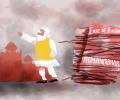
Indian growth in the rest of this fiscal year and next will be propelled by robust domestic consumption as consumer confidence improves, and by investment, including large increases in government capital expenditure, according to the Asian Development Outlook September 2023. "As slowing exports could foment headwinds for the economy, and erratic rainfall patterns are likely to undermine agricultural output, the growth forecast for FY2023 is revised down marginally to 6.3 per cent," ADB said.

With the cooling down of heatwaves as the monsoon spreads across the country, power demand has fallen by 12.5 per cent from the start of this month till Monday. Peak power demand of the country had touched a record of 210 Gw last week, mostly due to rising temperatures and opening up of the economy. Compared with the beginning of this month, almost all states have seen a fall in power demand. Punjab, however, is an exception where the power demand on Monday was 17 per cent higher than on June 1.

In 2018, Mr Chouhan became chief minister for the fourth time with some support from Mr Scindia. This time, nothing can be said with any certainty.

Non-basmati white rice accounts for nearly 25-30 per cent of total rice exported from the country.

Fearing likely shortage, the government on Thursday said it has made an advance plan to import about 10 lakh tonne higher quality of tur dal via private trade this year to meet the domestic requirement. The issue was discussed in a high-level meeting called by the cabinet secretary to review the prices of essential commodities, especially pulses and onions. Tur production is pegged lower at 3.89 million tonne in the 2022-23 crop year (July-June) from 4.34 million tonne in the previous year as per the initial projection made by the agriculture ministry. Tur is a kharif crop.
The RBI on Friday retained inflation forecast for FY23 at 6.7 per cent amid uncertain price trajectory on "geopolitical shocks" and on hope that inflationary pressures would ease with pick-up in kharif sowing and supply chain improvements. In its previous monetary policy review in June, it had projected retail inflation for 2022-23 at 6.7 per cent, higher from 5.7 per cent forecast in April. The six-member Monetary Policy Committee (MPC) unanimously decided to raise the benchmark repo rate by a steep 50 basis points to 5.40 per cent with immediate effect to tame inflation while supporting growth.
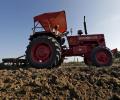
Increase in kharif sowing area, good monsoon, rural cash flows and base effect among factors that have driven volumes.

The country's unemployment rate in July fell to 6.80 per cent, the lowest level in the last six months, amid rising agriculture activities during monsoon, according to Centre for Monitoring Indian Economy (CMIE) data. The unemployment rate dropped to 6.80 per cent in July from 7.80 per cent in June, the CMIE data said. Rural unemployment declined 6.14 per cent to 272.1 million last month from 265.2 million or 8.03 per cent in June, it said.
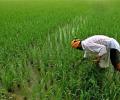
Gross value added in agriculture and allied activities clocked a healthy growth rate of 4.5 per cent at constant prices in the second quarter of FY22, up from 3 per cent during the same period last fiscal year and 3.5 per cent in Q2 of 2019-20. In the first quarter of FY22, gross value added in the sector was also 4.5 per cent. Growth in current prices was also a healthy 7.9 per cent in July-September 2021-22, up from 7.3 per cent in the same quarter last fiscal year. It was slightly less than the 8.7 per cent of the second quarter of 2019-20.

Several experts are of the view that inflationary pressure, including that in food items, may build from October with economic activity gathering steam. However, the price movement in three key items of tomato, onions and potatoes, commonly known as TOP, may give some solace in the months to come. Traders and market watchers said the price movement in all the three will remain within the band sans any unusual spikes.
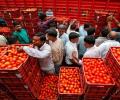
All India average retail tomato price, which has shot up by 63 per cent to Rs 67 per kg over the last year due to unseasonal rains, are likely to soften from December with the arrival of fresh crop from northern states, the government said on Friday. In the case of onions, retail prices have substantially subsided below to the level that prevailed in 2020 and also 2019, it said. "Tomato arrivals from north Indian states will start from the beginning of December itself, which will add to availability and lead to fall in prices.

Untimely rains during March have caused damage to rabi crops and may result in lower yields, a report said on Wednesday. Between March 1 and 21, cumulative rains have been 20 per cent more than normal, and in the past four days, it was 3-4 times more than usual, according to a report by Crisil Market Intelligence and Analytics. On March 21, the rain volume in central India was 1,600 per cent more than normal, the report said, adding that unfortunately, this ongoing harvest window for rabi crops has been lashed by an untimely torrent.
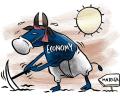
However, demand was still much higher compared to the previous years, underlining the scheme's vital role in providing employment to the rural poor, a vast majority of whom are migrants.

The Reserve Bank of India on Friday raised the benchmark lending rate by 50 basis points to 5.40 per cent to tame inflation.

Less-than-expected rainfall and a poor spatial distribution, experts say, can rekindle fears of a rise in food and fuel inflation that can have an impact on the RBI's monetary policy. The fear of less than optimal rainfall due to El Nino this year, analysts believe, is the biggest short-term risk for the markets, which they said has not been fully priced in yet by them. Monsoon set over Kerala on June 08, a week later than its scheduled date.
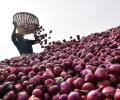
The model or average price for a kg of onion was Rs 6 on Monday -- the lowest in this late kharif and rabi harvesting season, so far. While poorer quality kharif onions traded at Rs 3 a kg, the price of export quality was Rs 9 a kg.
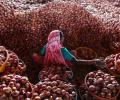
Last week, the Union Cabinet decided to import 1.2 lakh tonnes of onions to improve the domestic supply and control prices, which touched Rs 100 per kg earlier this month.

In the national capital, onion prices were ruling at around Rs 40 per kilogram.
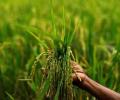
Riding high on the hopes of a normal monsoon, the agriculture ministry aims to increase foodgrain production by 6.35 million tonnes to a record 298.3 million tonnes in the 2020-21 crop year. The foodgrain output in the 2019-20 crop year (July-June) is estimated at an all-time high 291.95 million tonnes, as per the second advance estimates released by the ministry in February.
