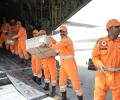
India on Saturday delivered 15 tonnes of relief materials to Myanmar under its 'Operation Brahma' that was launched after a powerful earthquake hit the neighbouring country as well as Thailand.
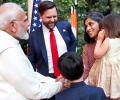
Prime Minister Narendra Modi and US Vice President JD Vance have expressed satisfaction with the progress made in negotiations for a bilateral trade agreement. The two leaders met in New Delhi and discussed a range of bilateral issues, including cooperation in energy, defense, strategic technologies, and other areas. They also exchanged views on regional and global issues of mutual interest.

'Our border guarding forces have also been instructed to be exceptionally alert in view of this complex situation.'

The people will view it from their viewpoint, their immediate interest, historical experiences, their insecurities, he said.

India, which has shipped 'Made In India' COVID-19 vaccines to around 25 nations, on Wednesday urged the international community to stop 'vaccine nationalism' and actively encourage 'internationalism', underlining that hoarding superfluous doses will defeat global efforts to attain collective health security and combat the pandemic.
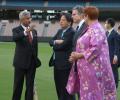
Yes, we (Quad) had a discussion on India-China relations because it was part of how we briefed each other about what was happening in our neighbourhood, Jaishankar said.

Jaishankar said he emphasised that India supports diplomacy and dialogue as the "way out".

His comments came hours after External Affairs Minister S Jaishankar arrived in the Pakistani capital to attend the Council of Heads of Government (CHG) summit of the Shanghai Cooperation Organisation.
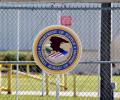
Tahawwur Rana, accused in the 2008 Mumbai terror attacks, has been extradited to India after the US Supreme Court denied his last-ditch effort to avoid being sent back. Rana, a close associate of David Coleman Headley, another key conspirator in the attacks, was expected to be extradited "shortly" after his legal appeals failed. This decision comes after a multi-agency team from India traveled to the US to complete all necessary paperwork and legalities with the US authorities. Rana's extradition marks a significant development in the pursuit of justice for the victims of the Mumbai attacks.
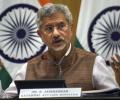
Jaishankar, speaking at a virtual event hosted by the Asia Society, said that India has built the relationship with China over the course of last 30 years "and a basis for building that relationship has been peace and tranquillity along the Line of Actual Control".
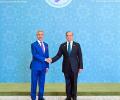
Pakistan Prime Minister Shehbaz Sharif said his country wants to resolve all issues, including Kashmir, with India through talks. He reiterated his "unwavering " support for the Kashmiri people during a speech in Muzaffarabad on the occasion of "Kashmir Solidarity Day. "
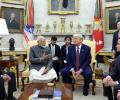
'No retaliatory tariffs now. You can retaliate after a few months.' 'Today, there is no need to retaliate because it is a question of long term benefits.'
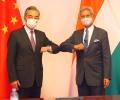
Jaishankar said full restoration and maintenance of peace and tranquillity in border areas was essential for the development of the bilateral ties.

'Our record and our actions and stances is fairly clear and by criticising it repeatedly, it doesn't make us less credible'

The minister also rejected Gandhi's allegation that the Narendra Modi government brought Pakistan and China together.
.jpg)
Jaishankar arrived on a day-long visit to prepare the ground for Prime Minister Modi's visit to Bangladesh later this month to participate in the celebrations of 50th anniversary of Bangladesh's Independence and 50 years of Bangladesh-India diplomatic relations.
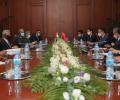
In a meeting on the sidelines of the summit of the Shanghai Cooperation Organisation (SCO) in Dushanbe on Thursday, the two foreign ministers exchanged views on the current situation in the region and agreed that military and diplomatic officials of both sides should meet again and discuss resolving the remaining issues at the earliest.

United States President-elect Donald Trump on Saturday warned BRICS countries against any move to replace the US dollar and has sought a commitment from the nine-member group that includes India, Russia, China, and Brazil.
The deportation of 104 Indian nationals from the US, followed by another 119 set to arrive in Amritsar on Saturday night, has sparked controversy in India over the treatment of returnees. The US government's intensified crackdown on undocumented immigrants has led to criticism of the use of handcuffs and shackles for deportees, even those who have committed no crimes beyond immigration violations. The issue has led to heated debates in the Indian Parliament, with opposition leaders demanding an inquiry into the deportation process. The Indian government is engaging with US officials to ensure the humane treatment of deportees, while also facing the challenge of reintegrating returnees into Indian society. The deportations highlight the ongoing tension between border control and human rights, and the complexities of US-India relations.
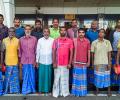
The Sri Lankan Navy has arrested 32 Indian fishermen and seized five fishing boats for allegedly venturing into the island nation's territorial waters. This incident is the latest in a series of arrests of Indian fishermen by the Sri Lankan Navy for alleged illegal fishing activities. The issue of fishermen is a contentious one in the relationship between India and Sri Lanka, with past incidents involving firing at fishermen and seizures of boats. This latest incident follows an earlier arrest of 10 Indian fishermen earlier this month and an incident in January where five Indian fishermen were injured after the Sri Lankan Navy fired on them. India has expressed its displeasure regarding the use of force by Sri Lanka.

The first career diplomat to be appointed as the EAM, Jaishankar paid homage to his predecessor in his first tweet from his official account on May 31. A surprise addition to Prime Minister Narendra Modi's second Union Cabinet, the former foreign secretary certainly has big shoes to fill.
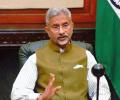
External Affairs Minister S Jaishankar will arrive in New York on Sunday to participate in the high-level 77th session of the UN General Assembly, which kicks off on September 20 with the opening of the general debate.

In an interactive session at a think-tank in Paris, Jaishankar said he was optimistic about resolving the issue through dialogue and that significant headway has been made in many of the friction points.

Jaishankar noted that it would be difficult to say what will happen in the future as there are a lot of "contradictions and frictions" out there today.
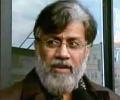
Tahawwur Rana, accused in the 2008 Mumbai terror attacks, has renewed his plea for a stay on his extradition to India, citing health concerns and alleging potential torture. He argues that his extradition would violate US law and the UN Convention Against Torture. Rana's lawyers claim he is at risk of being subjected to torture in Indian detention facilities due to his Pakistani origin, Muslim religion, and medical conditions. The US Supreme Court had previously denied his emergency bid for a stay, but he has now appealed to Chief Justice John Roberts. The US government has declined to provide information on any commitment from India regarding Rana's treatment, further fueling his concerns.
Mumbai terror attack accused Tahawwur Rana has moved an 'emergency application' with the United States Supreme Court against his extradition to India, claiming that he will be tortured there since he is a Muslim of Pakistani origin.

China does not have to give up what it took in 2020, it will never give up its claim to Arunachal Pradesh, Ladakh and other areas, and it has all the time now to plan its next surprise, points out Lieutenant General Prakash Katoch (retd).
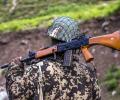
Talking about dealing with the border issue faced by India, Jaishankar, without naming any country or going into details, said, "You know again we did what we had to do. There was a very active debate which still continues to this day. It is natural for people to offer advice, often on matters which they may not have particular knowledge of, that are a human trait. But again if there was what came through it was that we were resolute, we were strong about protecting our interests."
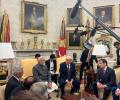
Who accompanied Prime Minister Narendra D Modi to his Thursday meeting with US President Donald J Trump in the Oval Office, and who did POTUS bring along?

Jaishankar said that the resolution on Kashmir introduced by Jayapal in the House is not a fair characterisation of the situation in J-K. And also said that he has no interest in meeting the Congresswoman.

This is Blinken's first visit to India after assuming charge as the US Secretary of State and the third by a high-ranking Biden administration official after it came to power in January.

The ex-foreign secy was the government's pointsman for China and the US.
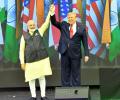
President Trump made these remarks on Monday while talking to reporters aboard Air Force One on his way back to Joint Base Andrews from Florida.
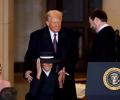
Prime Minister Narendra Modi congratulated Donald Trump on his historic inauguration as the 47th US president and said he looks forward to working closely together once again, to benefit both the countries as well as to shape a better future for the world.
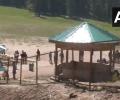
'If they aim to remain aligned with the public sentiment, as any democratic government should, then they must respond. Why else would the prime minister have cut short his visit to Saudi Arabia? And why would he have instructed the home minister himself to travel to Srinagar to assess the situation firsthand? This suggests that something is indeed being planned. I am quite certain of that, although the exact form it will take remains to be seen.'

Disengagement from the LAC will remain a chimera because China has given enough indications that the PLA will not move back any more. China has even deployed drones to monitor and deny any patrolling by Indian troops even in the buffer zones which are all in Indian Territory, explains Lieutenant General Prakash Katoch (retd).
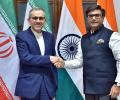
India's Foreign Secretary Vikram Misri will travel to Beijing for a two-day trip beginning Sunday, marking the second high-profile visit from India to China in less than one-and-a-half months. The visit comes amidst ongoing border tensions and follows a recent disengagement pact between the two countries in eastern Ladakh. The Foreign Secretary-Vice Minister mechanism meeting will focus on the next steps for India-China relations, including in the political, economic, and people-to-people domains. The decision to revive this bilateral mechanism was taken at a meeting between Prime Minister Narendra Modi and Chinese President Xi Jinping in Kazan in October.
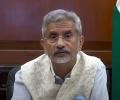
"Discussions are on; what is going on is something confidential between us and the Chinese," he said when the moderator at the Bloomberg India Economic Forum pressed the minister to give a clear status of the border situation.

India's relations with China cannot be normal as long as Beijing tries to unilaterally change the Line of Actual Control and continues to build up forces along the border, External Affairs Minister S Jaishankar said on Wednesday.

The Director of the Peradeniya Hospital in the central district of Kandy on Monday announced the temporary suspension of all routine surgeries due to the shortage of medicine.
