
Prime Minister Narendra Modi's visit to the United States this month will set new benchmarks for bilateral ties and some 'really big, historic and exciting' announcements are likely to be made on defence cooperation and boosting India's indigenous military industrial base, the Pentagon has said.
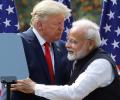
'Trump will absolutely back New Delhi on its position that Pakistan must do more to crack down on terrorists that threaten India.'

External Affairs Minister S Jaishankar has met United States Defence Secretary Lloyd Austin and held a productive conversation with him on deepening bilateral defence cooperation, including in the co-production of defence articles, and exchanged perspectives on a variety of security issues.
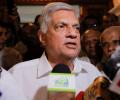
China will not be allowed to use the southern port of Hambantota for military purposes, Sri Lankan President Ranil Wickremesinghe has said, apparently attempting to allay fears in India and the United States about China's increasing maritime presence in the strategic Indo-Pacific region.
The United States' Department of Defence said that it continues to closely watch developments along the Line of Actual Control at the India-China border and noted that China 'continues to amass forces and build military infrastructure along the so-called LAC'.

In his opening remarks at a ministerial meeting in Tokyo of the Quadrilateral coalition, also known as 'Quad', External Affairs Minister S Jaishankar said India remained committed to a rules-based world order, respect for territorial integrity and sovereignty, and peaceful resolution of disputes.

The prime minister also underlined the importance of a free and open Indo-Pacific for the Pacific island nations and said India respects the sovereignty and integrity of all countries.

New Delhi had proposed during the 2+2 dialogue in April that the US navy could avail of the services and expertise of Indian shipyards.

Key provisions of the Citizenship Amendment Act (CAA) which came into law this year may violate certain provisions of India's Constitution, a report issued by an independent research wing of the United States Congress has claimed.

The opinion piece added that the party combines the most striking principles of three major political entities in the world -- the Likud Party of Israel, the Communist Party of China and the Muslim Brotherhood of Egypt.

"President Biden has had warm and productive early conversations with his counterparts in Australia, India, and Japan, and looks forward to engaging even more directly with our partners in the Indo-Pacific as soon as possible," a senior administration official told PTI.

The United States-China Summit meeting concluded at a sprawling mansion in Woodside, California with Presidents Joe Biden and Xi Jinping agreeing to work towards ensuring that the differences between the two countries remain manageable and the relations do not derail.

He also said "Chinese belligerence is evident in its continuing propensity to project power outside its region", in turn presenting a "threat to the rules-based international order".

The meeting between Jaishankar and Pompeo comes at a time both India and the US are at loggerheads with China.

The Ministry of External Affairs (MEA) said the leaders will exchange views and assessments about important developments in the Indo-Pacific.
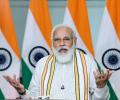
"Prime Minister Narendra Modi will be participating, along with Prime Minister of Australia Scott Morrison and Prime Minister of Japan Yoshihide Suga and President of USA Joseph R. Biden, in the first Leaders' Summit of the Quadrilateral Framework, being held virtually on March 12," the MEA said in a statement.

The trigger that led Japan and the Philippines to ink the deal was because of the deteriorating security situation in the South China Sea. China's coast guard increased the frequency and intensity of incursions into Philippine waters, provoking the Philippines to take countermeasures to deter China, explains Dr Rajaram Panda.
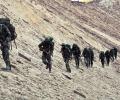
The report said that Indian officials believe China is trying to contain India by forcing it to divert more resources into defending simultaneously both its western border with Pakistan and eastern flank with China and by weakening its willingness and ability to challenge Chinese ambitions to dominate the region.
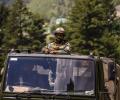
The remarks by the Chinese foreign ministry came a day after Secretary of State Mike Pompeo assured India that the US stands firmly with it to confront threats to its sovereignty.

External Affairs Minister S Jaishankar on Friday met Akie Abe, the wife of Japan's late Prime Minister Shinzo Abe and recalled the late premier's invaluable contribution to the advancement of India-Japan relations.

India and Japan on Thursday agreed to enhance military exercises and defence cooperation as the two countries emphasised that the bilateral special strategic and global partnership plays a crucial role in ensuring a free, open and rules-based Indo-Pacific, amidst China's aggressive behaviour in the region.

'Trump's disregard for norms and institutions could prove very costly for America's social fabric.'

One bill provides $60.8 billion for Ukraine, with over 80 percent of it for helping Kyiv amid its ongoing war with Russia, including replenishing supplies of US made weapons and ammunition.

'Given China's past behaviour and their territorial claims, should we be sceptical regarding China's willingness to adhere to these agreements fully? The answer is yes.' 'As Ronald Reagan famously said in the context of the SALT talks, 'Trust, but verify!' India should also do the same.' 'This has already begun with foot patrolling, drones, satellite imagery and so on. India's military deployment did mirror China's and will continue to do so in the future.'

It's time India re-visited its Western alliances for the attitude and approach that the West reserves for the nation when it comes to security cooperation of the kind that they might not have visualised outside of China, India's bug-bear, asserts N Sathiya Moorthy.

Prime Minister Modi, who is in Japan on a two-day visit to attend a summit of the Quad leaders at the invitation of his Japanese counterpart Fumio Kishida, penned an op-ed on the vibrant relations between India and Japan in the Yomiuri Shimbun.
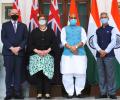
India and Australia on Saturday decided to expand military engagements across services and facilitate greater sharing of critical information in line with their resolve to significantly expand strategic ties.

In the midst of rising global concern over China's military expansionism, India and three other member nations of the Quad on Thursday vowed to uphold a rules-based international order underpinned by respect for territorial integrity and sovereignty, freedom of navigation and peaceful resolution of disputes.

His visit to India followed a few cancelled plans since he took office in July 2019 due to the coronavirus pandemic crisis, with the two leaders holding several virtual talks and eventually meeting in person on the sidelines of the COP26 climate summit in Glasgow last November.

The next edition of the high-voltage Malabar naval exercise begins from August 26 to 29 off the coast of Guam amid mounting global concerns over China's growing military muscle-flexing in the Indo-Pacific region.
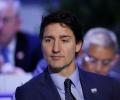
"I think there is a beginning of an understanding that they can't bluster their way through this and there is an openness to collaborating in a way that perhaps they were less open before," Trudeau told the Canadian Broadcasting Corporation.

In the opinion piece after the summit, the leaders said the cooperation, known as "the Quad," was born in crisis. It became a diplomatic dialogue in 2007 and was reborn in 2017.
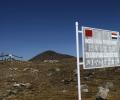
The resolution also pushes back against People's Republic of China (PRC) claims that Arunachal Pradesh is PRC territory, which is a part of the PRC's increasingly aggressive and expansionist policies.

US envoy Eric Garcetti on Thursday said he respects that India likes its "strategic autonomy", but in times of conflict, there is no such thing as strategic autonomy, even as he pitched for forging a stronger partnership between New Delhi and Washington.

This is Blinken's first visit to India after assuming charge as the US Secretary of State and the third by a high-ranking Biden administration official after it came to power in January.
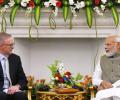
The matter came up for discussion during their wide-ranging dialogue that was aimed at expanding overall ties.

Ahead of his much-anticipated visit to conflict-torn Ukraine, Prime Minister Narendra Modi on Thursday said India firmly believes that no problem can be solved on the battlefield and it is ready to extend all possible cooperation for the restoration of peace and stability in the region.

China criticised the forthcoming meeting of the Foreign Ministers of India, Australia, Japan and the United States in Tokyo, saying it is opposed to the formation of "exclusive clique" harming third party's interests.

India, the US and 12 other members of the IPEF grouping have signed a supply chain resilience agreement that would help mitigate risks of economic disruptions from supply chain shocks and improve crisis coordination. The agreement would help member countries like India to reduce their dependence on China and provide timely information to the IPEF member countries about potential supply disruptions. The COVID outbreak severely disrupted the global supply chain, as most countries were dependent on China for various products like pharma raw materials.

This was their first conversation after Biden assumed office last month.
