
Punjab National Bank has the largest share.
The deficit for the first five months of the year stood at 96 per cent of the full-year target of Rs 5.46 lakh crore despite cut in capital expenditure in August.
Experts said the higher pay out will boost consumption demand.
About Rs 2,000 crore of realty money has flown into stocks in the National Capital Region in the months after demonetisation.
The limit of indebtedness comes down to Rs 15,000 crore from 2018-19, and then Rs 10,000 crore from April 2019 onwards

The central government's deposits with the RBI had fallen to just Rs 100 crore as of June 8.
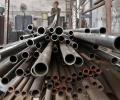
Aided by the new initiatives of the government, there has been a huge drop in imports

Of the 170 million rural households in the country, a government website claims to have connected 82 per cent of them. The metered households are 50 per cent of the total. As on February, 2018, of the 780,000 villages to be intensively electrified or provide connection to all in households, 493,000 have been covered. However, the amount and quality of the power supply cannot be ascertained from this data. No clause in any of the rural electrification programmes promises 24 hours' power supply.

Bad debt rules are steps in right direction.

The sharp rise was also due to a statistical illusion -- low industrial numbers in November 2015, and sharp reversal of a 12-month declining trend in capital goods.

India showed revival signs in the March quarter.

Mumbai Monorail was to be built in two phases - Phase I of 8.93 km and Phase II of 11.20 km. The first phase ran operations for around three years before services were abruptly halted, owing to a fire incident last year. The second phase now stands completed, but is lying closed.
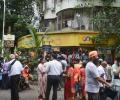
'What is critical today in India is confidence of depositors.' 'If you have these kinds of problems spreading like this, the confidence level of a lot of people in the system gets shaken.'

The services sector, which plays the biggest role in shaping the economy, is facing loads of issues currently. The largest segments, financial and real estate, are struggling to cope with bad debts and low demand for houses.

Experts said a future rate cut would depend on the inflation.

This time there has been a rather peculiar criticism of the latest GDP numbers.

This means lower losses on fuel sales by Indian oil companies and a shrinking oil subsidy bill for the government.

Prabhu's maiden Railway budget is high on vision.
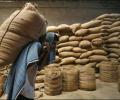
A collapse in global oil prices has unleashed a wave of monetary easing.

Moving from pricing control to a free market means stiff competition.
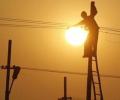
Power generation and distribution is the most indebted sector

Rather, the existing ones should be implemented speedily to clean up the mess.
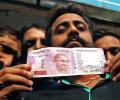
With weekly additions slowing, it's likely that demand could be slackening

Taxes on health, excluding medicines, could rise from 8.8 per cent currently, to around 13.6 per cent - an increase of 4.8 per cent.

Assocham expressed concern over the precarious situation that the manufacturing sector is in, observing that if the trend does not reverse with monetary and fiscal measures it would be difficult for the industry to generate jobs.

Most analysts expect the note ban to sharply hit GVA growth in Q3 and Q4, and the central bank's stance is being called into question.

It can be noted that the rupee lost nearly 7 per cent since the beginning of May as FIIs have pulled out nearly $4 billion from the domestic debt, as bond yields fell on expectation of RBI cutting rates on Monday.
Lenders can now review a borrower account within 30 days of default. Earlier, the banks had to start resolution within one day of default.

12 out of 21 public sector banks reported declines in their loan books in the last financial year against seven such banks in 2015-16 and none in 2013-14.

Significant portion of the funds used to fuel urban demand have become illegal and inoperative.

Petrol prices on Thursday crossed Rs 73 a litre mark, the highest level since the BJP government came to power in 2014, while diesel touched a record high of Rs 64.11 a litre.
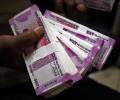
The budgeted indirect tax collection target is Rs 9.26 trillion, and the Centre has collected around Rs 5 trillion in the first 8 months. So it needs another Rs 4.2 trn in the last four months
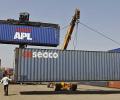
Export growth picked up mainly owing to rising global crude prices, which pushed up processed petroleum exports by nearly 40 per cent, apart from a broad-based improvement in exports of major foreign exchange earners such as engineering goods and gems and jewellery.

For the PMO this is urgent as the Digital India framework would depend on how the telecom companies perform. It is also linked to the proposed auction of 5G airwaves.
The festive season starts from August and last till December.

The Indian basket represents the price of Oman and Dubai sour grade crude.
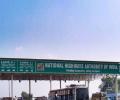
Nearly 240 projects were under various stages of implementation.

Much of the Q3 data will simply not be available for the CSO to factor in its calculation.

While India is catching China in motorbike sales, it lags far behind in cars, which use more petrol per journey.

Growth in the third quarter (October-December) is expected to be the weakest in years, with spending hit due to unavailability of enough replacement currency.
