
India's Rs 4.5-trillion fast-moving consumer goods (FMCG) sector was one of the first to bounce back from the lockdown induced blues, reporting a year-on-year (YoY) growth in the October-December quarter last year. That said, the overall consumption figures continue to remain depressed. The FMCG market, which includes daily consumables like branded atta, hand sanitizers, edible oils, shampoos, razors, and so on, recorded 7.3 per cent value growth during the period, while the smartphone market grew by 21 per cent.

CRAs are getting more business than they were getting a year ago. This could indicate expectations that investment demand will rise in the mid-term, says Devangshu Datta.

Is the worst over for Indian banks? The past two years saw them ride on treasury trades as deposits soared and credit growth dipped sharply. Gross and net non-performing assets (NPAs) moved south, and the provision coverage ratio (PCR), capital buffers, and profitability indicators are back at pre-pandemic levels. So, what's the plot ahead?

Cars priced above Rs 25 lakh account for 1 per cent in India's 3 million-car market and the share has remained unchanged over the last five years.

Scams happen with high regularity because the price of getting caught is insignificant. Aggrieved investors run from the police to already clogged courts to find redress for issues for which financial regulators have been specifically set up. For over 3,750 years we have known what to do, but we don't do it, observes Debashis Basu.

Retail inflation remained above the RBI's comfort level for the second consecutive month despite slipping slightly to 6.26 per cent in June while the factory output recorded a growth of 29.3 per cent in May, mainly on account of the base effect, the government data showed. The marginal slippage in the Consumer Price Index (CPI)-based inflation was noticed despite little firmness witnessed in the food inflation which inched up to 5.15 per cent in June from 5.01 per cent a month ago. Retail inflation based on Consumer Price Index (CPI) was 6.3 per cent in May 2021 and 6.23 per cent in June 2020.


The labour force at large has turned less needy, due to various government financial incentives and freebies.

As many as seven of eight core industries saw a contraction in output in September.
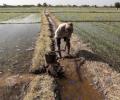
Among the states due for election next year are AP, Haryana and Odisha, which have a fair share of agri credit. If these states individually announced debt relief, the combined waiver would be at least around Rs 600 bn to Rs 700 bn. Clearly, this will be a frightening challenge for Indian banks.

Good sowing of kharif crops, better minimum support prices, and fewer Covid-19 cases (in villages) will help the rural growth story to continue, says Maruti.

Foreign banks set the template in consumer banking in its infancy, but have almost vacated this booming space.

Enthused by rising potato prices after a prolonged slump, Pradeep Sharma was planning to sow the crop on his 15-acre farm near Agra slightly earlier than usual. The delayed departure of the southwest monsoon also prompted his decision, since the good soil moisture would have saved at least one initial irrigation. But the acute shortage of diammonium phosphate (DAP), a crucial nutrient ahead of the sowing season for potatoes, nipped those hopes in the bud. DAP is the second-most used fertiliser in the country after urea.

'While most companies were bullish before the second wave of double-digit sales growth in FY22, that may not be the case now.'
Loans, cash credits, and overdrafts at the end of December 22, 2017, stood at Rs 81,287.32 billion, against Rs 73,340 billion in the year-ago period.

Auto-debit payment bounces have gone up for the second consecutive month in May, emphasising the stress building up due to a halt in economic activities as authorities lock down various parts of the country to stop the spread of the virus in the second wave. According to the National Automated Clearing House (NACH) data, in May, of the 85.7 million transactions initiated, 35.91 per cent, or 30.8 million transactions, failed.

Inflation in food articles during June stood at 2.04 per cent, as against 1.13 per cent in May.

After the government sought Parliament's nod for a second batch of supplementary demand for grants that will cause a hit of Rs 2.99 trillion to the exchequer, doubts suddenly arose about the government's ability to meet the Budget projections of reining in its fiscal deficit at 6.8 per cent of gross domestic product (GDP), or Rs 15.06 trillion, for the current financial year. Till now, many were of the opinion that the government would succeed in checking the deficit at a much lower figure than what was given in the Budget Estimates (BE). The government had sought Parliament's approval to spend Rs 3.74 trillion extra, but Rs 74,517.01 crore will be matched by equal savings on other heads.

Bidding for the sixth round of spectrum auction for radiowaves worth Rs 3.92 lakh crore will start from March 1, according to a notice issued by the Department of Telecom on Wednesday. The long-awaited spectrum auction is being held after a gap of four years and over two years after the Telecom Regulatory Authority of India (Trai) calculated and recommended base price for the radiowaves. The DoT has fixed January 12 for the pre-bid conference and January 28 as the last date for seeking clarification to the notice.

Fertiliser production dropped sharply by 11.5 per cent, crude oil by 5 per cent and natural gas by 0.9 per cent in October over the year-ago month

Positive cues from China - which accounts for 56.5 per cent of global crude steel production - are likely to keep demand-supply in balance and provide support to prices. All eyes have been on China, which opened after New Year holidays, as it was widely expected that prices would recover post-holidays after the weakness in January. Jayanta Roy, senior vice president, ICRA pointed out, barring last year when Covid-related restrictions affected China's steel demand in February 2020, historical trends show a typical upward movement in steel prices post-new year festivities. China's opening post-holidays was keenly awaited, especially in the wake of the sluggishness in the market in January.
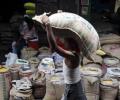
WPI inflation, which was in the negative zone from November 2014 to March 2016, has been on an upward trend for the seventh straight month

Brent crude oil price surged 4 per cent on Friday, following tension between Iran and the US. Airlines, however, have been unable to pass on the price increase to customers due to the soft demand.

The record contraction in the growth rate of eight core sectors will have its impact on IIP.

Spiraling steel prices led the government to cut customs duty by 2.5-5.5 per cent on a range of products from semi-finished to flat and long products for the benefit of MSMEs, that have been at the receiving end.
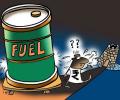
The wholesale price-based inflation accelerated to a record high of 12.94 per cent in May, on rising prices of crude oil and manufactured goods. Low base effect also contributed to the spike in WPI inflation in May 2021. In May 2020, WPI inflation was at (-) 3.37 per cent. This is the fifth straight month of uptick seen in the wholesale price index (WPI)-based inflation. In April, 2021, WPI inflation hit double digit at 10.49 per cent. "The annual rate of inflation, based on monthly WPI, was 12.94 per cent for the month of May, 2021 (over May, 2020) as compared to (-) 3.37 per cent in May 2020.

If raters get away by moving from AAA to D overnight after companies default, as happened with DHFL, YES Bank, RCom, and IL&FS, it shows a complete breakdown in the rating system. It calls for exemplary punishment, not kid glove treatment, says Debashis Basu.

Pushed by rising prices of essential kitchen items, the retail inflation rose to an eight-month high of 7.34 per cent in September, making the RBI's task to push growth by reducing the interest rate even more difficult in coming the days. The Consumer Price Index (CPI)-based inflation was 6.69 per cent in August and 3.99 per cent in September 2019. Inflation has been hovering above 4 per cent since October 2019.
The fiscal deficit rose primarily on the back of lower non-tax revenues, which came in at 60 per cent of full-year target, compared with 62.4 per cent for the same period last year.

The ministry of health and family welfare spent Rs 3,948 crore in May this year compared to Rs 7,816 crore in the corresponding month of the previous year. On the other hand, at Rs 12,930 crore, the expenditure had risen almost 200 per cent in April against Rs 4,327 crore in the corresponding month of 2019-20.

Rating agency ICRA on Wednesday revised down its credit growth outlook for banks to 2-3 per cent for the current fiscal, and said the coronavirus pandemic-driven stress may leave 3.1-3.7 per cent of assets into bad loan list by March.

Outlay for infra is also expected to see a significant increase in view of the government's Rs 111-trillion investment plan under the national infrastructure pipeline to develop social and economic infrastructure over five years.

No longer Bengal's finance minister, Amit Mitra, Mamata's principal chief advisor, will still advise and aid the 'chief minister and finance department on all matters relating to management of state finance', represent the 'state government in national and international events/meetings/committees' and examine 'important proposals/files and policy issues relating to financial matters referred to him for advice/views'.

To help revive the economy battered by COVID-19, Finance Minister Nirmala Sitharaman on Monday announced a slew of measures, including Rs 1.1 lakh crore credit guarantee scheme for improving health infrastructure, and enhancing the limit under the ECLGS by 50 per cent to Rs 4.5 lakh crore for the MSME sector facing liquidity crunch. Sharing the details of stimulus package, the finance minister said this comprises eight relief measures and other eight measures to support the economic growth. She announced Rs 1.1 lakh crore loan guarantee scheme for COVID-affected sectors, including health sector, which includes guarantee cover for expansion or for new projects. Besides, she said, additional Rs 1.5 lakh crore limit enhancement done for Emergency Credit Line Guarantee Scheme (ECLGS) scheme.

To counter the pandemic, air transport was suspended from March 25 till May 24 which rendered zero traffic at AAI airports. Even after resumption of flights, traffic is yet to pick up at airports due to quarantine measures implemented by states and an overall fear of flying.

Imports too declined 26 per cent to $29.47 billion in August, leaving a trade deficit of $6.77 billion.

An expected withdrawal of FIIs from the market likely to weaken the rupee against the dollar.
Airlines sought a limited period concession of the standing rule of slot allocation, which mandates that firms must operate at least 80 per cent of their allocated slots.

To make possible discretionary spending including capex and that on welfare, the government decided to borrow more than planned in FY21 -- Rs 12.7 trillion.

Since April, India has seen multiple strains of the coronanavirus sweep the nation, upending life and businesses alike. Out-of-home retail and discretionary categories such as durables, auto, fashion, lifestyle, hospitality, food services, travel, and tourism have been the worst-hit as Covid cases remain high, leaving state governments with no option but to curtail mobility and economic activity.
