
India's dependence on imported crude oil to meet domestic demand has been a matter of concern for years. Delivering the inaugural address at the global energy summit - Urja Sangam - in 2015, Prime Minister Narendra Modi had called for enhancing domestic oil and gas production to cut the import burden. He aimed at lowering it by at least 10 per cent by 2022 - to coincide with the platinum jubilee of India's independence. But this target is far from being achieved and the country's import reliance has only risen.
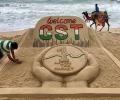
Mop up grows 10% y-o-y at Rs 1.05 trillion, almost equal to levels in February before a nationwide lockdown to contain the coronavirus pandemic

RBI had on February 12, 2018 issued a circular saying that lenders have to provide for resolution plan within 180 days in case of large account of Rs 2,000 crore and above.

The net NPA ratio declined to 3.7 per cent in September 2019 from just below 4 per cent in March 2019, reflecting increased provisioning.

As per commerce and industry ministry data, food inflation fell to 4.91 per cent in March from 7.79 per cent in the previous month.

Sectors with positive growth during the month include rice, iron ore, oil seeds, oil meals, meat, dairy and poultry products, pharmaceuticals, coffee, engineering goods, and plastic.

Kerala Tourism has drawn up God's Own Country 2.0 and the department is going all out to repair the state's image and infrastructure. Apart from being a damage control exercise, it is also an opportunity to reimagine the state as a tourism brand.

RRBs were formed under an Act to provide credit to small farmers, agricultural labourers and businesses in rural areas.

Passenger car sales in the country, already witnessing a slowdown, may get further bogged down in case of a hike in fuel prices or hardening of interest rates, credit rating agency ICRA has warned.

The new system is expected to give emphasis on various in-built credit enhancement structures.

If the industrial sector expanded, growth rate is likely to rise in the remaining quarters to reach 7.6-7.8 per cent for 2017-18.

India's factory output climbed 22.4 per cent in March, benefiting from the base effect of the lockdown-marred month a year back as well as a turnaround in the manufacturing sector, while retail inflation slipped to a three-month low of 4.29 per cent in April. The high positive annual growth in the index of industrial production (IIP) in March 2021 came on back of a contraction of (-)0.9 per cent and (-)3.4 per cent in January and February 2021 respectively, according to the data released by the National Statistical Office (NSO) on Wednesday. This turnaround was led by recovery in the mining, manufacturing and electricity sectors.

The inflation in the food basket spiked to 7.89 per cent in October 2019 as against 5.11 per cent the preceding month.

The retrenchments at the company promoted by Mumbai BJP chief Mangal Prabhat Lodha come at a time when the economic growth has dipped to a six-year low of 5 per cent, which has led many to fear if the spectre of job losses across sectors awaits next.
Software major Wipro on Wednesday became the first entity to get the credit rating agency ICRA's highest category 'SVG1' rating for stakeholders value creation and governance practices.
With assets depreciating over time, it will lead to large haircuts for lenders and creditors, say experts

Signs of financial stress were visible when the airline reported a loss of Rs 10.40 billion.
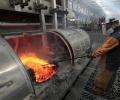
In the first two months of the current fiscal, Indian exports of finished steel reportedly grew by almost 76 per cent on a YoY basis and China alone accounted for close to 60 per cent of the increase.

Costlier vegetables slowly pushed retail inflation, which had remained well within the Reserve Bank's comfortable level of 4 per cent during most part of 2019, peaked to more than three-year high of 5.54 per cent in November.

To meet the revised estimates for 2019-20, the central government will have to garner Rs 5.03 trillion in total revenues in March, which has seen the worst phase of the coronavirus pandemic so far and the resultant lockdown.

Companies that are developing biosimilars (for regulated markets) or have portfolio of new chemical entities (NCEs) under development.
Growth in Internet usage in the coming years is likely to be led by higher PC penetration and access through cable TV route, according to rating agency ICRA.
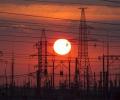
India has achieved 100 per cent electrical connectivity, but 100 per cent electrification remains a long-drawn task, says Shreya Jai.

'Fiscal and monetary space is more constrained in developing countries because of inflation and high borrowing cost.'

Axis Bank and ICICI Bank consumed 37-59 per cent of their operating profit for COVID-19 provisioning, while the figure is 24 per cent in case of Kotak Mahindra Bank and 10-12 per cent for IndusInd Bank and HDFC Bank.

More asset sales may be only way out, though most of the group companies' ratings have been downgraded and their combined market value is now a fraction of their combined debt.

'The real lifting of the economy will happen only if this momentum sustains in the coming months.'

Airlines will report losses in FY16 but 35% less Y-o-Y

Sebi has now said any default of payments of interest or principal on loans taken from financial institutions, including banks, will have to be disclosed if it continues beyond 30 days.

With the government looking to divest loss-making steel assets, significant interest from secondary players is most likely this time apart from the anticipated list of large integrated primary steel producers, said industry experts. Rashtriya Ispat Nigam Limited (RINL), Neelachal Ispat Nigam Ltd (NINL), NMDC Integrated Steel Plant (NISP)-Nagarnar, Ferro Scrap Nigam Ltd and three units of Steel Authority of India (SAIL) - Alloy Steels Plant, Durgapur; Visvesvaraya Iron and Steel Plant, Bhadravati; and Salem Steel Plant, Salem - constitute the divestment list. All the three units of SAIL have been loss-making for more than five years.
Following the footsteps of ICRA and CRISIL on rating corporate governance, credit rating agency Fitch will also take up such an exercise soon.
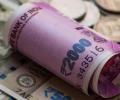
The spreads between state development loans and equivalent-maturity government papers have started widening, and market participants don't expect them to contract anytime soon. The rise in spreads is a direct measure of market displeasure than a rise in yields.
Credit rating agency ICRA on Tuesday warned that fiscal deficit will cross 4.8 per cent of GDP during 2003-04, as it was projected by the government in the interim budget.

This is the third consecutive month when GST mop-up remained below the Rs 1 lakh crore mark, despite the festival season.
The government will be able to keep its fiscal deficit lower at 5.4 per cent during 2003-04 than the budgeted 5.6 per cent of GDP, despite the give-aways announced by Finance Minister Jaswant Singh on January 8, according to rating agency ICRA.

India Ratings expects long products demand growth to be sharp, supported by a demand push from the government-led infrastructure investments in affordable housing, railways, rural electrification and road networks.
India Ratings principal economist Sunil Kumar Sinha said the Brexit is a mixed bag for the country.

Overall, the domestic FMCG market bounced back to levels of 98 in June compared with 75 in May and 101 in March before the nationwide lockdown was announced. The pre-Covid March index for foods was 103, and for non-foods, it was 99.
Import segments which recorded negative growth include gold, silver, transport equipment, coal, fertiliser, machinery and machine tools. However, exports of oil seeds, coffee, rice, tobacco, spices, pharma, and chemicals reported positive growth in June.
