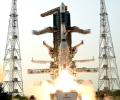
Over 32 missions -- satellites and rockets -- have been planned for the year.

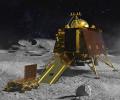
'All possible efforts are being made to establish communication with (the) lander,' the ISRO further said in a tweet.

A man has built an eco-friendly house with mud, mud tiles, jute, metal, and toys in Kozhikode, Kerala.

The 1994 Indian Space Research Organisation (ISRO) espionage case, in which former space scientist Nambi Narayanan was falsely implicated, was allegedly created by a then special branch officer of Kerala police to justify his illegal detention of a Maldivian woman in India after she spurned his advances, the Central Bureau of Investigation has told a court in Thiruvananthapuram.
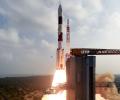
The launch is scheduled at 11.46 am on November 26, said the national space agency headquartered in Bengaluru.

Sivan asserted that though Chandrayaan-2 did not go as per script, it will have no bearing with on the 'Gaganyaan' mission.

The Indian Space Research Organisation has resolved to alight its lander on the lunar surface with Chandrayaan-3 in addition to a maiden solar expedition in 2020.
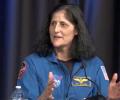
Sunita added that "I hope, and I think for sure, I'm gonna be going back to my father's home country and visiting with people and getting excited about the first, or not the first, but the Indian national who's going up on the Axiom Mission coming up, pretty awesome," she said.

According to sources in the Bengaluru-headquartered space agency, under the Department of Space, delivery of hardware by the industry was hit due to the lockdown imposed in several States to contain the pandemic in recent months.
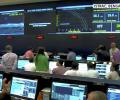
NASA said it is looking forward to explore the solar system with its Indian counterpart.
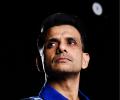
Indian astronaut Shubhanshu Shukla will be the first Indian to travel to the International Space Station (ISS), flying aboard a SpaceX Dragon spacecraft as part of a joint effort between NASA and ISRO. Shukla, a group captain in the Indian Air Force, will serve as the pilot for the Axiom Mission 4, scheduled for launch no earlier than spring 2025. The mission will also carry the first astronauts from Poland and Hungary to stay aboard the ISS.
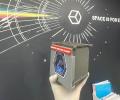
'To access our satellite, you don't need any IQ test, you don't need to write an examination.' 'You can be a Class 1 student, an engineering student, a 60-year-old person, anybody can access our satellite.'

The space agency said Chandrayaan-2 planned for mid-April.

Cartosat-3 satellite is a third-generation agile advanced satellite having high-resolution imaging capability.

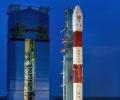
The countdown began at 6.27 am for the launch on board ISRO's third generation workhorse Polar Satellite Launch Vehicle, in its 47th flight, ISRO said.
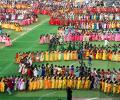
Prime Minister Narendra Modi announced that he will hand over his social media accounts to women achievers from different walks of life to mark International Women's Day on March 8. In his monthly "Mann Ki Baat" address, Modi said these successful women will talk about their work and experience on his social media accounts. He also renewed his appeal to people to take measures to deal with the growing problem of obesity and encouraged people to visit research laboratories or planetariums to mark National Science Day on February 28. Modi highlighted India's progress in space science and artificial intelligence, and emphasized the importance of celebrating and respecting the indomitable spirit of women. He also spoke about the diversity of India's wildlife and the importance of conservation efforts.

Modi, in his address at the ISRO centre asked the scientists not to get disheartened by the hurdles in the lunar mission Chandrayaan-2 and asserted that there will be a "new dawn".
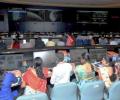
Nirmala Sitharaman, Amit Shah, Arvind Kejriwal and Rahul Gandhi also expressed solidarity with ISRO.

India and the US on Friday said they have started talks to put in place a strategic framework for human space flight by year-end as they plan to send an Indian astronaut to the International Space Station in 2024.

The announcement comes two days ahead of the proposed historic launch of the ISRO's 100th satellite along with 30 others in a single mission from Sriharikota.

The RISAT-2B would replace the RISAT-2, which has been actively used by India to monitor activities in camps across the border in Pakistan to thwart infiltration bids by terrorists.

The Supreme Court on Friday quashed the Kerala high court order granting anticipatory bail to four people, including a former director general of police (DGP), in a case of alleged frame-up of scientist Nambi Narayanan in the 1994 ISRO espionage matter.
'The unflappable temperament and nerves of steel under extreme pressure -- essential ingredients in space research -- were on full display in the rows occupied by the scientists still engrossed in their monitor screens,' says Minnie Vaid, author of Those Magnificent Women And Their Flying Machines, ISRO's Mission to Mars.

All spacecraft parameters are normal, the Bengaluru headquartered space agency said after the maneuver on the spacecraft.

EOS-01 is an earth observation satellite intended for applications in agriculture, forestry and disaster management support, ISRO has said.

He said the ISRO scientists have a very strong spirit of working and will not rest till the objective is met.

The 3,423 kg GSAT-29 carries Ka and Ku band high throughput transponders intended to meet the communication requirements of users, including in the North East and in Jammu and Kashmir.

Artificial Intelligence, innovation and next-generation technologies figured prominently during the high-stakes discussion between Prime Minister Narendra Modi and US President Donald Trump at the White House, as the two sides announced transformative measures, including the US-India TRUST initiative, roadmap on accelerating AI infrastructure and INDUS Innovation, to boost tech ties.
A French court has ordered freezing of an Indian government property in Paris on a plea by Devas shareholders who are seeking to enforce a USD 1.3 billion arbitration award over a cancelled satellite contract, according to the court order copy.

India scripted history by successfully launching EMISAT, a military satellite, and 28 foreign nano satellites on-board its polar rocket from Sriharikota on Monday, in a complex mission which marked many a first for Indian Space Research Organisation.
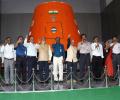
The space agency is gearing up for the human spaceflight programme by 2021-end that is likely to include a woman astronaut.

Nervous and anxious for sure but the city-headquartered space agency is cautiously optimistic of "Vikram" module's soft-landing on the Lunar surface planned in the early hours of Saturday.
Connecting with people is the first step to creating greater awareness for the brand and that in turn, believes ISRO chief K Sivan, will translate into the institution becoming a place that people want to work in.
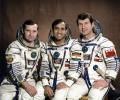
ISRO has to select astronauts, training them to withstand the space environment, and then bring them back to earth and rehabilitate them.
Antrix, ISRO's commercial arm, is eyeing 10% of the $357 billion global market.
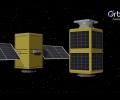
'It is our duty to keep space sustainable and free of debris.'

This would be the 44th flight of the PSLV and the third launch by ISRO this year.

The crater was formed during the Nectarian period, which dates back to 3.85 billion years and is one of the oldest time periods in the Moon's history, the team, including researchers from the Physical Research Laboratory and Indian Space Research Organisation (ISRO), Ahmedabad, said.
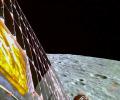
According to the Indian Situational Space Awareness Report for 2023, the nominal lift-off of the Launch Vehicle Mark-3, carrying the Chandrayaan-3 spacecraft, had to be delayed by four seconds based on the Collision on Launch Avoidance analysis.
An ISRO official said: "Unless and until everything is intact (lander), it's very difficult (to re-establish contact). Chances are less. Only if it had soft-landing, and if all systems functioned, then only communication can be restored. Things are bleak as of now."
