
Lashkar-e-Tayiba operative David Coleman Headley, who has pleaded guilty to charges of his involvement in the Mumbai terror attacks, would testify against his Pakistani handlers Illyas Kashmiri and Sajid Mir, a United States attorney has said.
United States would consider giving India further access to David Headley, who has pleaded guilty in the Mumbai terrorist attacks case, for questioning by its investigating agencies once New Delhi makes such a request, the state department has said.

Pakistani-origin Canadian businessman Tahawwur Rana, a key accused in the 26/11 terror attacks case, stayed at a hotel in Mumbai's Powai area for two days in November 2008 ahead of the attacks, where he discussed about the crowded places in south Mumbai with a witness in the case, the police said on Tuesday.
Mumbai attack co-accused David Coleman Headley on Wednesday testified he had conducted a surveillance of the German Bakery in Pune and identified Chabad houses in Delhi, Pushkar and Pune as potential bombing targets.
Senior analyst B Raman on how India should react to 26/11 accused David Headley's testimony in co-accused Tahawwur Hussain Rana's ongoing trial in a Chicago court.
The Maharashtra government's decision to appeal against the acquittal of Fahim Ansari and Sabahuddin largely depends on India's interrogation of Lashkar operative David Headley.
Ambiguous replies about his travels abroad aroused the suspicions of airport officials and led to the arrest of Pakistani-American Lashkar-e-Tayiba operative, David Headley, charged with criminal conspiracy in the Mumbai terror attacks.
India may get access for the second time to Mumbai attack terrorist David Headley and his accomplice Tahawwur Hussain Rana, currently in the custody of the United States, for questioning. The positive indication was given by Washington to New Delhi during a recent bilateral meeting held in America.

India has sought access from the United States to the 26/11 Mumbai terror attack convict David Headley and his accomplice Tahawwur Rana -- both of whom were sentenced by a Chicago court after being found guilty of terrorism charges.
The United States on Saturday said it will allow Indian investigators to interrogate David Headley, who has pleaded guilty to his involvement in the Mumbai terror attacks, but made it clear that he cannot be extradited to India.
The US administration had informed the Indian government before it finalized a deal with David Coleman Headley to change his plea to guilty, sources said.
Pakistan Prime Minister Yousuf Raza Gilani had attended the funeral of Mumbai attacks accused David Headley's father in 2010. This was disclosed by 50-year-old Headley at a Chicago court during the trial of co-accused Tahawwur Rana in the 26/11 attacks case.
Suspected Lashkar-e-Tayiba terrorist David Coleman Headley was charged in a Chicago court with criminal conspiracy in the Mumbai terror attacks that killed about 180 people, including many foreigners.

Pakistan Prime Minister Yousuf Raza Gilani's Public Relations Officer Danyal Gilani has refuted media reports suggesting that the prime minister knew Lashkar terror suspect David Coleman Headley.
Pakistani-American David Headley's confession in a US court about his involvement in the Mumbai terror attacks has strengthened the 26/11 case, currently being heard by a special judge in Mumbai, public prosecutor in the case Ujjwal Nikam said on Friday.
Indian investigators, who conducted a detailed probe into the David Headley link to the Mumbai 26/11 case, would wait before they can file a charge-sheet against the man who pleaded guilty before an American court.
Chilling confessions of Lashkar-e-Tayiba operative David Coleman during his 30-hour interrogation with the National Investigation Agency last year reveal that the 26/11 attack is not the worse the nation has experienced. In fact, the terror strike that massacred Mumbai has only inspired the terror group to continue waging "war" against India.
A team of the National Investigating Agency had interrogated Lashkar-e-Tayiba operative David Headley for nearly 30 hours in the presence of his lawyer and investigators of the Federal Bureau of Investigation. During the interrogation, Headley, who is currently serving a jail term in the United States under a plea bargain, offered some chilling insights into the workings of the terror outfit.
Headley's trial thus promises to be fascinating and important. If it is established that Headley was working for Headley all along, it will establish the Mumbai terror attacks as being a joint Lashkay-Al Qaeda operation, says Riedel. This, if true, is bad news for American counter-terrorism ops given the Lashkar's global network of supporters the Pakistani diaspora

In a further blow to the encounter case of Ishrat Jahan, the National Investigation Agency has clarified that convicted terrorist David Coleman Headley, who is currently lodged in an American jail, never mentioned the 19-year-old during any of the interrogations.
Roemer said, "Headley may well be responsible for canvassing, tracking information to pass on to attackers of Mumbai blast. This is the sort of the thing that the US is extremely serious about. We want, along with Indian people and Indian government, to bring him to justice."
The United States has put the case of David Coleman Headley, Mumbai terror attack suspect now languishing in a Chicago jail, as one of the key counter-terrorism cases on information sharing with its partners.
Mumbai attacks co-accused David Headley on Wednesday testified that New Delhi-based National Defence College is on the hitlist of terrorists as 26/11 mastermind Illiyas Kashmiri believes in this way he can kill more Indian brigadiers than what the Pakistan Army could not do in four wars with India.

'I am convinced Headley was working for the Americans, for the FBI. I had nicknamed him agent Headley,' Rahul said in an interview to UK's Channel 4.
William said he was in disbelief that his own nephew was connected with the massacre in Mumbai. Headley wrote letters to his uncle from a Chicago jail, addressing him as "Dear Uncle Billy (Mama)". William said Headley had communicated to him that he was doubtful he would be let off, after he was arrested on terror charges in October last year. In a letter dated December 18, 2009, Headley wrote to his uncle that "despite his heritage, he is now a 100 per cent Muslim."
Pakistani-American David Coleman Headley, charged with conspiring in the Mumbai terror attacks, is set to plead guilty before a US court in an apparent bid to bargain for a lighter sentence and escape death penalty.
Headley visited Goa in 2008 during the last leg of the reccee that he had conducted in Mumbai. Sources in the Intelligence Bureau told rediff.com that Headley was definitely not on a holiday in Goa, but was exploring the possibility of carrying out a terror strike in the tourist destination. The NIA says it is possible that Headley was using the American couple in Goa as a cover. For the Lashkar, Goa was a backup option to the Mumbai attack.
Home Minister P Chidambaram had briefed the Cabinet Committee on Security, where External Affairs Minister S M Krishna was present, on the interrogation report of LeT operative David Headley before visiting Pakistan for the SAARC Interior Minister's conference last month.
Amid reports that the Obama administration was upset over Indian officials going into the details provided by Headley, State Department spokesman P J Crowley said the US values cooperation with India on combating terrorism but it places responsibility on both countries.
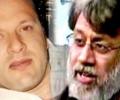
A Delhi court on Monday issued fresh non-bailable warrants against Pakistani-American David Coleman Headley, his accomplice Tahawwur Rana, Lashkar-e-Tayiba founder Hafiz Saeed and 26/11 attack mastermind Zaki-ur-Rehman Lakhvi, who are accused of carrying out terror attacks in New Delhi.
Special Secretary (Internal Secretary) U K Bansal met Solicitor General Gopal Subramanium on Tuesday night and discussed with him about the options available before Indian investigators to question Headley under the plea bargain agreement between him and the American government.
An NIA official, who was part of the team that interrogated David Headley in FBI custody, tells Vicky Nanjappa that the Pakistani-American terrorist was beaming with pride each time they asked him about his association with the Lashkar and also his role in the 26/11 attacks.
US officials have agreed to take "suitable steps" in giving India a direct access to Headley, a statement released by the Indian Embassy in Washington said on Wednesday.
Talking tough, External Affairs Minister S M Krishna on Tuesday told Pakistan to take "seriously" the revelations made by Lashkar-e-Tayiba operative David Headley on the Mumbai attacks and not "push them under the carpet".

Here are the revelations made by Headley so far in the deposition
Intelligence sources tell Vicky Nanjappa/Rediff.com how investigators overlooked an important aspect of the 26/11 case. A key suspect, who helped Pakistani-American terrorist David Headley gather information for the 2008 Mumbai attacks, has never been captured.
External Affairs Minister S M Krishna on Tuesday expressed happiness over media reports that Indian investigating agencies would get direct access to David Coleman Headley, the man charged with scouting targets for the 2008 Mumbai attacks.

Headley also said that LeT boss Hafiz Saeed, the mastermind behind the November 2008 attack that killed 166 persons, motivated him for carrying out a 'jihad'. Saeed told him that the satisfaction of one second of 'jihad' is equal to "100 years of worship."
Vicky Nanjappa provides a glimpse of what Rahul Bhatt, filmmaker Mahesh Bhatt's son and a 'witness' in the case against David Headley, revealed during questioning.

As Indian and American investigators dug deeper into the David Headley case, some Bollywood stars who had reportedly interacted with the American terror suspect during his stay in Mumbai in 2007-2009, are likely to be questioned.
